Tasmania Without a Car: Can You Do It? Honest Guide
📍 Tasmania · 🕐 8 min read · 📅 Updated July 2026
Quick answer

Yes, you can visit Tasmania without a car — but with real limitations you need to understand before you book flights. Hobart is fully walkable and well-served by public transport. Launceston is manageable. The East Coast, Cradle Mountain, and Bay of Fires are all reachable without a car using a combination of regional buses, dedicated tourist shuttles, and guided tours. What Tasmania without a car does not give you is flexibility. You will work around timetables, book ahead, and accept that some of the best off-road spots simply stay off the list. For most international visitors, a mix of guided tours and public transport covers the highlights well enough to have a genuinely great trip.
The honest reality of Tasmania without a car
Tasmania has no passenger rail. There are no trains. Everything beyond a rideshare or taxi runs on buses, shuttles, or boats and outside of Hobart and Launceston, services drop off fast. With no passenger rail services on the island, buses are the main means of getting around Tasmania without a car. Bus services are comfortable and efficient, although departure times can change due to seasonal demand.
Kinetic is the main long-distance bus operator in Tasmania without a car. Kinetic runs intercity services between Hobart, Launceston, Burnie and Devonport with multiple departures each day.
The catch: you need to book ahead, accept that schedules shape your itinerary rather than the other way around, and be comfortable with the fact that some of Tasmania’s best places — the Tarkine, the Southwest Wilderness, the remote West Coast — simply do not have public transport options.
Tasmania without a car is genuinely doable. Tasmania without a car on a whim is not. Plan ahead and it works. Wing it and it falls apart fast.
Getting to Tasmania without a car
Flying in
Most international visitors fly into Hobart Airport, which sits 17km from the city centre. SkyBus operates frequent turn-up-and-go services between Hobart Airport and the CBD seven days a week. Taxis queue outside the terminal, and Uber pickup points are signposted outside arrivals. Getting into Hobart from the airport without a car is completely straightforward.
Launceston Airport is 15km from the city centre. Minibus transfer services run between the airport and city — book ahead rather than expecting taxis to be waiting.
The Spirit of Tasmania ferry

The Spirit of Tasmania crosses Bass Strait overnight from Geelong (near Melbourne) to Devonport on Tasmania’s north coast. You do not need a car to board — foot passenger tickets are available and significantly cheaper than bringing a vehicle. Devonport to Hobart is about 2 hours 30 minutes by bus from there. A solid option if you are travelling from Melbourne or want an overnight crossing experience as part of the trip.
Getting around Tasmania without a car: the three main operators
Kinetic: intercity buses
Kinetic is the main long-distance bus operator in Tasmania without a car. Kinetic runs intercity services between Hobart, Launceston, Burnie and Devonport with multiple departures each day. Tickets can be booked in advance via their website. If you are moving between the major cities, Kinetic is your main tool. Hobart to Launceston takes around 2 hours 30 minutes and runs multiple times daily.
Tassielink: regional routes
Tassielink operates regional routes that go beyond the cities — including services to the Tasman Peninsula (Port Arthur), along the East Coast toward Swansea and Coles Bay, and into the Huon Valley south of Hobart. If Freycinet or Port Arthur are on your Tasmania without a car itinerary, Tassielink is how you get there by bus. Timetables are less frequent than Kinetic — check schedules carefully and book ahead in peak season.
Metro Tasmania: city buses
Metro Tasmania operates city bus networks in Hobart, Launceston and Burnie. For Hobart specifically, Metro covers the inner suburbs well and is the cheapest way to get around the city. Metro provides public buses in greater Hobart. Buy a Metro Greencard, preload it with credit and tap on when you board. Within the city itself, many of Hobart’s main attractions are walkable from the waterfront without needing buses at all.
Tasmania without a car: destination by destination
Hobart: fully doable without a car
Hobart is the easiest part of Tasmania without a car. Salamanca Place, Battery Point, the waterfront, the Hobart Museum and Art Gallery — all walkable from the CBD. MONA is 15 minutes by dedicated ferry from Brooke Street Pier, with return tickets starting from 30 AUD. The Explorer Bus is a dedicated shuttle departing daily from Hobart’s waterfront to the kunanyi / Mount Wellington summit. Adult return tickets start from 50 AUD with hop-on hop-off stops along the way. Hobart without a car is not just manageable — it is one of the better ways to experience the city.
Port Arthur: reachable by shuttle
Port Arthur sits 90 minutes southeast of Hobart on the Tasman Peninsula. Tassielink operates scheduled bus services to the Tasman Peninsula from Hobart, and dedicated day-tour shuttles depart daily from the city. A guided day tour is the most practical way to reach Port Arthur without a car — transport, entry and a guided walk are typically bundled into one price. Book ahead, especially in summer.
Freycinet and Wineglass Bay: possible with planning
Freycinet is 2 hours 45 minutes from Hobart. Tassielink runs a service along the East Coast that stops at Coles Bay Road — from there, a local shuttle covers the final stretch into the national park. It is manageable but it requires pre-booking and careful timetable checking. The easier option for Tasmania without a car: join a guided tour that departs from Hobart and handles all transport. The Wineglass Bay Day Tour covers the key highlights in a single day with pickup included. The Freycinet Paddle kayak tour can be added alongside for a water-level view of the bay.
Bay of Fires: hardest without a car
Bay of Fires is the most difficult destination on this list for Tasmania without a car visitors. It sits 20 minutes north of St Helens via an unsealed road, and St Helens itself requires a long bus journey from Hobart or Launceston with at least one change. The most practical option: join a Bay of Fires 3 Day tour that departs from Hobart with all transport included. You get the full Bay of Fires experience without navigating the logistics of getting there independently.
Cradle Mountain: accessible by shuttle
Cradle Mountain without a car is more accessible than most visitors expect. McDermott’s Coaches offers scheduled services between Launceston and Cradle Mountain, including pickup from accommodation. From Hobart, the practical route is Kinetic bus to Launceston, then McDermott’s coach to Cradle Mountain. Inside the park, the Cradle Discoverer hybrid bus transports visitors between the Cradle Mountain National Park visitor centre and Dove Lake. No car is needed once you are there. The Gourmet Cradle Mountain 3 Day tour handles everything — transport from Hobart, accommodation in the park, and guided access to the Dove Lake Circuit — in one booking.
Cradle Mountain without a car is entirely doable. The shuttle system inside the park actually works better than driving your own vehicle in peak season when roads get congested.
The best option for Tasmania without a car: guided multi-day tours
For most international visitors doing Tasmania without a car, the most practical and enjoyable approach is a combination of guided multi-day tours and Hobart as a walkable base. Here is why:
- Multi-day tours handle all transport between destinations — no timetable coordination required
- Small group sizes mean you see the same places as a self-driver but with a local guide who knows where the cassowaries are, where to stop, and what to skip
- Accommodation is included — no need to book multiple places across a region with limited options
- National park entry is typically included — no need to buy a pass separately
- You travel with other visitors rather than alone, which suits solo travellers particularly well
The downside: you are on a fixed schedule. You cannot linger at Bay of Fires for three hours if the group moves on after two. For visitors who value flexibility above everything else, a hire car remains the better option if driving is comfortable.
A sample Tasmania without a car itinerary: 7 days
- Day 1: Arrive Hobart. Walk Salamanca Place and Battery Point. Dinner on the waterfront.
- Day 2: Hobart day — MONA by ferry, kunanyi / Mount Wellington by Explorer Bus, Salamanca dinner.
- Day 3: Join a guided East Coast day tour to Freycinet and Wineglass Bay. Return to Hobart overnight.
- Day 4: Join a Port Arthur guided day tour with shuttle pickup from Hobart CBD.
- Day 5 to 6: Join the Bay of Fires 3 Day tour departing Hobart. Covers St Helens, Bay of Fires, and the East Coast with accommodation included.
- Day 7: Return to Hobart. Final Salamanca walk. Fly out.
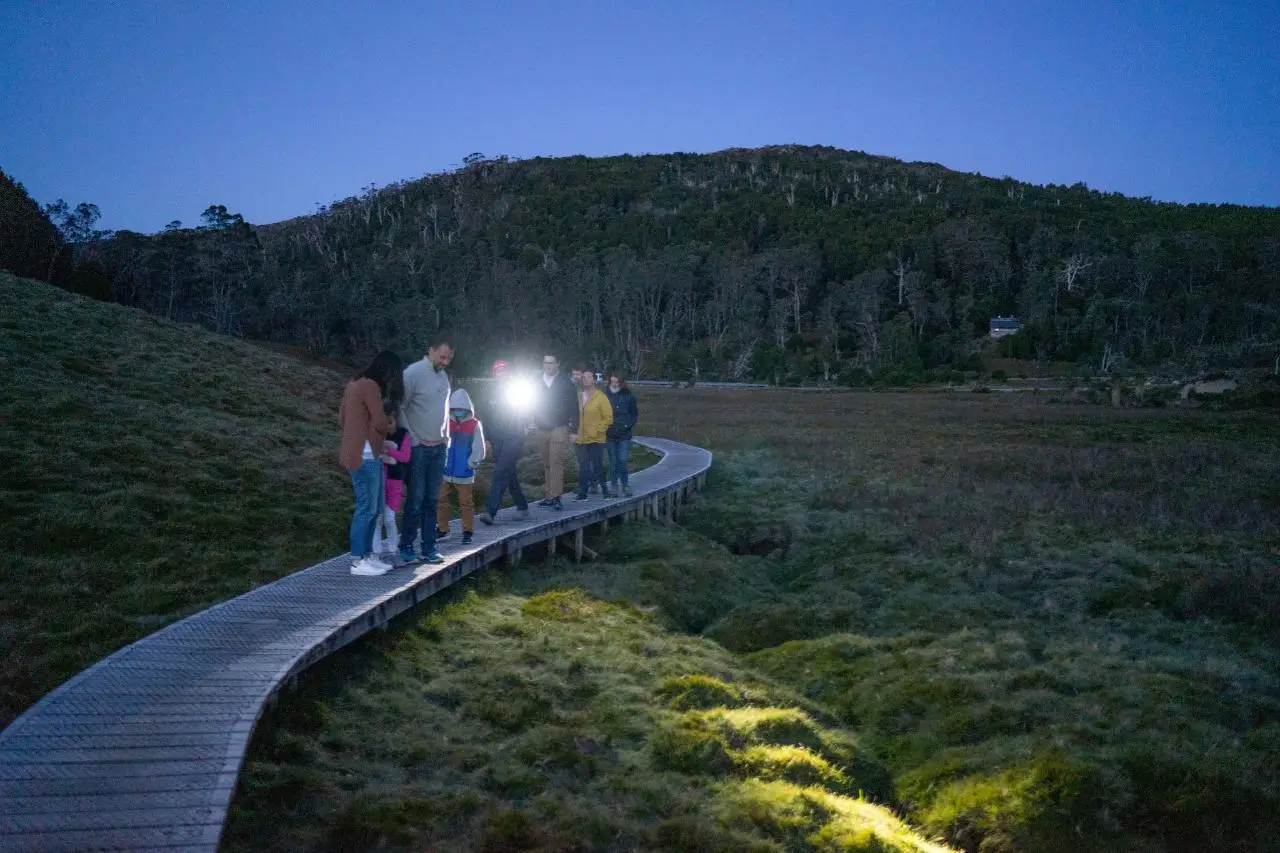
Cradle Mountain can replace Days 3 and 4 using the Launceston shuttle route, or slot in as a 3-day guided tour extension for visitors with more time. The Cradle Mountain Night Spotting tour is worth adding if you are basing there overnight.
What you genuinely cannot do in Tasmania without a car
Honest accounting. Some experiences in Tasmania without a car are simply not realistic for independent travellers:
- The Tarkine wilderness. No public transport. No tours that visit regularly. Only accessible by car or chartered 4WD experience.
- The remote West Coast beyond Strahan. A bus service runs from Hobart to Strahan via Queenstown on limited days, but deeper West Coast exploration requires a car.
- Maria Island. The ferry from Triabunna requires getting to Triabunna first, which needs either a car or a taxi from the nearest Tassielink stop. Possible but complex.
- Spontaneous detours. The waterfall you spot from the road. The lookout with no sign. The unmarked beach. These do not happen on a bus.
A car-free Tasmania is a highlights Tasmania. That is still a very good Tasmania. But know what you are signing up for before you decide.
FAQs
Can you visit Tasmania without a car?
Yes. Tasmania without a car is genuinely doable for most of the main visitor destinations. Hobart is fully walkable. Cradle Mountain is accessible by shuttle from Launceston. Freycinet and Port Arthur are reachable by Tassielink bus or guided day tour. Bay of Fires is best accessed via a multi-day guided tour from Hobart. The limitation is flexibility — you work around transport timetables rather than your own schedule.
What is the best way to get around Tasmania without a car?
A combination of Kinetic intercity buses between cities, Tassielink regional services to destinations like Coles Bay and the Tasman Peninsula, and guided multi-day tours for Bay of Fires and Cradle Mountain. For visitors who want simplicity, joining guided tours for the regional destinations and using Hobart as a walkable base covers the highlights without needing to navigate multiple bus operators or timetables.
How do you get to Cradle Mountain without a car?
Take a Kinetic intercity bus from Hobart to Launceston (around 2 hours 30 minutes), then book a McDermott’s Coach service from Launceston to Cradle Mountain with pickup from your accommodation. Inside the park, the Cradle Discoverer shuttle runs between the visitor centre and Dove Lake. Alternatively, book a guided multi-day Cradle Mountain tour that departs from Hobart with all transport included — this is the simpler option for most international visitors doing Tasmania without a car.
Is Tasmania public transport enough for a holiday?
For a Hobart-focused trip, yes — public transport in Tasmania is enough. For a broader Tasmania without a car experience covering the East Coast and Cradle Mountain, it depends on your comfort with planning. The intercity bus network is reliable. Regional services are less frequent and need advance booking. Most international visitors find that mixing public transport for city travel with guided tours for regional destinations gives the best balance of coverage and simplicity.
Is it cheaper to visit Tasmania without a car?
It can be. Car hire in Tasmania is expensive — rental cars are in short supply on the island and prices reflect that, especially in peak season. A car-free Tasmania trip covering the main highlights costs approximately 250 to 370 AUD in bus and shuttle transport. Add guided tour costs and the total varies widely, but for short trips focused on Hobart and one or two regional destinations, Tasmania without a car can be meaningfully cheaper than self-driving.
What can you not do in Tasmania without a car?
The places that are genuinely difficult or impossible in Tasmania without a car include the Tarkine wilderness, the remote West Coast beyond Strahan, deep exploration of the Huon Valley, and Maria Island (which requires a ferry from Triabunna with complex bus connections). Spontaneous detours and off-the-beaten-track exploration are also off the table without your own vehicle. A car-free Tasmania covers the headline destinations well. It does not cover the hidden ones.
Every tour on Aussie Loop is handpicked by people who actually know Tasmania. No paid placements. No sponsored listings. If you are doing Tasmania without a car, these are the tours worth your time.