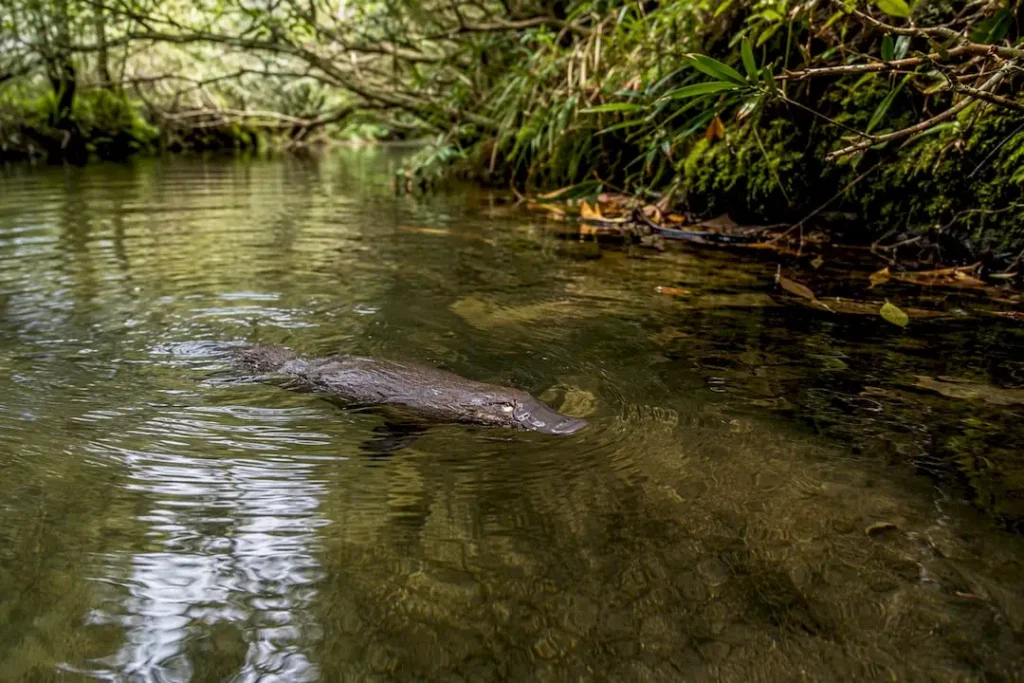
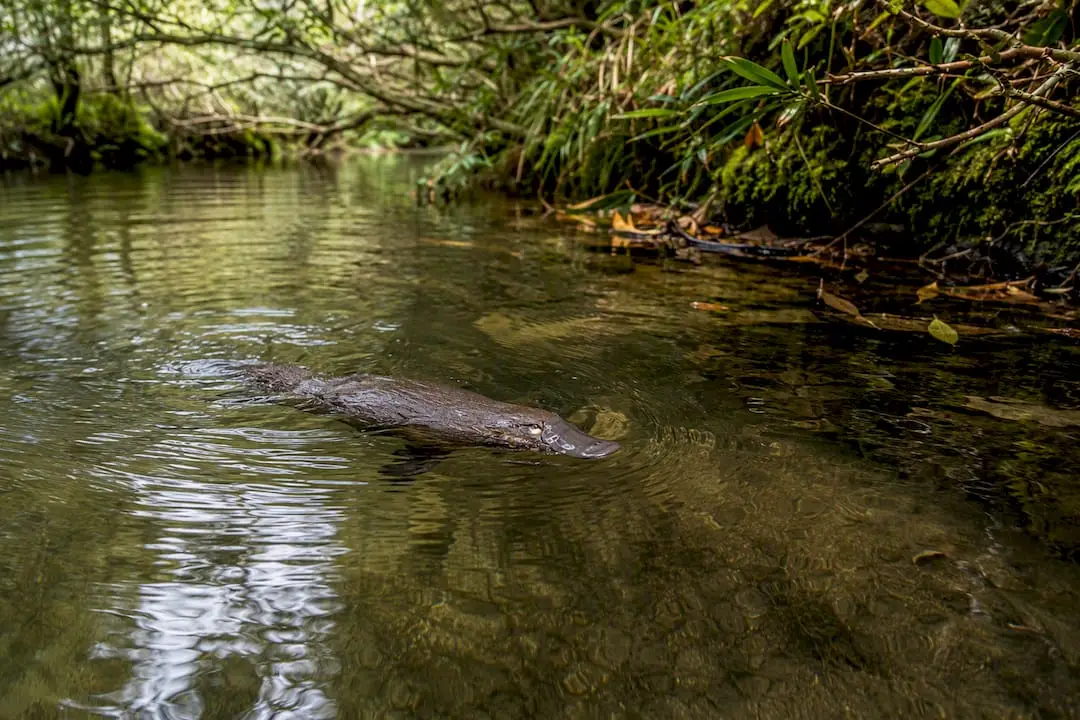
Your best odds of seeing a wild platypus in Tasmania are at the Tasmanian Arboretum near Devonport, Fernglade Reserve in Burnie, and Warrawee Reserve in Latrobe, all of which locals report deliver sightings even in daylight. If you want a guarantee rather than a chance, Platypus House at Beauty Point puts you eye to eye with one indoor, any time of day. For the wild sites, the formula is simple: turn up within the prime dawn or dusk window, find a calm, vegetated stretch of water, and stay dead still for 5 to 10 minutes while you scan the surface.
- Tasmanian Arboretum (Founders Lake) — reliable, easy walking access
- Fernglade Reserve, Burnie — short trail, good sightlines
- Warrawee Reserve, Latrobe — walk from town, marked “Platypus Pool”
- Platypus House, Beauty Point — indoor, guaranteed daytime viewing
According to the Australian Platypus Monitoring Network, the prime viewing window sits within three hours of dawn or two hours of sunset, and a proper scan needs 5 to 10 minutes of stillness, not a quick glance. The Burnie City Council and Parks Tasmania both back this up with their own site listings, which is about as close to a locals’ guarantee as wildlife spotting gets.
Key Takeaways
Reliable platypus sightings in Tasmania come down to choosing a proven site, timing your visit to dawn or dusk, and scanning calm water in stillness for 5 to 10 minutes.
| Point | Details |
|---|---|
| Top wild sites | Tasmanian Arboretum, Fernglade Reserve, and Warrawee Reserve deliver the most consistent sightings across the state. |
| Best viewing window | Scan within three hours of dawn or two hours of sunset, holding still for 5 to 10 minutes at a time. |
| Winter boosts daylight chances | Lactating females forage more in colder months, widening the daytime viewing opportunity beyond dawn and dusk. |
| Guaranteed option | Platypus House at Beauty Point offers indoor daytime viewing when a wild sighting can’t be scheduled. |
| Trip planning support | Aussie Loop curates dawn and dusk wildlife outings and broader Tasmanian itineraries for travellers wanting booking help. |
Table of Contents
- Best places to see platypus in Tasmania by region
- When to go: timing your visit for the best odds
- How to spot a platypus: field technique that actually works
- Managed viewing and guided tours for a sure thing
- What to bring and the rules worth knowing
- A spotter’s notes on patience and posture
- Let Aussie Loop help you plan the trip around it
- Where to check for site rules and reporting sightings
- Sources
- FAQ
Best places to see platypus in Tasmania by region
Tasmania’s platypus population is spread widely across the state, and the Department of Natural Resources and Environment notes they favour freshwater systems with earth banks, native fringing vegetation, and the alternating deep pools and shallow riffles that make good foraging ground. That habitat preference is exactly why the same handful of reserves keep coming up as the places to see platypus, year after year. Here’s how the regions stack up.
1. North-west: Tasmanian Arboretum, Founders Lake
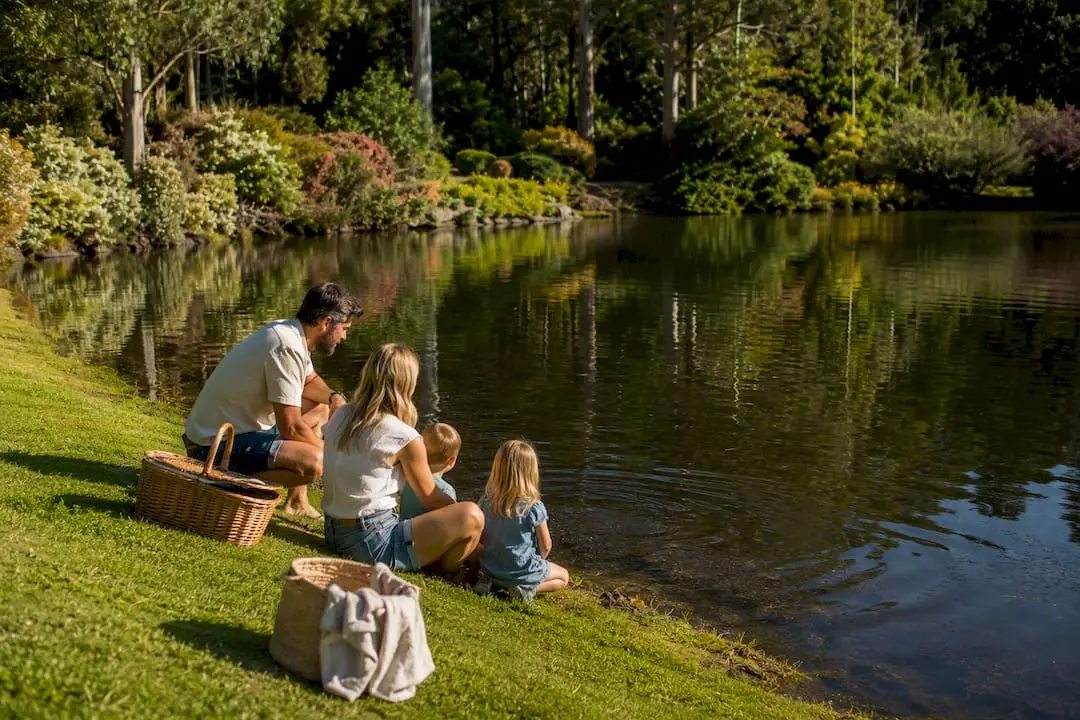
This is arguably the single most consistent spot in the state, and it’s a genuine standout for families and photographers alike Arizona Wildlife | Grand Canyon Journeys. Founders Lake within the Arboretum grounds near Devonport has a reputation for daytime sightings, not just the classic dawn and dusk slots, which makes it forgiving if you’re not an early riser. Parking is free and close to the lake, the walk is flat and short, and there are picnic tables if you want to make a morning of it. Bring a thermos and settle in; this is a site where patience pays off quickly.
2. Burnie area: Fernglade Reserve and Emu Valley Rhododendron Garden
Fernglade Reserve sits along the Emu River just outside Burnie and is one of the sites the Burnie City Council specifically flags as reliable. The riverside track has several natural viewing points where the water slows and vegetation overhangs the banks, ideal platypus territory. Note that vehicle access to some nearby reserves is gated from dusk to dawn, so plan your parking before the light fades. Emu Valley Rhododendron Garden, a short drive away, offers a quieter, more manicured alternative with ponds that occasionally produce sightings, though it’s better known for its plant collection than as a dedicated wildlife site.
3. Latrobe: Warrawee Reserve
Warrawee Reserve is one of the easiest wins on this list simply because of its location, a genuine urban-fringe reserve just a few minutes from Latrobe’s town centre. Marked trails lead to a section locals call the “Platypus Pool,” and the reserve is set up with interpretive signage explaining what to look for. Toilets and a car park are on site, which makes this a strong pick for families with younger kids who can’t sit silently for 40 minutes on a riverbank with no facilities nearby.
4. Deloraine: Meander River
The Meander River as it winds through Deloraine offers several calm bends with the kind of overhanging vegetation platypus favour. It’s less signposted than Warrawee or Fernglade, so you’re relying more on your own scanning skill here, but that also means fewer other spotters competing for the quiet you need.
5. Mount Field and the south: Tyenna River, Westerway
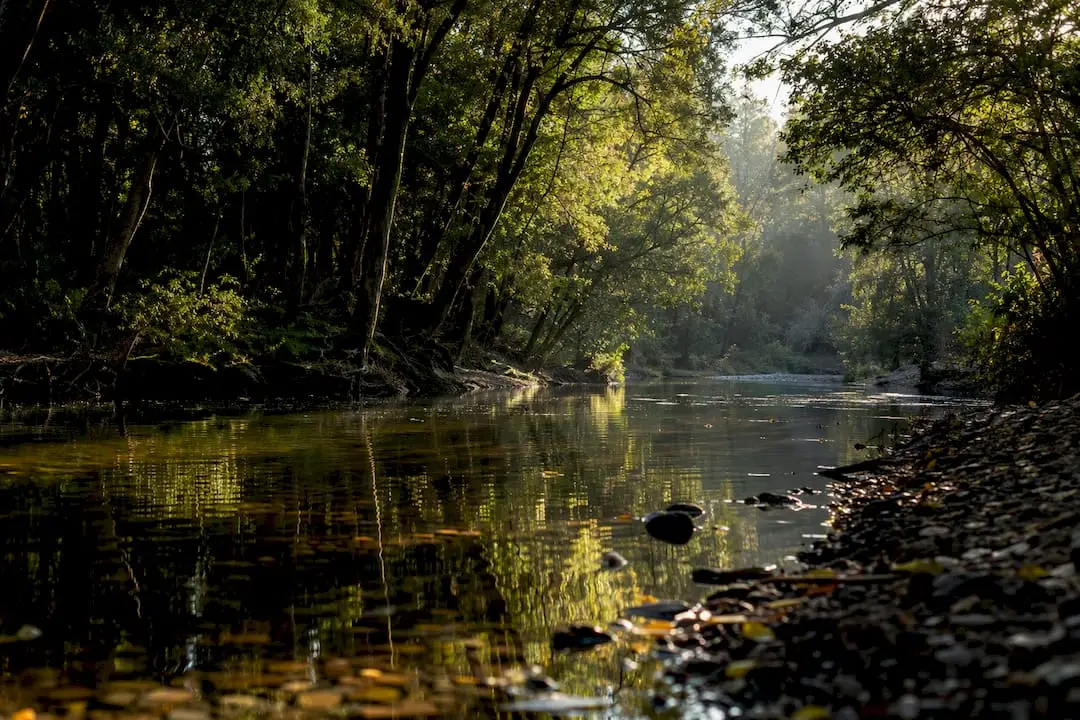
Heading south, the Tyenna River near Westerway, just before you reach Mount Field National Park, is a favourite among photographers chasing that classic forest-stream shot. The river here runs slower and clearer than higher up in the park, and the surrounding tree cover keeps the light soft in the early morning, useful if you’re shooting rather than just watching.
6. Loongana: River Leven
River Leven at Loongana, tucked into the state’s north west, rewards visitors willing to go a little further off the beaten track. It’s quieter than the Burnie-area sites, which suits travellers who find crowds off-putting even when the crowd is just two other people with binoculars.
7. Central highlands: Little Pine Lagoon
Little Pine Lagoon is a different beast altogether, remote, exposed, and better known among fly fishers than wildlife watchers. Sightings here are less predictable and the drive in is longer, but the lagoon’s stillness at dawn is hard to beat if you’re chasing a genuinely wild, uncrowded experience.
8. Hobart: the Rivulet and other urban waterways
Don’t discount the city. The City of Hobart’s own spotting guidance for the Hobart Rivulet points to quiet, calm sections within the urban catchment where patient scanning has paid off for local residents. It’s proof that seeing platypus in Tasmania doesn’t always mean a wilderness trek.
For families and casual photographers, Warrawee and the Tasmanian Arboretum offer the best combination of facilities and reliability. For serious wildlife photographers chasing atmosphere over convenience, Tyenna River and River Leven are worth the extra driving time.
When to go: timing your visit for the best odds
Turning up at the wrong hour is the single biggest reason people leave disappointed. The APMN’s scanning guidance is unambiguous: your best window is within three hours of dawn or two hours before and after sunset. Outside those hours, platypus retreat to burrows and your chances drop sharply.
- Arrive at least 15 minutes before your target window starts, so you’re settled and quiet before activity picks up.
- Check the wind forecast the night before; a still morning beats a windy one every time.
- Avoid bright midday glare, which makes it almost impossible to distinguish a platypus ripple from surface reflection.
- Winter and early spring often bring a bonus: increased daylight foraging.
That last point is worth unpacking. The Australian Museum notes that lactating females can spend a huge share of their day foraging to meet the energy demands of raising young, and that seasonal pressure pushes more daytime activity into the colder months. If you’re visiting Tasmania between winter and early spring, you have a genuinely wider window than the classic dawn or dusk slot.
Wind matters more than most first-time visitors expect. Burnie’s own council advice on platypus viewing flags calm water as a precondition for spotting success, since even a light breeze scrambles the surface ripples you’re trying to read. If the forecast shows anything more than a gentle breeze, consider shifting your visit to the next calm morning rather than pushing through.
How to spot a platypus: field technique that actually works
Seeing a platypus in the wild is less about luck and more about method. The Australian Conservation Foundation’s spotting guidance is built around one core idea: patient scanning beats moving around looking for action.
- Pick your spot carefully. Look for a calm stretch of water with overhanging vegetation and a clear sightline along at least 20 to 30 metres of bank. Sit or stand where your silhouette isn’t obvious against the sky.
- Scan systematically for 5 to 10 minutes. Sweep the water slowly rather than fixing on one point. You’re watching for a distinct v-shaped wake or a small, dark shape breaking the surface before diving.
- Use binoculars and go easy on your movements. Sudden gestures and heavy footsteps on the bank send vibrations through the ground that platypus can detect. Keep your kit quiet and your body still.
Telling a platypus from a rakali (native water rat) or a duck takes a little practice. Ducks paddle continuously and sit high on the water; platypus swim low, dive frequently, and leave a narrower wake, sometimes described as a “bullseye” ripple pattern when they surface briefly before diving again, according to the Australian Platypus Conservancy. Rakali tend to swim with more of their body visible and their tail trailing, and they’re generally more active in full daylight than platypus.
Experienced spotters also learn to read subtler cues, small patches of disturbed, murky water, sometimes called “smoke” patches, or the faint tugging of debris near the bank, both signs of a platypus foraging just below the surface. If an animal dives close to you, staying completely still for several minutes afterwards often rewards you with a reappearance in almost the same spot.
Pro Tip: If your chosen spot is noisy or busy with other visitors, don’t force it. Move to a quieter stretch or come back at a different time. A single loud voice or barking dog can undo twenty minutes of patient scanning in seconds.
Managed viewing and guided tours for a sure thing
If your schedule can’t accommodate a dawn start or you’re travelling with kids who need certainty, managed options solve the problem neatly. Platypus House at Beauty Point houses platypus in a purpose-built indoor facility, offering guaranteed daytime viewing without the wait, the wind, or the disappointment. It’s an easy add-on for families short on time, and it works well as a first stop before you try your luck in the wild with a better sense of what you’re looking for.
- Private twilight tours suit travellers who want expert guidance during the exact prime window without organising the logistics themselves.
- Small-group ecotours work well if you’d rather split the cost and enjoy some company while you wait.
- Riverbank guided walks are ideal for photographers who want a guide who knows the specific bends and pools where sightings cluster.
Before booking any tour, check the group size, since a party of ten quiet-footed strangers is a very different experience to a party of two. Confirm the cancellation policy too. Weather-dependent wildlife tours should offer flexibility if a windy morning threatens your chances, and ask directly whether the tour is genuinely platypus-focused or just touches on it as one stop among many.
What to bring and the rules worth knowing
Most platypus reserves in Tasmania are unstaffed, which means the responsibility for doing this properly, and safely, sits with you.
- Reserve car parks and access gates can close from dusk to dawn at some sites, so check timings before you plan an early start or late finish.
- Keep dogs leashed or leave them at accommodation; even a quiet dog’s scent can unsettle wildlife near the bank.
- Never enter the water, and stay off riverbanks where you can see burrow entrances, since platypus nest in tunnels dug into the bank itself.
- Pack binoculars, a small torch for the walk in before dawn, quiet-soled shoes, insect repellent, and a waterproof layer, Tasmanian mornings turn cold fast near water.
- Check the site’s access hours the day before your visit.
- Arrive early enough to be settled and silent before the prime window opens.
- If you find an injured or sick platypus, do not touch it. Contact your local Parks Tasmania office or the state wildlife management service for guidance.
A spotter’s notes on patience and posture
There’s a particular stillness to a good platypus vigil. You pick a rock or a fallen log, get comfortable because you’ll be there a while, and let your eyes soften across the water rather than darting from point to point. Most sightings are brief, a ripple, a dark curve breaking the surface, a splash as it dives again, gone in under ten seconds. That brevity is part of what makes it memorable.
Respect the quiet. A loud comment or a sudden movement can end your chances for the next twenty minutes, and other visitors nearby deserve the same silence you’re hoping for. Don’t assume you need a remote forest stream either. Hobart’s own rivulet has produced reliable sightings for patient locals willing to sit still in an unglamorous, very urban stretch of water. Wildness isn’t always a prerequisite. Patience is.
— Dhruv Sharma
Let Aussie Loop help you plan the trip around it
Chasing platypus across Tasmania often means threading together early starts, remote drives, and a few backup sites in case the wind doesn’t cooperate. That’s exactly the kind of logistics puzzle Aussie Loop untangles for travellers who’d rather spend their morning watching a riverbank than mapping one. Aussie Loop curates dawn and dusk wildlife outings and broader Tasmanian itineraries chosen by locals who already know which reserves are worth the early alarm.

If you’re building a longer Tasmanian route, browse the full range of curated tours to see how a wildlife morning can slot alongside other Tasmanian highlights, or start from the Aussie Loop homepage for tailored recommendations. Worth being upfront about scope though: Aussie Loop helps you plan the trip and book the right experience, but the quiet, patient, respectful behaviour once you’re on the riverbank is still entirely on you. Ready to build your itinerary around the best viewing windows? Get in touch through the tours page and start with your dates.
Where to check for site rules and reporting sightings
Before you head out, a handful of official sources cover the practical questions a blog post can’t fully answer.
- The Australian Platypus Monitoring Network publishes the standardised scanning method and is the right place to check current monitoring guidance or report a sighting for citizen science purposes.
- DPIPWE’s platypus page covers species biology, habitat, and the state’s conservation approach.
- Burnie City Council’s platypus viewing page has site-specific access notes and gate hours for the north-west reserves.
- The Australian Museum’s platypus profile is the best general reference for behaviour, diet, and seasonal activity patterns.
Sources
- Australian Platypus Monitoring Network — How to scan
- Burnie City Council — Platypus viewing
- DPIPWE — Platypus in Tasmania
- Australian Conservation Foundation — How to spot a platypus
- Australian Museum — Platypus
FAQ
Where is the best place to see platypus in Tasmania?
The Tasmanian Arboretum near Devonport, Fernglade Reserve in Burnie, and Warrawee Reserve in Latrobe are the three most consistently reliable wild sites, based on local council and community reporting.
Where is the best place in Australia to see a platypus?
Tasmania is widely regarded as one of the strongest states for wild sightings because of its dense freshwater habitat and lower predator pressure, with sites like the Tasmanian Arboretum standing out nationally for daytime activity.
Can you see platypus near Devonport, Tasmania?
Yes. The Tasmanian Arboretum at Founders Lake sits close to Devonport and is one of the more reliable sites in the state, with sightings reported even outside the classic dawn and dusk windows.
Can you see platypus in Cradle Mountain National Park?
Platypus can occasionally be spotted in calm streams within the Cradle Mountain area, though it isn’t as consistently reliable as dedicated sites like Fernglade or Warrawee; pairing an early wildlife scan with a Cradle Mountain day tour is a practical way to combine both.