You don’t need to swim a single stroke to see the Great Barrier Reef properly. Non swimmers can get right up to the coral, through glass-bottom boats and semi-submersibles, underwater observatories, helmet dives like Seawalker, and guided shallow snorkels fitted out with flotation aids. Here’s the quickest way to size up your options:
- Dry viewing — glass-bottom boats, semi-submersibles, underwater observatories, scenic flights
- Helmet diving (Seawalker) — walk on the seafloor in a dry helmet, no swimming required
- Guided snorkel with flotation — life jackets, noodles and in-water crew support
- Reef pontoons — stable platforms with rest stations and easy, staged water access
- Scenic flights — a wide, dry view of the reef’s colour from above
Jump to the checklist further down for how to pick and book the right one, or lean on Aussie Loop’s curated tour listings to skip the guesswork entirely.
Key Takeaways
Non swimmers can experience the Great Barrier Reef safely and thoroughly through a mix of dry viewing, helmet diving and flotation-assisted snorkelling, provided the operator supplies proper briefings and flotation aids.
| Point | Details |
|---|---|
| Dry viewing covers most needs | Glass-bottom boats, semi-submersibles and underwater observatories all require zero swimming ability. |
| Seawalker suits total non-swimmers | Helmet diving keeps your face dry and needs no ear equalisation or swimming skill. |
| Ask before you book | Confirm flotation aids, staff ratios and medical disclosure requirements ahead of time. |
| Stinger season needs protective suits | Between roughly November and May, confirm stinger suits are supplied as standard. |
| Aussie Loop filters for accessibility | Its curated tour listings flag vetted, non-swimmer-friendly operators across Cairns departures. |
Table of Contents
- Dry viewing options for exploring the reef without getting wet
- Can non swimmers snorkel or go in the water at the reef?
- How do you choose a non swimmer friendly Great Barrier Reef tour?
- What accessibility and health checks matter before you book?
- What does a typical non swimmer reef day actually involve?
- Book a non swimmer friendly reef trip through Aussie Loop
- Sources
- FAQ
Dry viewing options for exploring the reef without getting wet
If staying completely dry matters to you, Queensland Tourism’s own guidance lists four solid choices: glass-bottom boats, semi-submersibles, underwater observatories and scenic flights. Each gives a genuinely different view of the reef, and none asks anything of your swimming ability.
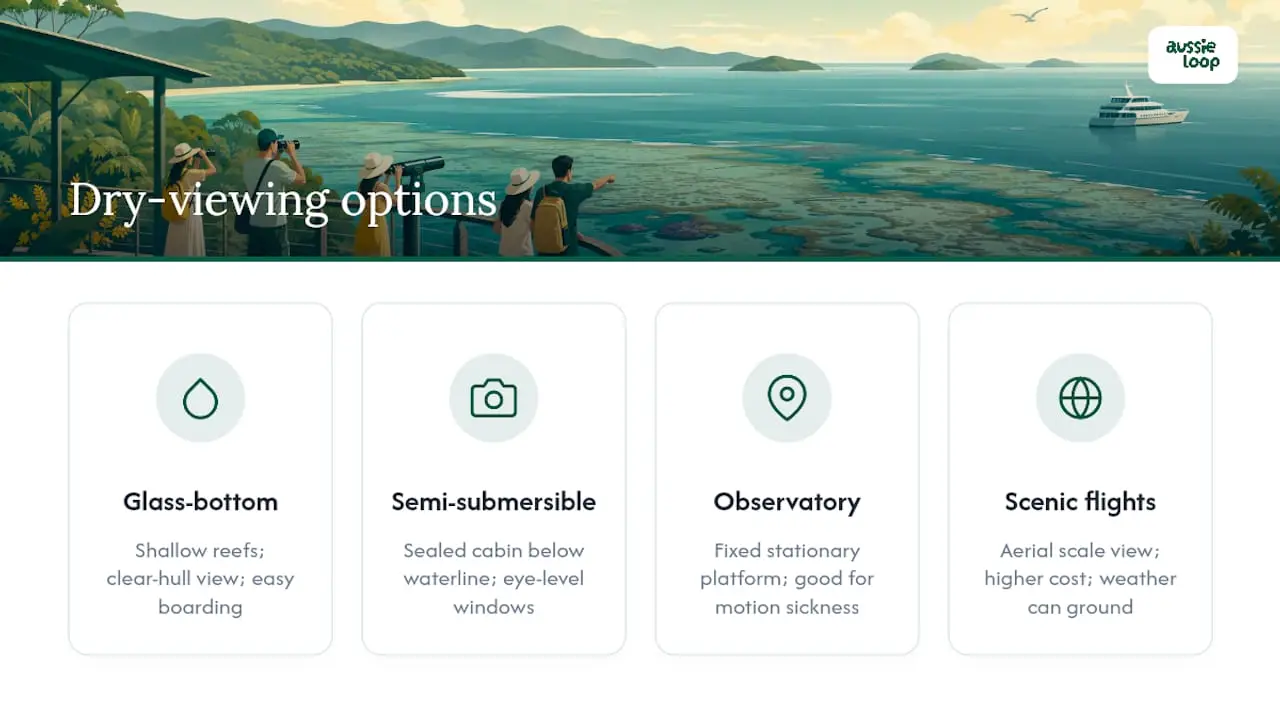
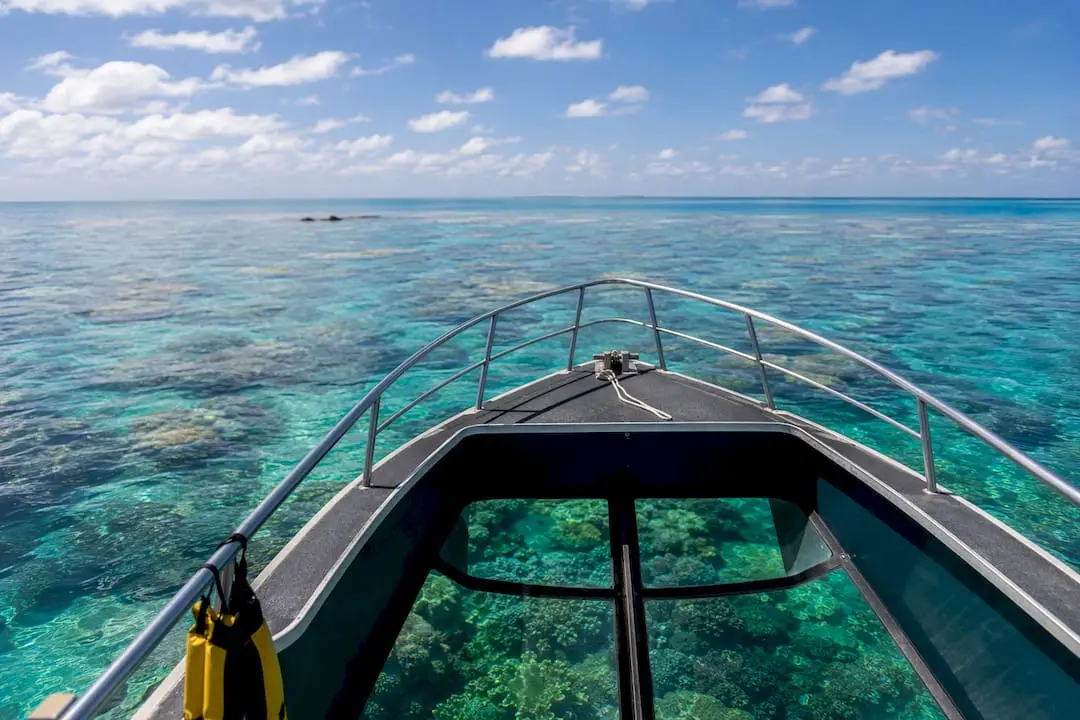
Glass-bottom boats cruise slowly over shallow coral gardens, letting you look straight down through a clear hull. Boarding is simple, usually a step from a pontoon or jetty, which makes this a strong pick for older travellers, wheelchair users transferring with assistance, and families with young kids who’d rather not sit still in a life jacket.
Semi-submersibles take you a level deeper. You sit below the waterline in a sealed cabin with large viewing windows, watching fish and coral drift past at eye level, no snorkel required. Underwater observatories, fixed structures moored at popular reef sites, offer the same style of view but from a stationary platform, which suits anyone prone to motion sickness.
Scenic flights, whether helicopter or fixed-wing, trade close-up detail for scale. From the air you see the reef’s true size and colour patterns, the kind of view no boat trip can match, though cost runs higher and weather can ground a flight at short notice.
Pro Tip: Book an operator that runs an onboard marine biologist or naturalist talk during the dry-viewing segment. You’ll get far more out of watching a parrotfish graze on coral once someone’s explained what it’s actually doing.
Can non swimmers snorkel or go in the water at the reef?
Yes, and this is where most non swimmers are surprised. You don’t need to swim to get in the water at all. Three assisted options let you experience the reef wet without ever needing to kick, tread water or hold your breath.
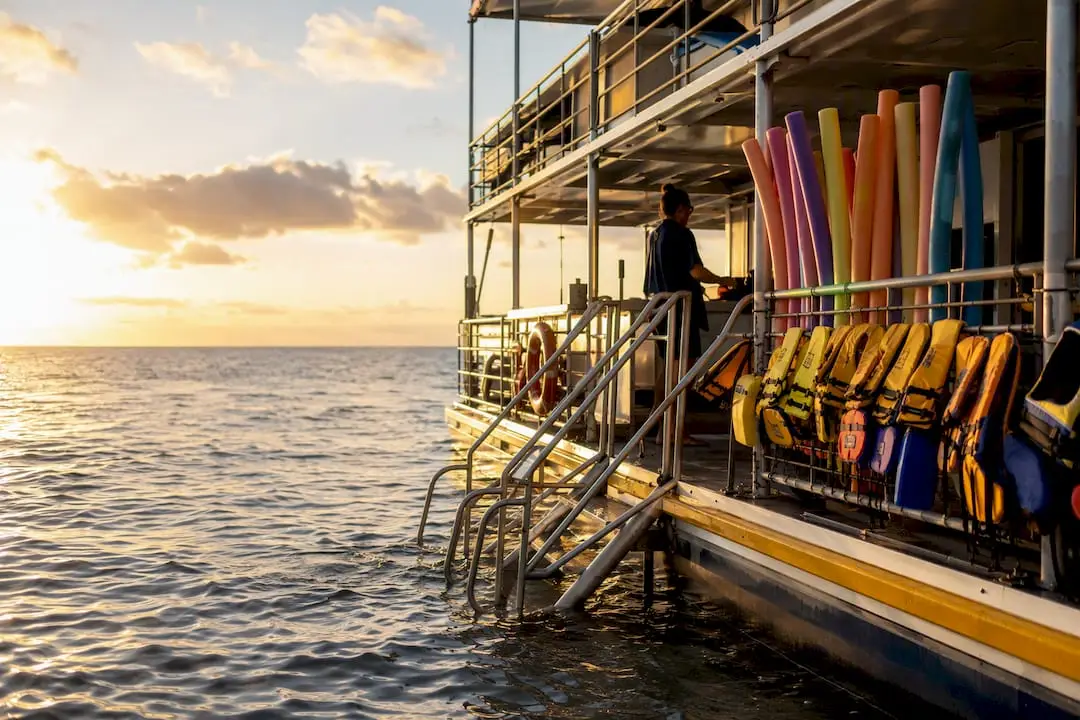
Reef pontoons, the large stationary platforms moored at outer-reef sites, are the gateway to most of these. They offer staged, easy water access, rest stations where you can float and take a break, and crew stationed specifically to help nervous entrants in and out.
Helmet diving, marketed as Seawalker on many boats, is the standout option for anyone who wants to walk the seafloor without swimming at all. You wear a helmet fed by a surface air supply, so your hair and face stay completely dry, and you simply walk along the sand at around 3.5 metres depth while a guide leads the way. Sunlover’s Seawalker program is built specifically for first-timers and non-swimmers, and there’s no ear equalisation skill required the way there is with scuba.
Guided snorkel with flotation puts you face-down in the water with a mask and snorkel, but a life jacket or flotation noodle does the work your legs would otherwise do. In-water crew stay close by, sometimes towing you gently along the reef edge so you can watch the coral without any swimming effort. Operator guides for non-swimmers note that the main requirement isn’t swimming ability at all. It’s being able to breathe steadily through a snorkel while floating still.
- Boarding ladders and assisted entry points are standard on pontoon days
- Most operators set a minimum age depending on the activity
- Seawalker and guided snorkel both typically require a basic health disclosure before you go in
How do you choose a non swimmer friendly Great Barrier Reef tour?
Not every reef tour is set up equally for non swimmers, so a short round of questions before you book saves a lot of stress on the day.
- Ask about flotation aids. Confirm life jackets, noodles or flotation rings are provided free, not as a paid extra.
- Ask about in-water staff ratios. A boat with one crew member watching forty snorkellers isn’t going to notice if you’re struggling.
- Ask what medical disclosure is required. Legitimate operators ask about heart conditions, asthma and mobility before you board, not after.
- Ask how boarding works. If you have limited mobility, confirm there’s a ramp, gangway or assisted transfer, not just a ladder.
- Ask about stinger suits in season. During stinger season, protective suits should be offered as standard, not an afterthought.
- Ask if there’s an interpretive talk or marine biologist onboard. This is a strong sign the operator invests in the whole experience, not just transport.
On price, expect half-day dry-viewing or pontoon trips from Cairns or Port Douglas to sit at the lower end, with full-day outer-reef pontoon days costing more once you add helmet diving or scenic flight upgrades. Red flags include no safety briefing before departure, no flotation aids visible on the pontoon, vague answers about medical checks, and platforms so crowded that supervision looks token.
The simplest decision rule: match the viewing method to your actual comfort level, not what sounds most adventurous online. If you’re nervous in open water, choose dry viewing or Seawalker before you choose guided snorkelling. Aussie Loop’s Great Barrier Reef tour comparison breaks down outer reef, inner reef and island departures side by side if you want to weigh all three at once.
What accessibility and health checks matter before you book?
The Great Barrier Reef Marine Park Authority sets out responsible reef practices that every operator is expected to promote, covering both visitor safety briefings and reef protection behaviour like not touching coral or standing on it. You’re entitled to a proper safety briefing before you go anywhere near the water, dry viewing included.
- Ask about assisted boarding if you use a wheelchair or have limited mobility. Ramps and gangways vary between boats.
- Disclose heart, respiratory or balance conditions when asked. Operators need this to allocate the right activity and supervision.
- Check seasickness risk honestly. Longer outer-reef transfers can be rough, and a dry-viewing pontoon day is gentler than an open-water snorkel trip.
- During stinger season (roughly November to May), confirm stinger suits are supplied, since this applies to guided snorkelling as much as any other in-water activity.
Pro Tip: Pack reef-safe sunscreen, a motion sickness tablet if you’re prone to it, and a laminated card with any medical details in your daypack, easy for crew to find if you need help.
What does a typical non swimmer reef day actually involve?
A half-day trip usually means an early departure from Cairns or Port Douglas, roughly 90 minutes cruising to the outer reef, then two to three hours at a pontoon or on a glass-bottom boat before heading back. Inclusions typically cover morning tea, a light lunch, and a short reef talk from crew.
A full-day trip stretches that pontoon time out, often six or more hours on the reef, with the option to add Seawalker or guided snorkel with flotation on top of the standard dry viewing. Lunch and at least one interpretive talk are usually built in, alongside the dry-viewing basics.
- Seawalker or helmet dive add-ons: typically an extra cost on top of the base pontoon fee
- Scenic flights: sold separately, often as a standalone half-day or a bolt-on before/after your boat trip
- Reef photo packages: a common optional extra crew will offer onboard
Departure logistics matter more than most people expect. Cairns has the widest range of operators and the shortest transfer times to outer-reef pontoons, while Port Douglas trips often run slightly longer but reach quieter reef sites. Aussie Loop’s guide to Port Douglas versus Cairns is worth a read if you haven’t picked a base yet, and Aussie Loop’s half-day snorkelling tour listing from Cairns shows what a typical departure window and inclusion list looks like in practice.
Why we point non swimmers toward vetted, curated tours
I’ve watched enough reef bookings go sideways to know the gap isn’t ability, it’s information. Non swimmers rarely lack the confidence to get on a boat. They lack a reliable way to tell which operators actually deliver flotation aids and proper briefings versus which ones just mention it in the fine print. That’s the filter Aussie Loop applies before any tour makes the list: safety briefings, genuine flotation provision, and an onboard naturalist worth listening to.
Book a non swimmer friendly reef trip through Aussie Loop
Aussie Loop exists so you don’t have to cross-check a dozen operator websites to find out which ones actually cater to non swimmers properly. Every tour listed has been checked for the details that matter here: flotation aids, accessible boarding, stinger protection in season, and crew who run a real safety briefing rather than a rushed announcement.

You can filter listings by accessibility need and compare half-day pontoon trips against full-day outer-reef days without digging through fine print, and verified guest feedback flags which operators genuinely support nervous or non-swimming guests. Aussie Loop covers Cairns departures directly and near-shore alternatives too, including a Fitzroy Island day tour for anyone who’d rather skip a long ocean transfer altogether, since Fitzroy Island’s shallow beach access and boardwalks make it a gentle introduction to reef country. Start by browsing the full Australian tour listings and searching for non-swimmer-friendly reef options, or head to the Aussie Loop homepage to see what’s currently available for your travel dates.
Sources
- Responsible reef practices — GBRMPA
- How to see the Great Barrier Reef without getting wet | Queensland
- Seawalker helmet dive on the Great Barrier Reef — Sunlover
FAQ
Can non swimmers snorkel in the Great Barrier Reef?
Yes. Guided snorkel trips fitted with life jackets, flotation noodles and in-water crew support let non swimmers float face-down and watch the coral without needing to kick or tread water.
How do you see the Great Barrier Reef if you can’t swim?
Dry-viewing options like glass-bottom boats, semi-submersibles and underwater observatories, plus helmet diving through Seawalker, let you experience the reef closely with zero swimming required.
What is the biggest threat to the Great Barrier Reef?
Coral bleaching driven by rising ocean temperatures is widely recognised as the reef’s most serious long-term threat, which is part of why the GBRMPA’s responsible reef practices ask every visitor to avoid touching or standing on coral.
Are people allowed to swim in the Great Barrier Reef?
Yes, swimming is permitted at most reef sites, though operators enforce local rules around stinger nets, protective suits in season, and designated swimming zones for safety.
Does Aussie Loop list tours suitable for non swimmers?
Yes. Aussie Loop’s curated tour listings let you filter for accessibility and flotation support, covering Cairns departures and near-shore island options alike.