Everything you need to know before visitng the Great Barrier Reef for the first time!
???? Cairns, Far North Queensland · ???? 8 min read · ???? Updated July 2026
Quick answer

Visiting the Great Barrier Reef for the first time is easier than most people expect — and better than most people dare to hope. The reef stretches over 2,300 kilometres along Queensland’s coast and is home to more than 1,500 species of fish and 2,900 individual reefs. You access it by boat from Cairns or Port Douglas, with outer reef sites around 60 to 90 minutes offshore. You do not need to know how to dive. You do not need prior snorkelling experience. All gear is provided. The key decisions before you go are which tour type to book, which time of year gives you the best conditions, and whether to take seasickness medication. Get those three right and your first visit to the Great Barrier Reef will be everything you hoped for.
You cannot wade in from the beach: what visiting the Great Barrier Reef actually means
The most important thing to understand before visiting the Great Barrier Reef for the first time: it is not something you walk into from a beach. The reef systems closest to shore are inner reef sites and islands, which are accessible in 30 to 45 minutes by boat. The outer reef — where the coral formations are most dramatic and the visibility reaches 15 to 20 metres — sits 60 to 90 minutes offshore by high-speed catamaran from Cairns or Port Douglas.
Every first-time visitor to the Great Barrier Reef books through a tour operator. There is no independent reef access without a boat. The good news: the range of tours available from Cairns is enormous — small group snorkelling boats, large pontoon platforms, dive-certified trips, liveaboards, scenic flights, and glass-bottom boat options for non-swimmers. There is a right option for every type of visitor.
The reef is one of the great natural wonders of the world. It also requires 90 minutes on the open Coral Sea to reach it. These two facts go together. Know both before you book.
When to visit the Great Barrier Reef for the first time
Timing matters for visiting the Great Barrier Reef. The reef is open year-round but the experience varies significantly by season.
Best time for first-time visitors: May to October
The dry season from May to October is the best window for visiting the Great Barrier Reef for the first time. Water temperatures sit around 22 to 26°C — warm enough without a wetsuit but not oppressively hot. Visibility on the outer reef regularly reaches 20 metres from June through October as winter storms clear the water. No stinger concerns at coastal beaches during this period. Seas are calmer, making the boat crossing more comfortable. June and July are peak months for dwarf minke whale encounters at the Ribbon Reefs north of Cairns — one of the few places on earth where you can swim with them.
July is the busiest and most popular month overall. Book reef tours at least 6 to 8 weeks in advance in July. May and September offer near-identical conditions with noticeably fewer people and better prices.
Visiting the Great Barrier Reef in the wet season: November to April
Stinger season runs November to May. During this period, box jellyfish and Irukandji jellyfish are present in coastal and some reef waters. All tour operators provide full-body stinger suits — wearing one is not optional during stinger season. The outer reef is significantly less affected by stingers than coastal areas, but the suits are standard practice. Water temperatures reach 28 to 29°C in the wet season, meaning no wetsuit required. Marine life activity is high as fish begin to spawn. Visibility on outer reef sites is often still excellent — rain falls mainly over land and does not reach the offshore reef systems.
The Great Barrier Reef Marine Park Authority’s visitor guide has current stinger season information and reef-responsible practices every first-time visitor should read before booking.
Seasonal wildlife highlights for visiting the Great Barrier Reef
- Dwarf minke whales: June to late July at the Ribbon Reefs north of Cairns — one of the only places on earth you can snorkel with them
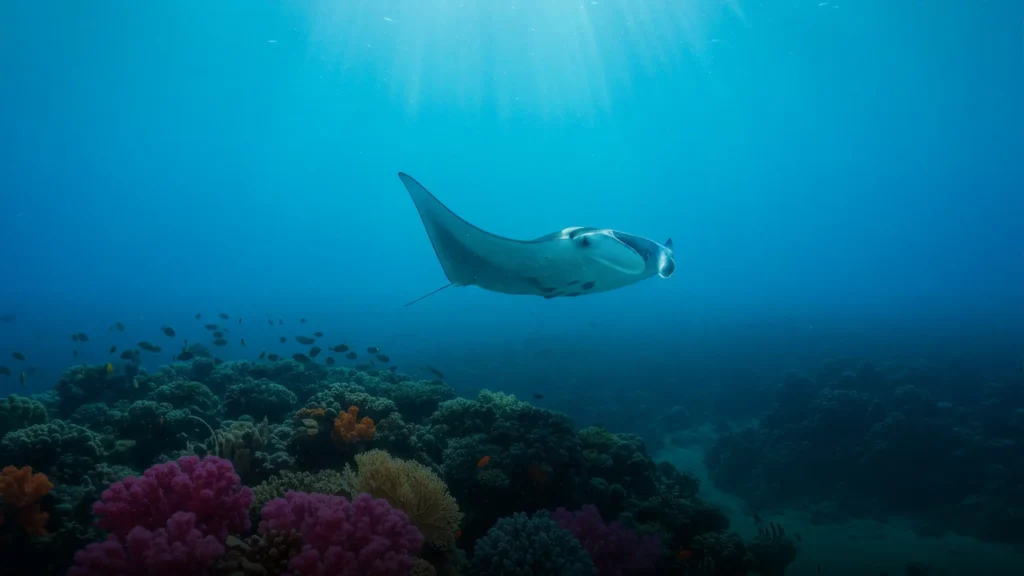
- Manta rays: May to August at various outer reef sites
- Humpback whales: June to September migrating along the Queensland coast
- Coral spawning: October to December, typically a few nights after the full moon
- Sea turtles: Year-round at most reef sites, most active November to March nesting season
Choosing your first Great Barrier Reef tour
The single most important decision before visiting the Great Barrier Reef for the first time is which type of tour to book. Get this right and everything else falls into place.
Outer reef day trips: recommended for first-time visitors

Outer reef day trips are the right choice for the vast majority of first-time visitors to the Great Barrier Reef. You board a high-speed catamaran at the Reef Fleet Terminal in Cairns at around 8am, travel 60 to 90 minutes offshore, visit two reef sites, and get 3 to 4 hours in the water before returning by 5pm. All snorkelling gear is included. In-water crew assist beginners. Flotation aids, noodle belts, and snorkel vests are provided for those who want them. Prices run from 180 to 280 AUD per adult for snorkelling, with introductory dive options available for first-time divers from around 100 AUD additional.
Our GBR Half Day Snorkelling tour runs a maximum of 40 snorkellers per trip with a Master Reef Guide onboard — one of the best small-group outer reef options in the catalogue for first-time visitors who want proper guidance rather than a crowd.
Island day trips: best for families and non-swimmers
Green Island and Fitzroy Island both offer fringing reef accessible directly from the beach without a long boat crossing. Turtles are common at both. Coral quality is below the outer reef but the experience is more accessible and calmer — ideal for families with young children, elderly visitors, or anyone anxious about open water. Ferry returns start from around 76 AUD for Fitzroy Island. Both islands have glass-bottom boat options for non-swimmers.
Liveaboards: for serious divers visiting the Great Barrier Reef
For certified divers, a liveaboard changes the entire experience of visiting the Great Barrier Reef. You sleep on the boat, dive at sunrise and sunset before the day-trip boats arrive, and access sites that are never reached on a standard day trip. Two to three night trips start from around 700 AUD per person including meals and dives. PADI Open Water certification can be completed in 3 to 4 days on the reef for around 400 to 500 AUD — an incredible setting for a first certification.
What to expect on the day of your Great Barrier Reef visit
The boat crossing
The Coral Sea can be choppy. This is not a lake crossing — it is open ocean. If you are prone to motion sickness at all, take medication the night before your visit to the Great Barrier Reef, not the morning of. Most experienced guides recommend Kwells or Travacalm taken the evening before departure. Sitting on the outer deck in fresh air and keeping your eyes on the horizon both help. Larger vessels have stabilisers that significantly reduce rolling. Most outer reef tours use high-speed catamarans that are stable in normal conditions — but on a rough day, even seasoned travellers can feel it.
At the reef site
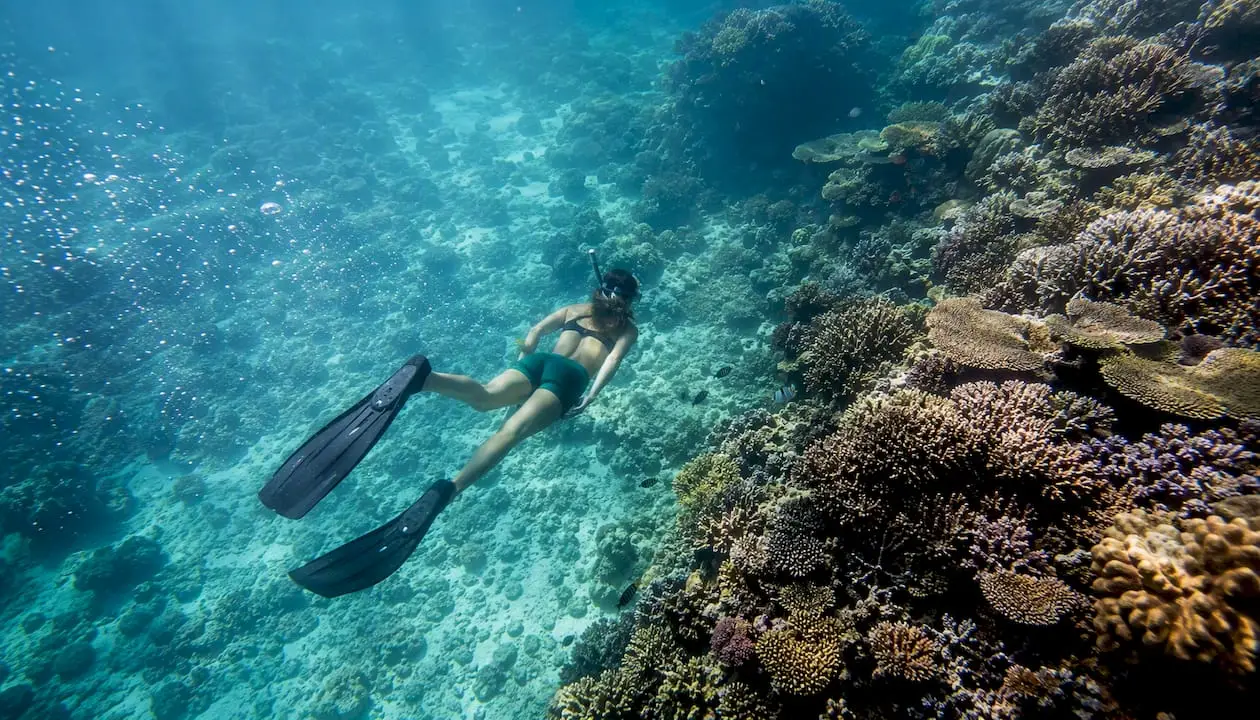
You will receive a safety briefing before entering the water on your first Great Barrier Reef visit. Listen carefully — the crew explain reef etiquette (do not touch coral, do not stand on the reef, do not chase marine life), water entry and exit procedures, and how to use your snorkel equipment properly. If you have never snorkelled before, most outer reef tours offer a practice area in calm water before moving to the main reef site.
Mornings are generally calmer and clearer than afternoons on the water. If your tour visits two reef sites, the first site is typically in better condition. Spend your best energy and attention on the first site and use the second for a more relaxed swim.
What you will see visiting the Great Barrier Reef for the first time
On a clear-water outer reef day, first-time visitors typically see hard and soft coral formations in multiple colours, large schools of parrotfish, surgeonfish, and butterfly fish, Maori Wrasse (large, friendly, and curious), sea turtles (common at most sites), reef sharks (small, not dangerous, and often seen resting on the sand), giant clams, sea cucumbers, and nudibranchs. Marine life sightings vary by site and season — no tour can guarantee specific encounters. The honest message from every experienced reef guide: go with open eyes and an open mind. The reef surprises you every time.
The reef is not the photos. The photos do not capture the scale or the sound or the feeling of being inside it. Your first Great Barrier Reef visit will exceed what you imagined.
What to pack for visiting the Great Barrier Reef for the first time
- Reef-safe sunscreen. Standard sunscreens containing oxybenzone and octinoxate damage coral. Reef-safe alternatives are available at most Cairns pharmacies and are mandatory on most reputable tours. Apply before you leave your accommodation — not on the boat.
- Swimwear and a rash vest or stinger suit. During stinger season (November to May), operators provide full-body stinger suits. Year-round, a rash vest adds sun protection on the surface.
- Seasickness medication. Take it the night before, not the morning of.
- A towel and change of clothes. You will be wet for hours. Boats have freshwater showers on board.
- Water and snacks. Most outer reef tours include lunch and morning tea, but having water and something to eat during the crossing helps with seasickness.
- A waterproof phone case or underwater camera. Most tours have professional photographers on board — underwater photos are available for purchase at the end of the day. If you want your own shots, a waterproof case is the simplest option.
Responsible reef visiting: what first-time visitors need to know
The Great Barrier Reef is a UNESCO World Heritage Area and a living ecosystem under genuine environmental pressure. Coral bleaching events in recent years have affected parts of the reef significantly. Visiting responsibly matters.
- Never touch the coral. Even gentle contact with fins or hands damages coral polyps that take years to regrow.
- Never stand on the reef. It is alive. Even what looks like dead coral may be recovering.
- Do not chase or handle marine life. Sea turtles, reef sharks, and fish should be observed, not pursued or touched.
- Use reef-safe sunscreen only. Chemical sunscreens harm coral and are increasingly banned by responsible operators.
- Take nothing. No shells, no coral fragments, no sand. It is illegal to remove anything from the Great Barrier Reef Marine Park.
The Great Barrier Reef Marine Park Authority’s Eye on the Reef program allows visitors to log marine life sightings and contribute to real reef monitoring — a genuinely useful way to give something back on your first visit.
FAQs
Do you need to know how to swim to visit the Great Barrier Reef for the first time?
Basic swimming ability is recommended for snorkelling tours, but most outer reef operators provide flotation aids, snorkel vests, and noodle belts that make the experience accessible to weak swimmers. Non-swimmers are well catered for on pontoon tours with glass-bottom boat rides, semi-submersible tours, and underwater observatory platforms that give genuine reef views without entering the water. Check with your specific operator about their minimum swimming requirements before booking.
What is the best month to visit the Great Barrier Reef for the first time?
May to October is the best period for visiting the Great Barrier Reef for the first time. June through August offers the clearest water visibility, with outer reef sites regularly reaching 20 metres. No stingers at coastal beaches during this period. July is the peak month so book ahead. May and September offer near-identical conditions with smaller crowds and better prices. April is a transition month with good conditions and low prices — an underrated window for first-time visitors.
What should I do about seasickness when visiting the Great Barrier Reef?
Take motion sickness medication the evening before your reef tour, not the morning of. Most pharmacies in Cairns stock Kwells and Travacalm — both are effective. On the day, sit on the outer deck in fresh air and keep your eyes on the horizon. Avoid reading or looking at your phone during the crossing. Eat a light meal before boarding and stay hydrated. If you are particularly prone to seasickness, consider choosing a larger vessel with stabilisers or booking a reef island tour to a closer site like Fitzroy Island.
Is it safe to visit the Great Barrier Reef for the first time as a non-diver?
Yes, completely. Snorkelling is the most popular activity for first-time Great Barrier Reef visitors and requires no certification or prior experience. All gear is provided on every reef tour. In-water crew assist beginners and there is always a safety briefing before entering the water. For those who want to try diving, most outer reef day tours offer introductory dives with an instructor who stays with you at all times — no certification required. A full PADI Open Water certification can be completed on the reef in 3 to 4 days for around 400 to 500 AUD.
How much does visiting the Great Barrier Reef for the first time cost?
Outer reef snorkel day trips from Cairns range from 180 to 280 AUD per adult, typically including snorkel gear, lunch, and morning tea. Introductory dive add-ons cost around 100 AUD additional. Island day trips to Fitzroy Island start from 76 AUD return for the ferry. Liveaboard diving trips start from around 700 AUD for two nights including meals and dives. A PADI Open Water certification course on the reef costs approximately 400 to 500 AUD for 3 to 4 days. The Environmental Management Charge (reef tax) of 7 AUD per person is included in most tour prices.
What sunscreen should I use when visiting the Great Barrier Reef?
Use reef-safe sunscreen only when visiting the Great Barrier Reef. Standard sunscreens containing oxybenzone and octinoxate are harmful to coral and banned by many responsible tour operators. Reef-safe alternatives using mineral-based filters (zinc oxide or titanium dioxide) are available at Cairns pharmacies and most supermarkets. Apply sunscreen at your accommodation before you leave — not on the boat — to allow it to absorb before you enter the water.
Every reef tour on Aussie Loop is handpicked for first-time visitors and experienced snorkellers alike. No paid placements. No sponsored listings. Just the tours worth your one day on the water.
Explore Great Barrier Reef tours