May to October is Broome’s dry season, and it’s the answer most travellers are looking for. Warm days, low humidity, and reliably open roads make it the best window for swimming, tours and fishing. The catch: mid-June to mid-August is peak season, so prices climb and popular tours book out fast.
- Best months: May–October (dry season)
- Peak crowds: Mid-June to mid-August
- Best value: April and October (shoulder months)
Key Takeaways
The dry season from May to October offers Broome’s most reliable weather, but booking early matters most during the mid-June to mid-August peak.
| Point | Details |
|---|---|
| Best overall window | May to October delivers warm days, low humidity, and open roads and attractions. |
| Peak crowd period | Mid-June to mid-August brings the highest prices and tightest tour availability. |
| Shoulder season value | April and October balance good weather with lower prices and thinner crowds. |
| Safety timing | Box jellyfish are present roughly October to May; check local advisories before swimming. |
| Plan your tour dates | Aussie Loop curates season-matched Broome tours, from dry-season flights to shoulder-month fishing trips. |
Table of Contents
- Dry season (May–October): why it’s Broome’s best time to visit
- Wet season (November–April): what the monsoon actually brings
- When is Broome busiest, and how far ahead should you book?
- Timing your trip around Broome’s biggest events and wildlife
- How long should you stay, and what should you pack?
- What do the official climate numbers say?
- Sources
- FAQ
Dry season (May–October): why it’s Broome’s best time to visit
This is when Broome shows off. Daytime temperatures sit comfortably between 17°C and 30.8°C, skies stay clear, and BOM’s climate records show mean rainfall dropping to as little as 1.5–18.1mm across June to September. That’s essentially no rain for weeks at a stretch. Humidity drops away too, so the heat feels manageable rather than sticky.
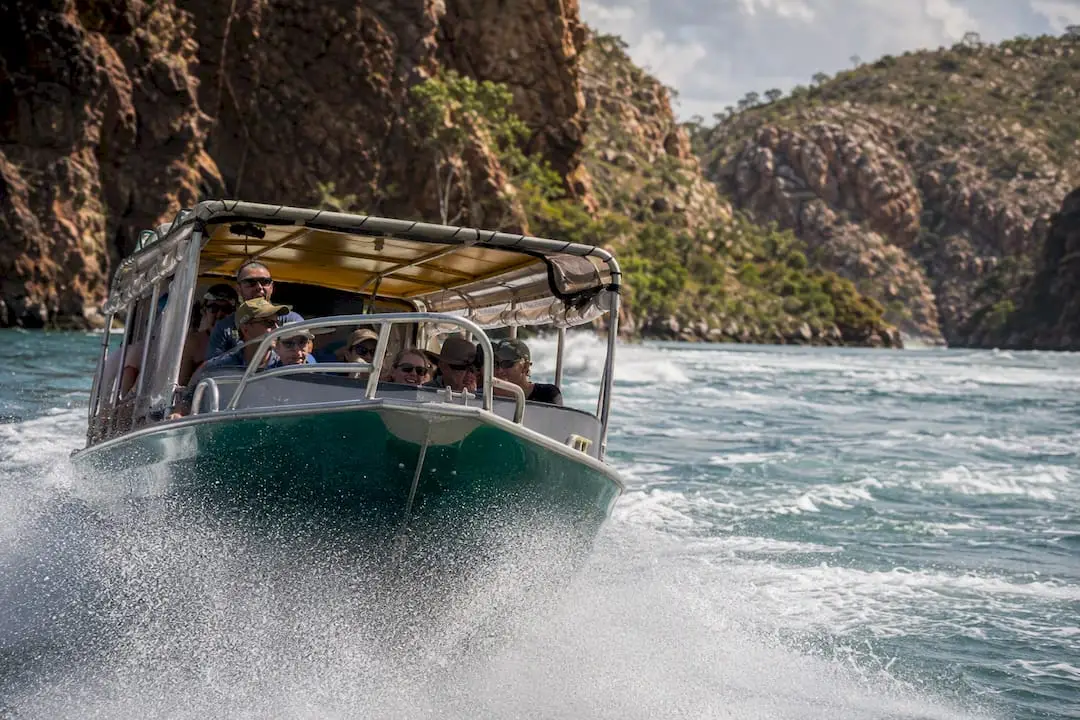
Every road, tour operator and beach access point runs at full capacity during these months. Cable Beach camel rides, Horizontal Falls scenic flights and reef fishing charters all operate without the disruption a downpour or flooded track can cause in the wetter months.
What to plan for:
- Swimming and snorkelling in calm, clear conditions
- Fishing charters and boat tours (seas are far calmer than in the wet)
- Walking trails and 4WD coastal drives without mud or closures
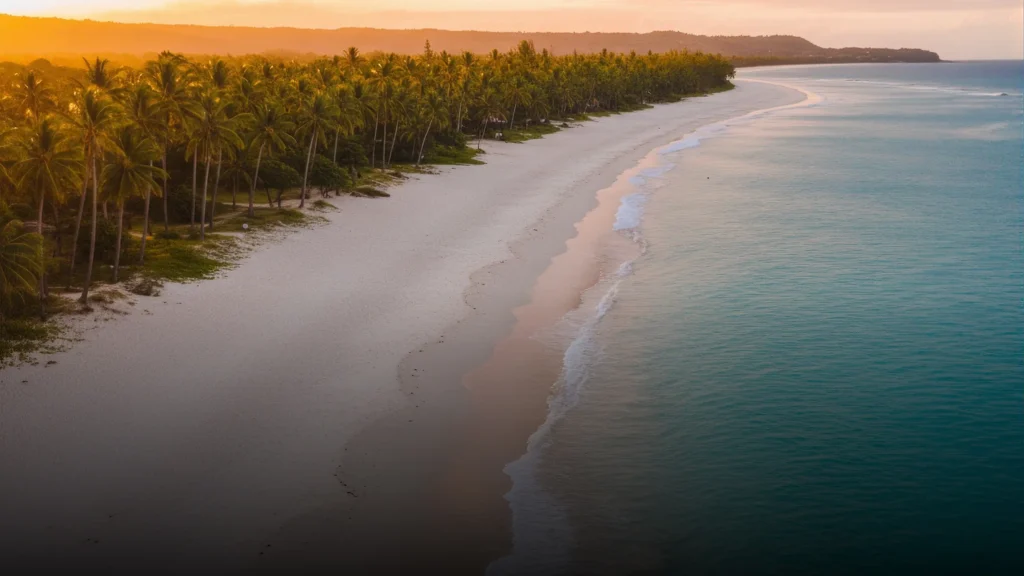
- Sunset camel rides on Cable Beach with virtually guaranteed clear skies
Pack layers. Nights cool down noticeably, especially in July, so bring something warmer than you’d expect for a tropical destination. Daylight runs a fairly consistent 11 to 12 hours year round, giving you a solid window for full-day tours.
Pro Tip: Book your Horizontal Falls or Cable Beach camel tour a few days ahead even outside peak season. Operators run smaller boats and fewer daily departures than you’d expect for such a popular destination.
Wet season (November–April): what the monsoon actually brings
The wet season flips the script entirely. Heat and humidity climb, afternoon storms roll in most days, and BOM data shows monthly rainfall reaching around 200.4mm in January and 177.0mm in February, part of an annual wet-season total near 463.7mm concentrated in these six months. January to March is core cyclone season, bringing genuine flood and storm risk in some years.
It’s not all downside. Fewer tourists means quieter beaches, cheaper accommodation, and a landscape that turns dramatically green and alive with the sound of storms rolling off the Indian Ocean.
- Expect heavy, short bursts of rain rather than constant drizzle
- Some unsealed roads and outback tracks can flood or close temporarily
- Cyclone watches are issued by the Bureau of Meteorology, so check warnings before booking
- Lightning displays over the ocean are a genuine spectacle worth timing an evening around
If you’re chasing solitude and don’t mind a flexible itinerary, the wet season rewards travellers willing to work around the weather rather than fight it.
When is Broome busiest, and how far ahead should you book?
Mid-June to mid-August is Broome’s busiest stretch, and it shows in everything from flight prices to campsite availability. Tourism Australia flags this window as peak season, when accommodation and popular tours fill fastest and rates sit at their highest point of the year.
If you want in during peak weeks, plan ahead:
- Book accommodation 2–3 months out for July school holiday periods
- Reserve popular tours (Horizontal Falls, camel rides) 3–4 weeks ahead minimum
- Lock in flights early, since seat availability tightens noticeably by May
April and October sit either side of the crush. You get dry-season weather without dry-season crowds, and prices ease back toward normal. For travellers who value comfort over cost savings and don’t mind sharing the beach, these shoulder months are hard to beat.
Timing your trip around Broome’s biggest events and wildlife
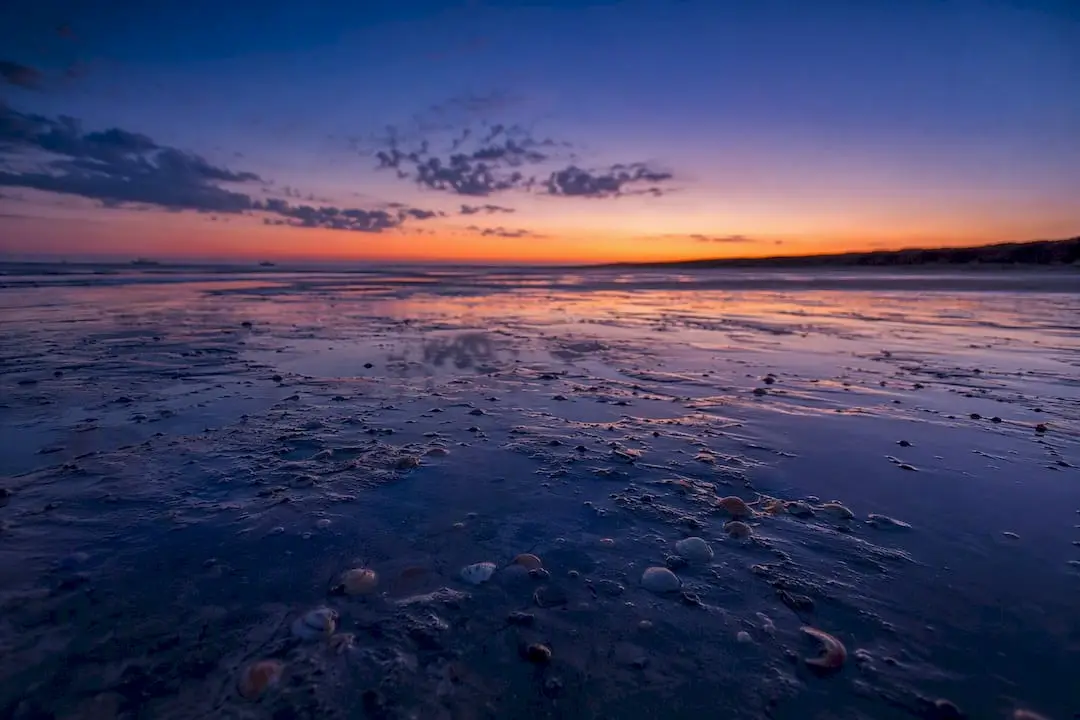
Staircase to the Moon is Broome’s signature spectacle: an optical illusion where the rising full moon reflects off exposed tidal mudflats in Roebuck Bay, creating a staircase effect stretching to the horizon. It only happens on specific full-moon nights between March and October, so check the exact dates before you book, not just the month.
Other seasonal windows worth building a trip around:
- March to October: Staircase to the Moon viewing nights (low spring tide plus full moon)
- Dry season months: best conditions for reef and reef-edge wildlife spotting
- Year-round, tide-dependent: fishing success shifts with tidal cycles rather than season alone
Locals lean on more than a calendar here. The Yawuru people use a six-season system tied to plant flowering, animal behaviour and tidal patterns, which often pins down the right week for fishing or shellfish gathering more precisely than “wet” or “dry” ever could.
How long should you stay, and what should you pack?
Four nights covers Broome’s essentials comfortably: Cable Beach, a Staircase to the Moon viewing if the dates line up, and one signature tour like Horizontal Falls or a Dampier Peninsula day trip. Stretch to six or seven nights if you want to add a fishing charter, a pearl farm tour, or time to actually relax on the sand rather than rush between bookings.
Swim safety needs real attention here. Box jellyfish are present in Broome’s waters roughly October through May, broadly overlapping the warmer, wetter months, so check local signage and lifeguard advice before swimming outside patrolled areas. Crocodile awareness also applies year round in tidal waterways and river mouths.
Before you pack:
- Dry season: light layers, a warmer layer for cool nights, reef shoes, broad-brim hat
- Wet season: quick-dry clothing, a light rain jacket, waterproof phone case
- Any season: reef-safe sunscreen and a reusable water bottle
- Check the Shire of Broome’s website for current road and attraction closures before heading out
Tides run Broome’s clock more than most destinations. Some beaches and 4WD routes are only accessible at specific tide stages, so a tide chart matters as much as a weather forecast.
What do the official climate numbers say?
BOM’s long-run averages for Broome Airport confirm what the seasonal pattern suggests: dry months are drier and cooler than most people expect from a tropical destination, while wet months bring both heat and heavy rain in the same stretch.
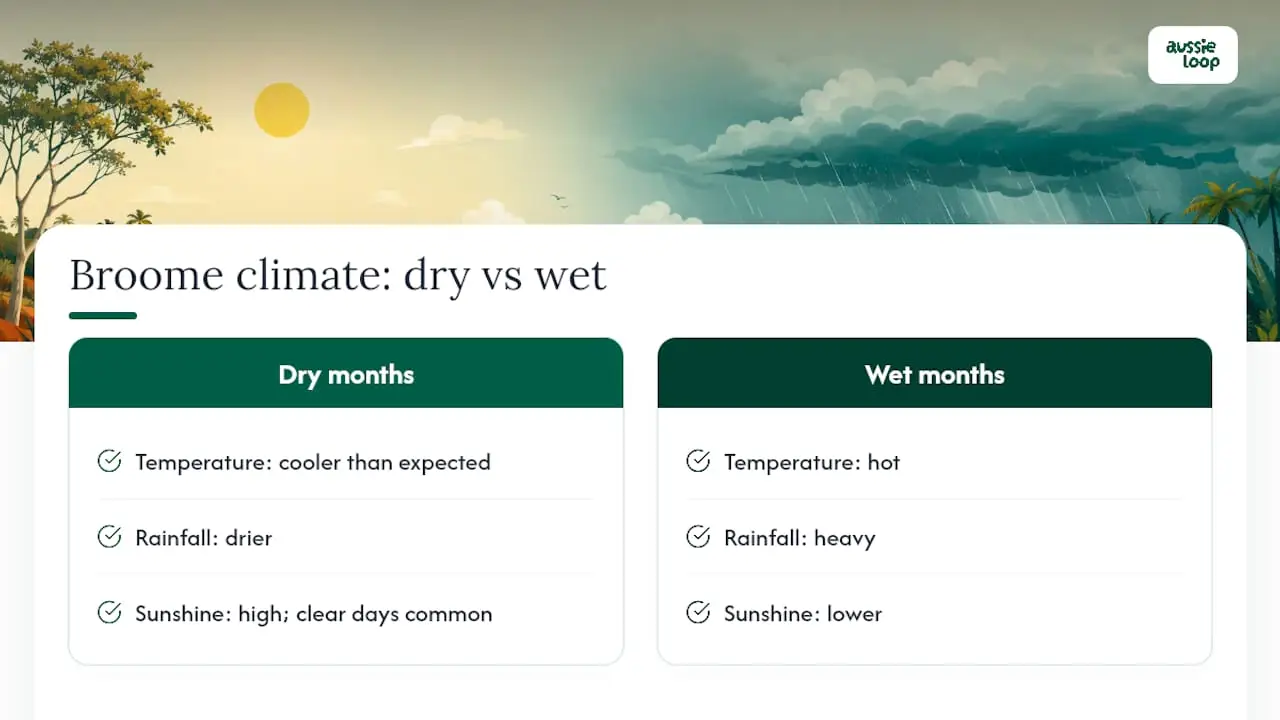
These figures come from BOM’s Broome Airport climate tables, which also track sunshine hours, running highest through the dry season when clear days are the rule rather than the exception.
A traveller’s take on choosing your window
Visiting during the dry season window rewards planners who book early and accept the crowds that come with reliable weather. The real skill isn’t picking a month. It’s syncing your dates with tides and moon phases, the way locals always have.
[Author credentials and Broome trip case studies to be inserted here]
Find the right Broome tour for your travel dates
Picking the right month is only half the job. Matching it to a tour that actually suits the season is where most travellers waste time scrolling generic listings. Aussie Loop cuts that search down by curating experiences with local operators who know exactly which weeks work best for reef access, tide-dependent beaches, and wildlife windows.
Whether you’re chasing a July peak-season Horizontal Falls flight or a quieter April shoulder-season fishing charter, Aussie Loop’s curated tour listings are chosen by locals rather than pulled from a generic directory. Browse the full range of Australian experiences and check availability for your travel dates now.
Sources
- Climate statistics for Australian locations — Broome Airport averages (BOM)
- Guide to Broome — Tourism Australia
FAQ
Is Four Nights in Broome Enough?
Four nights covers the essentials, including Cable Beach and one major tour like Horizontal Falls. Stretch to six or seven nights if you want a fishing charter or a Staircase to the Moon viewing built into your itinerary.
Is Crime a Serious Concern in Broome?
Broome is a small, tourism-focused town with no unusual crime patterns compared to other Australian regional centres; standard travel precautions, like securing valuables and using well-lit areas at night, are sufficient.
When Can’t You Swim in Broome?
Box jellyfish are present roughly October through May, overlapping the warmer wet-season months, so check local signage and swim only in patrolled or advised areas during this period.
What Is the Wet Season Like in Broome?
The wet season runs November to April, bringing high heat, humidity, and most of Broome’s annual rainfall, with January to March carrying the highest cyclone risk.
When Should I Book if I Want to Visit During Peak Season?
Book accommodation two to three months ahead for July school holidays, and reserve popular tours like Horizontal Falls three to four weeks out, since mid-June to mid-August availability tightens quickly.