If you have one clear day and want easy, family-friendly swimming close to Darwin, choose Litchfield. If you have two to three days and want deep culture, wetlands and wildlife, choose Kakadu. Got four days or more? Do both, in that order.
Here is the quick map we give every traveller who asks us this at Aussie Loop:
- Day trip, family swim, no 4WD: Litchfield National Park, sealed roads, swimming holes within a short walk of the car park.
- Wildlife, rock art, billabong cruises: Kakadu National Park, budget at least two nights.
- Multi-day adventurer with a 4WD: Kakadu’s remote falls (Jim Jim, Twin Falls) plus a Litchfield stopover on the drive back to Darwin.
- Short stopover, unsure which: Litchfield first, it rewards you fastest per hour invested.
Both parks answer to different authorities on the ground, NT Parks manages Litchfield’s day use and safety signage, while Parks Australia runs Kakadu as a World Heritage site with its own visitor centres and permit system. That difference in management shapes almost everything else in this comparison.
Key Takeaways
Litchfield suits short, sealed-road, swimming-focused trips, while Kakadu rewards travellers who commit two or more days to culture, wetlands and remote 4WD access.
| Point | Details |
|---|---|
| Distance from Darwin | Litchfield is about 115 km (1.5 hours); Kakadu is around 250 km (3 to 3.5 hours). |
| Vehicle needs | Litchfield’s main sites suit a 2WD; Kakadu’s Jim Jim and Twin Falls require 4WD. |
| Swimming safety | Swim only at signed, actively managed sites in either park, and check status the morning of your visit. |
| Time budget | Plan one day for Litchfield, two to three days minimum for Kakadu. |
| Booking help | Aussie Loop curates local tours and can help plan a combined Litchfield and Kakadu itinerary. |
Table of Contents
- Kakadu vs Litchfield: the practical differences that decide your trip
- Kakadu: the deep dive worth the extra drive
- Litchfield: the easy win for swimmers and families
- When can you actually swim, and how do the seasons change everything?
- Which park matches your trip, right now?
- Sample itineraries for one, two or four days
- What the conventional advice gets wrong
- Sources
- FAQ
Kakadu vs Litchfield: the practical differences that decide your trip
Distance sets the tone before you even leave Darwin. Litchfield sits about 115 km away, roughly 90 minutes by sealed road. Kakadu is a genuinely different proposition: around 250 km and 3 to 3.5 hours to reach the main hub, and once you’re inside, the park itself spans close to 20,000 square kilometres against Litchfield’s 1,500.
That size gap changes how you drive once you arrive, not just how you get there.
- Road access: Litchfield’s headline sites sit off sealed roads, fine for a standard 2WD hire car. Kakadu’s showpieces, Jim Jim Falls and Twin Falls, need a high-clearance 4WD and are seasonally closed.
- Swimming and crocodile safety: both parks carry saltwater crocodiles in their waterways, so swim only in designated, actively managed sites, never in unmarked billabongs or rivers.
- Fees: Kakadu requires a park pass, purchased online or at a visitor centre; Litchfield is currently free to enter.
- Facilities: Litchfield has basic camping and day-use areas; Kakadu offers proper towns at Jabiru and Cooinda with fuel, accommodation and two major visitor centres.
Neither park is objectively “better.” They solve different problems, and knowing which problem you actually have is most of the decision.
Kakadu: the deep dive worth the extra drive
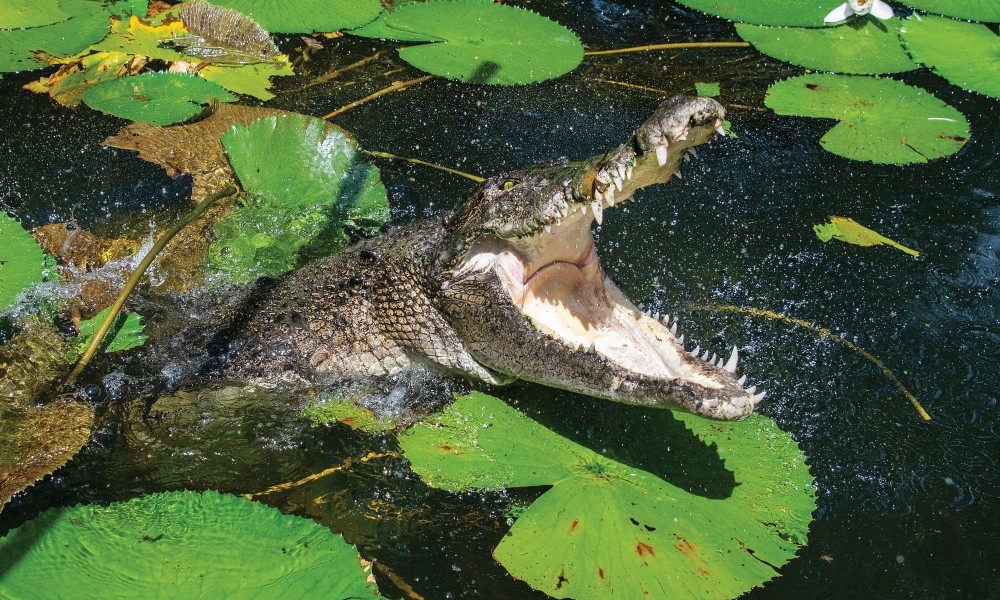
Kakadu is where you go for scale, not speed. A Yellow Water cruise at dawn puts you eye to eye with crocodiles, jabirus and brolgas across wetlands that flood into a different landscape every wet season. Ubirr and Nourlangie hold some of the oldest continuously maintained rock art galleries on Earth, with interpretive walks that take an hour but stay with you for years.
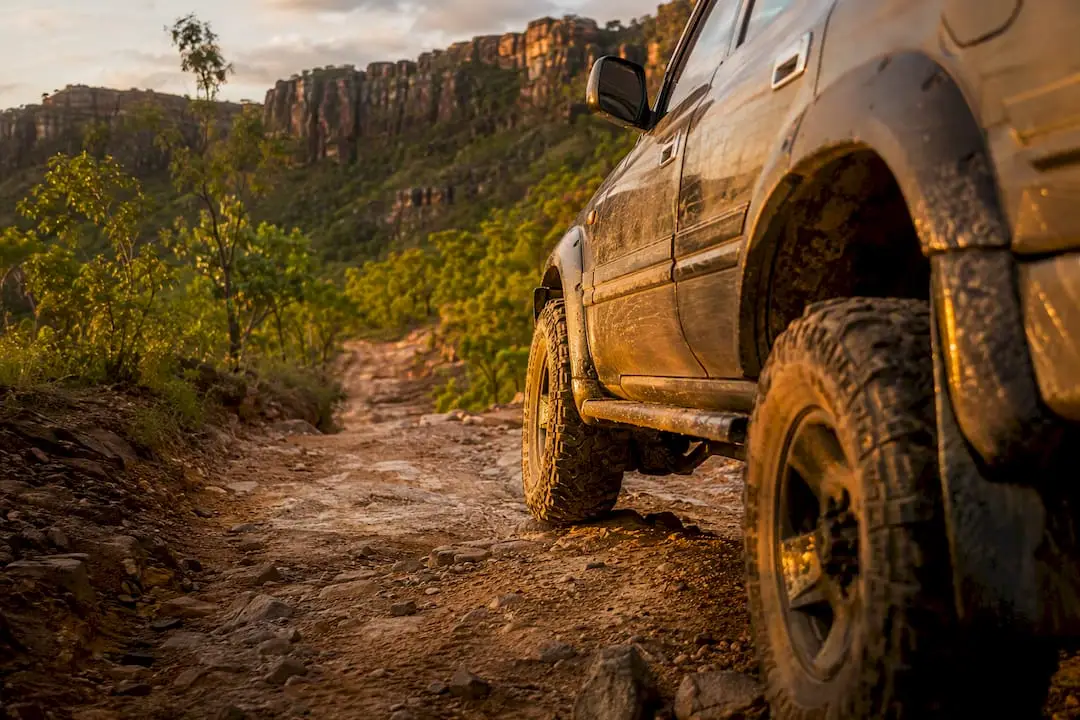
The waterfalls demand more effort. Jim Jim Falls and Twin Falls sit down 4WD tracks that close entirely in the wet season, while Maguk rewards a shorter, easier walk with a genuine swimming hole. Bowali Visitor Centre near Jabiru and the Warradjan Aboriginal Cultural Centre at Cooinda both run daily updates on road and site conditions, worth a call before you commit a whole day to a remote falls run.
- Stay in Jabiru or Cooinda; both offer fuel, food and a base for early starts.
- Budget two to three days minimum; one day barely covers Yellow Water and Ubirr.
- Wildlife spotters should prioritise dawn and dusk around the wetlands.
Pro Tip: Book your Yellow Water cruise the moment you know your dates. Dry season slots fill fast, and it’s the safest, closest look you’ll get at a saltwater crocodile in the wild.
Litchfield: the easy win for swimmers and families
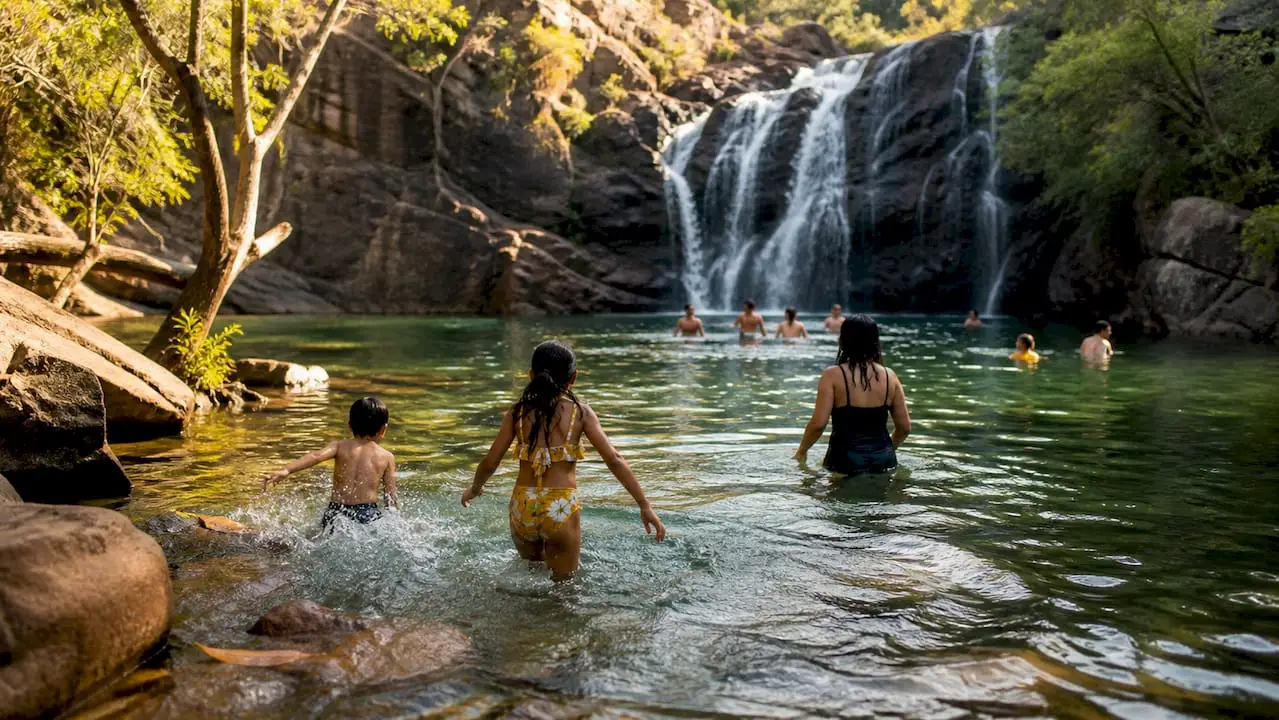
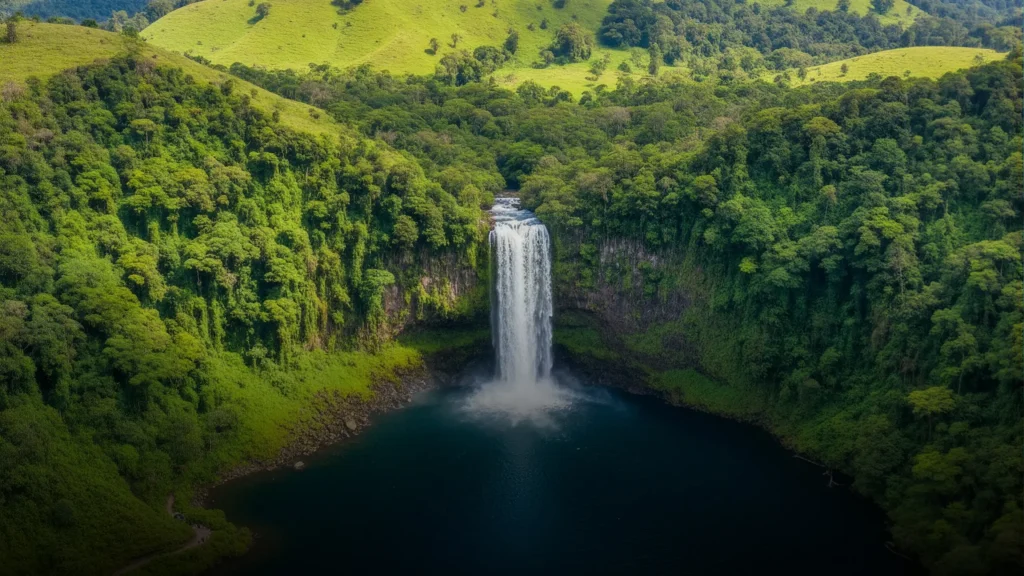
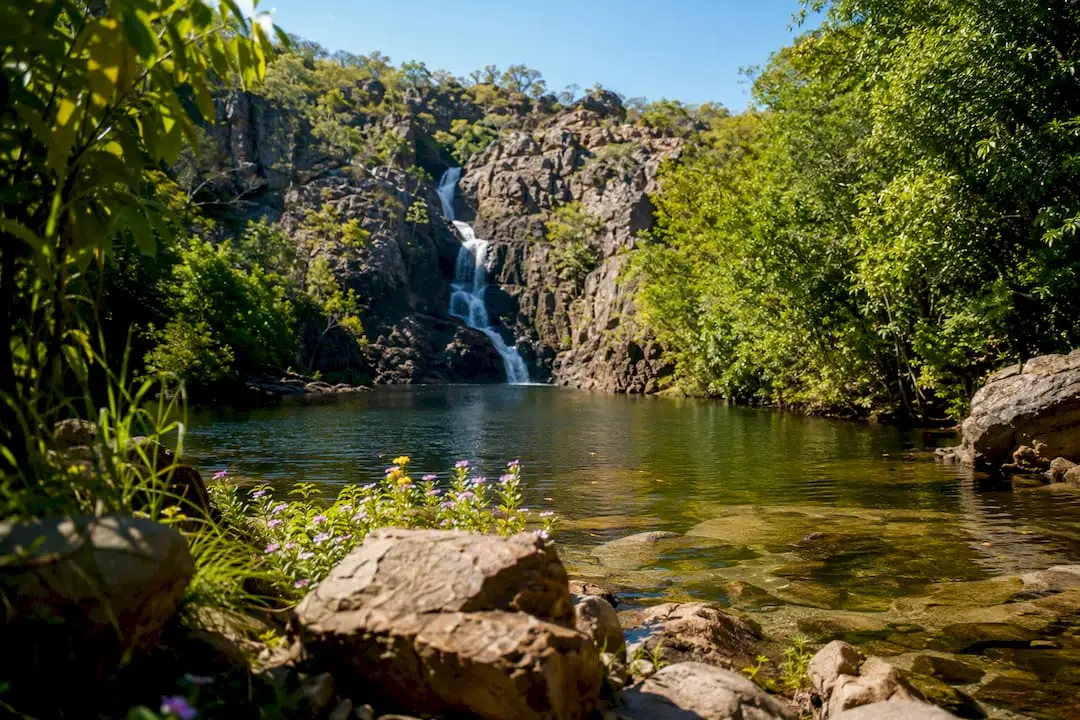
Litchfield solves a simpler problem: you want waterfalls you can actually swim in, reached on roads a standard hire car can handle. Florence Falls drops into a deep plunge pool ringed by monsoon forest, Wangi Falls has the widest, most photogenic pool, and Buley Rockhole is a series of stepped rock pools perfect for kids who can’t manage a long walk.
The magnetic termite mounds near the park entrance are worth the five-minute detour, thousands of them, all oriented north to south like a compass rose scattered across the plain.
- Every major site sits within a 15 to 20 minute walk of a car park.
- 2WD sealed roads reach Florence Falls, Wangi Falls and Buley Rockhole without trouble.
- Camping is available at several sites for those extending beyond a single day.
- Best suited to families, first timers and anyone without four-wheel drive experience.
Pro Tip: Arrive at Wangi Falls before 9am. It’s the most popular swimming spot in the park, and the car park fills fast once tour buses start rolling in from Darwin.
When can you actually swim, and how do the seasons change everything?
The Top End runs on two seasons, and they change your itinerary more than any other single factor. Dry season, May through October, is when roads are open, waterfalls are swimmable and Kakadu’s 4WD tracks are passable. Wet season floods roads, closes swimming holes and can cut Kakadu’s remote falls off entirely, though the wetlands themselves put on a dramatic show for anyone happy to stick to sealed routes.
The crocodile rule never changes with the season: swim only where signage confirms the site is open and monitored, and check current status before you go, because rangers close designated sites temporarily after crocodile sightings, even at popular spots like Maguk or Florence Falls.
- Buy your Kakadu park pass online or at a visitor centre before entering, Litchfield currently has no entry fee.
- Check NT Parks’ current swimming status the morning of your visit, not the night before.
- Carry more water than you think you need, download offline maps like Avenza for remote tracks, and top up fuel before heading into Kakadu.
- Tell someone your planned route if you’re tackling Jim Jim or Twin Falls, mobile coverage inside Kakadu is patchy at best.
Which park matches your trip, right now?
Run through this before you book anything:
- One day, sealed roads only, want to swim today: Litchfield.
- Two to three days, want rock art, cruises and real wilderness: Kakadu.
- Only a 2WD hire car: stick to Litchfield’s main sites, or Kakadu’s sealed-access highlights like Ubirr and Yellow Water, skip Jim Jim and Twin Falls.
- Four or more days: combine both, Litchfield first for an easy warm-up, Kakadu second for the main event.
- Confirm your vehicle type before choosing sites, hire car 2WD rules out Kakadu’s remote falls entirely.
- Book Kakadu accommodation in Jabiru or Cooinda at least a few weeks ahead in dry season, rooms sell out fast.
- Buy your park pass online before arrival to skip the queue.
- Check swimming-site status the morning you travel, not when you book.
Sample itineraries for one, two or four days
A Litchfield day trip from Darwin: leave by 7am, hit Florence Falls first (90 minute drive), swim an hour, drive to Buley Rockhole (10 minutes), then Wangi Falls for lunch and a final swim before heading back by late afternoon.
A two-day Kakadu run: day one covers the drive in, Bowali Visitor Centre and an afternoon Yellow Water cruise; day two takes in Ubirr’s rock art at sunrise and, conditions permitting, a waterfall like Maguk.
- Combine both parks over three to four days by driving Nature’s Way, Litchfield first, then Kakadu, overnighting in Batchelor and Cooinda or Jabiru.
- Pace yourself, Kakadu’s internal distances are long, don’t schedule more than two major sites per day.
Why trust this comparison?
Aussie Loop curates Australian tours with local operators who know these access trade-offs firsthand, not just guidebook summaries. Editorial input on this piece comes from Dhruv Sharma, drawing on Northern Territory park data and safety guidance rather than a single rushed visit. If juggling park passes, 4WD hire and accommodation across two parks sounds like more admin than holiday, Aussie Loop can help you book a guided day trip or a curated multi-park itinerary instead.
What the conventional advice gets wrong
Most guides frame Kakadu vs Litchfield as a battle of “which is better,” and that’s the wrong question. Litchfield isn’t a lesser Kakadu, it’s a different tool for a different job, and plenty of travellers who skip it because it “sounds smaller” end up regretting missing the easiest swimming in the Top End.
The bigger blind spot is vehicle honesty. Too many people book a standard hire car, then discover Jim Jim Falls needs a proper 4WD, and either waste a day arranging one or miss it entirely. Decide your vehicle capability before you decide your itinerary, not after.
The crocodile-safety messaging also gets flattened into a vague “be careful” line, when the actual rule is specific: swim only at signed, actively managed sites, and check status the morning of your visit because closures happen with little notice. That’s not caution for caution’s sake, it’s the difference between a great swim and a genuinely dangerous mistake.
If there’s one thing worth prioritising above waterfalls and rock art, it’s building slack into your schedule. Roads close, sites shut, and the Top End doesn’t run on a tourist’s timetable.
Let Aussie Loop take the logistics off your plate
Juggling park passes, 4WD hire and accommodation bookings across two national parks eats into the time you’d rather spend swimming under a waterfall. Aussie Loop works with local Northern Territory operators to line up guided day trips and multi-day itineraries that handle the access questions for you, so you’re not the one deciding at 6am whether a track is open.

Browse Aussie Loop’s curated tours to see what a locally-guided Top End itinerary looks like, or start from the Aussie Loop homepage to plan your full trip.
Sources
- Nt
- Be Crocwise — stay safe while swimming
- Kakadu access — Parks Australia
- Nature’s Way itinerary — Northern Territory tourism
FAQ
Are there crocodiles in Litchfield National Park?
Yes, saltwater crocodiles can be present in Top End waterways including Litchfield, which is why you should only swim at designated, signed and actively managed sites such as Florence Falls, Buley Rockhole or Wangi Falls.
Which is better to visit, Katherine Gorge or Kakadu?
Both offer wetland and gorge scenery, but Kakadu delivers a broader mix of rock art, cultural sites and wildlife cruises across a much larger area, making it the stronger pick if you only have time for one.
Is Litchfield National Park worth visiting?
Yes. It’s a practical day trip from Darwin on sealed roads with multiple swimmable waterfalls close to the car parks, making it one of the most efficient nature stops in the Top End for families and short-stay visitors.
Can you swim in Litchfield National Park?
Yes, at designated sites like Florence Falls, Wangi Falls and Buley Rockhole, though rangers can temporarily close any site after a crocodile sighting, so check current status before you go.