Stinger season in the Whitsundays runs from late October or November through to May, with the highest risk sitting between December and March. You can still swim, snorkel and sail through it. Do these two things first: check the Queensland Government’s dangerous marine life guidance for current local warnings, and either wear a full-body stinger suit or stick to netted, patrolled beaches.
- Check local signage and lifeguard flags before entering the water
- Wear a stinger suit or swim within a netted enclosure during peak months
Pro Tip: Most reef and island tours running through summer already supply stinger suits as standard kit. Ask before you book, not once you’re on the boat.
Key Takeaways
Stinger season in the Whitsundays runs late October or November to May, peaks December to March, and manageable precautions like stinger suits and netted beaches let water activities continue safely.
| Point | Details |
|---|---|
| Season window | Runs late October/November to May, with peak risk from December to March. |
| Highest-risk locations | Sheltered bays, river mouths and mangrove edges carry more risk than open reef sites. |
| Species matter less than speed | First aid follows the same life-first protocol regardless of which stinger is suspected. |
| First aid basics | Apply vinegar for at least 30 seconds, avoid fresh water, and call 000 for severe or unknown stings. |
| Book smart | Aussie Loop features tours that supply stinger suits and run proper safety briefings in season. |
Table of Contents
- What drives stinger season in the Whitsundays and when it peaks
- Where you’re most likely to encounter stingers
- Box jellyfish, Irukandji and the other stingers you’ll hear about
- How likely are you to actually get stung?
- What to wear, where to swim, and what to check before you board
- What to do immediately if someone gets stung
- Stinger nets, lifeguards and what councils actually provide
- How Aussie Loop vets tours for stinger season safety
- A local’s honest take on stinger season nerves
- Book a Whitsundays tour that takes stinger season seriously
- Where to check current safety advice
- Sources
- FAQ
What drives stinger season in the Whitsundays and when it peaks
Warm water is the trigger. Once sea temperatures climb through late spring, box jellyfish and Irukandji move into the shallower, calmer waters around the coast to breed, and they tend to concentrate wherever currents are weak and the water is warm and still. That’s why the risk window tracks the Queensland wet season almost exactly: late October or November through to May, peaking December to March.
Outside that window, though, don’t assume the water is clear. Jellyfish don’t read calendars, and health authorities note that stings can occur at any time of year, even if the odds drop sharply once the season passes. Treat “stinger season” as a description of elevated risk months, not a hard switch that flips risk on and off.
- Season dates: late October/November to May
- Peak risk: December to March
- Off-season sightings: possible but far less common
Where you’re most likely to encounter stingers
Box jellyfish and Irukandji favour calm, sheltered water over open surf, which changes where the real risk sits around the Whitsundays.
- Sheltered bays and calm inshore water carry the highest risk, since stingers drift into still, shallow zones where there’s little current to move them along.
- River mouths and mangrove edges are prime habitat, thanks to the murky, nutrient-rich water stingers seem to prefer.
- Patrolled town beaches like Cannonvale and Boathaven run seasonal stinger nets, though coverage can shift with the tide, so check whether the net is actually in the water before you swim.
- Open reef sites and outer island beaches carry comparatively lower risk thanks to clearer, more current-swept water, but “lower” is not “zero”, so precautions still apply.
Box jellyfish, Irukandji and the other stingers you’ll hear about
Two species dominate the conversation, and for good reason. Box jellyfish deliver a sting that can cause severe pain and, in serious cases, life-threatening reactions. Irukandji are smaller, harder to see, and their sting can trigger Irukandji syndrome, a delayed set of symptoms including chest pain, nausea and a sense of impending doom that can take twenty to forty minutes to appear.
Bluebottles turn up too, mostly on ocean-facing beaches after strong onshore winds. They’re painful, sometimes miserable, but rarely dangerous.
- Box jellyfish: potentially lethal, fast-acting, found in warm shallow water
- Irukandji: tiny, near-invisible, symptoms can be delayed by 20 to 40 minutes
- Bluebottles: painful but not typically dangerous
Pro Tip: Don’t waste time trying to identify the species in the water. ANZCOR’s own guidance is clear that first aid should never be delayed by an attempt to work out exactly what stung you.
How likely are you to actually get stung?
Rarer than most visitors assume. Surf Life Saving figures cited in the ANZCOR marine envenomation guideline put the annual sting count across Australia at around 40,128, against roughly four deaths over the long-term reporting period. Most stings are painful rather than dangerous, and fatalities are genuinely uncommon.
Risk still isn’t evenly spread. It climbs in calm, warm, sheltered water during peak months, and rises further when a few specific conditions line up.
- Swimming in poor visibility, especially murky water after heavy rain
- Entering the water where beaches are closed or unpatrolled
- Ignoring stinger warning signage or swimming outside netted zones
What to wear, where to swim, and what to check before you board
Precaution beats luck here, and most of it comes down to three decisions.
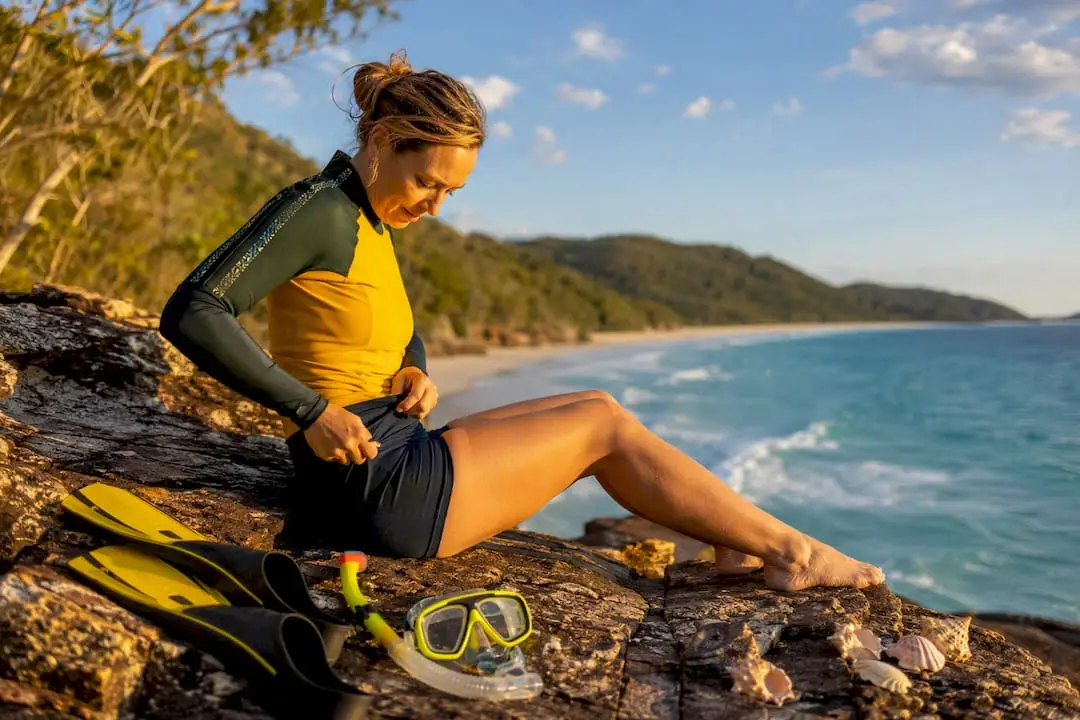
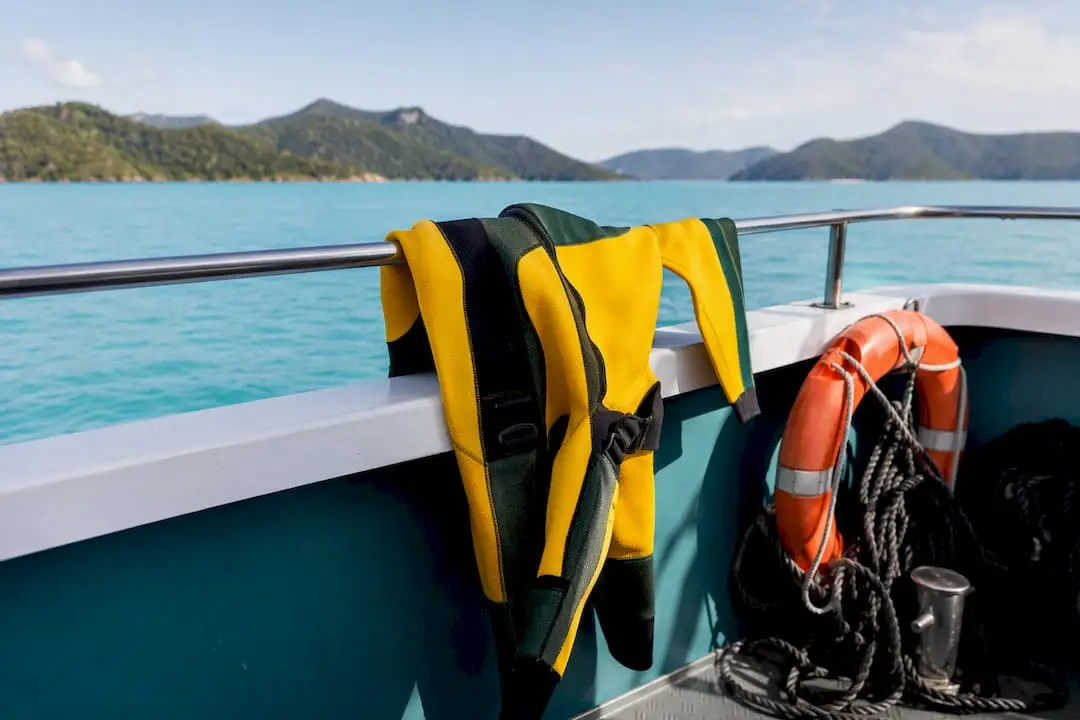
- Wear a full-body stinger suit or a thick rash vest with leggings. Suits cover the skin most exposed to tentacle contact and are standard issue on well-run reef trips, including options like the Great Barrier Reef half-day snorkelling tour.
- Swim between the red-and-yellow flags at patrolled beaches, and use stinger nets where the council provides them. If there’s no flag, no net and no lifeguard, treat that as a warning, not an invitation.
- Carry vinegar on any boat trip and confirm your operator does the same. A proper safety briefing before anyone enters the water should cover what to do if someone’s stung, not just where the toilets are.
- Ask before you book: does the price include a stinger suit, is there a briefing, and what’s the plan if conditions turn?
- Skip the swim if a beach is closed. Closures during peak months usually follow an actual sighting or a lifeguard call, not blanket caution.
Pro Tip: A stinger suit does double duty. It’s your best defence against tentacle contact, and it protects against sunburn on a full day out on the water, which matters just as much in tropical UV.
What to do immediately if someone gets stung
Speed matters more than certainty about which jellyfish caused it. If the sting looks severe, or you simply don’t know what caused it, call 000 straight away and start basic life support if the person becomes unresponsive.
- Douse the sting site with vinegar for at least 30 seconds; this neutralises stinging cells that haven’t fired yet
- Carefully remove any visible tentacles rather than rubbing or scraping the skin
- Never rinse with fresh water, since it can trigger any remaining stinging cells to fire
- Watch for delayed symptoms such as chest pain, back pain, sweating or nausea for the next 20 to 40 minutes, and seek urgent care if they appear
Vinegar is the right first response for potentially lethal tropical stings like box jellyfish and Irukandji, which is exactly why boats and beach kiosks around the Whitsundays keep it on hand. When symptoms escalate beyond local pain, that’s your signal this isn’t a “walk it off” situation.
Stinger nets, lifeguards and what councils actually provide
Whitsunday Regional Council runs seasonal stinger nets at Cannonvale and Boathaven, installed and maintained under protocols developed with James Cook University and Surf Lifesaving Queensland. Nets reduce risk but aren’t foolproof. Coverage can shift with tidal movement, so a net that’s fully deployed at low tide might not extend the same distance at high tide.
- Lifeguard patrols and signage remain the first line of defence, net or no net
- Tour operators commonly supply stinger suits and run pre-departure briefings, but standards vary between operators
- Confirm suit provision and briefing content directly with your operator before paying
How Aussie Loop vets tours for stinger season safety
Aussie Loop checks for stinger suit provision, a proper pre-departure safety briefing, genuine local knowledge of current conditions, and reasonable access to medical support before featuring a Whitsundays water tour. Ask any operator the same questions. Most run safe, well-briefed trips right through the season.
A local’s honest take on stinger season nerves
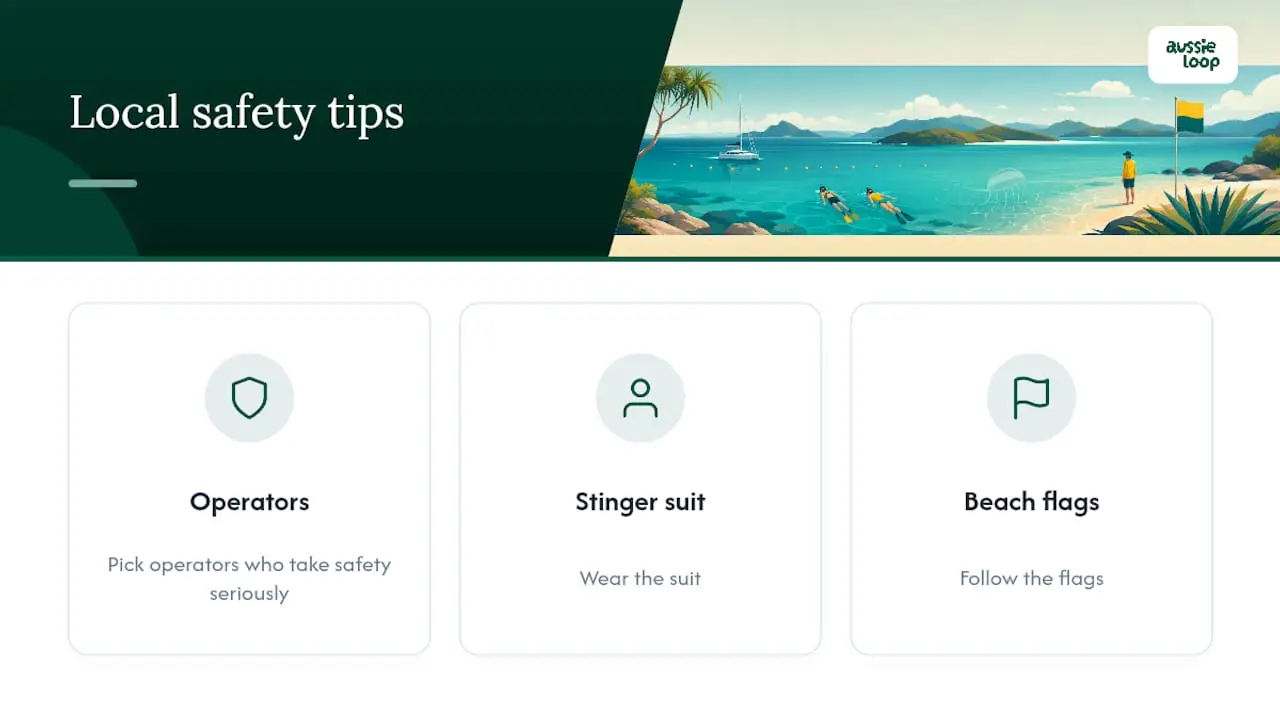
Stinger season sounds scarier than it plays out in practice. Pick operators who take safety seriously, wear the suit, follow the flags, and you’re free to enjoy the Whitsundays exactly as they’re meant to be experienced.
Book a Whitsundays tour that takes stinger season seriously
Aussie Loop is the difference between guessing which operator actually supplies a stinger suit and knowing before you pay. Every tour listed has been checked by locals for the practical stuff that matters in season: suit provision, a real safety briefing, and crew who know current conditions rather than reading from a script.

Browse the full range of curated Australian tours and filter for Whitsundays water activities, or check the tours index for reef and island trips running through the season. When you shortlist an operator, confirm stinger suit provision and briefing details directly on the tour page before you book. If a full reef day isn’t quite your speed, the Sunset Whale Watching Cruise from Magnetic Island is a lower-risk way to get out on the water while you weigh up your options.
Where to check current safety advice
Check Queensland’s dangerous marine life guidance, the ANZCOR first-aid guideline, and your local council’s stinger net updates before you swim.
Sources
- Qld
- Guideline 9.4.5 – First aid management of marine envenomation
- Jellyfish stings – healthdirect
- Marine stinger nets – Your Say Whitsunday
FAQ
When should you avoid swimming in the Whitsundays?
Avoid unpatrolled, unnetted water in sheltered bays or river mouths during December to March, and never swim where beaches are closed or signage warns of stingers.
Can you swim at Airlie Beach without a stinger suit?
You can, especially at patrolled beaches with stinger nets, but a suit adds a real layer of protection during peak months and is worth wearing regardless.
Is it jellyfish season in Airlie Beach right now?
Jellyfish season in Airlie Beach runs late October/November to May, peaking December to March, though isolated sightings can occur outside that window.
What month is stinger season at its worst?
Peak stinger season sits between December and March, when warm, calm water draws box jellyfish and Irukandji into shallow coastal areas.
Do Aussie Loop tours provide stinger protection?
Aussie Loop features operators that supply stinger suits and run safety briefings before water activities, and it’s worth confirming these details on the specific tour page before booking.