Australia’s whale watching season runs from May to November, driven by the annual migrations of humpback and southern right whales along both the east and west coasts, with southern bays and offshore zones adding blue whale and dwarf minke sightings outside that core window. Regional peaks vary sharply: Queensland’s Hervey Bay peaks July to October, New South Wales headlands are busiest June to November, and Western Australia’s Perth waters come alive September to late November. To use this guide well, pick your region first, match it to the peak months below, then decide whether you want a land-based headland, a commercial boat tour, or a licensed swim-with programme.
According to WWF Australia, the national season is anchored by humpback and southern right migrations, with sightings possible somewhere along the Australian coastline in every month from May through November.
- East coast (QLD, NSW): June to November, with Hervey Bay’s sheltered bay making it one of the most reliable humpback resting areas in the world
- South coast (VIC, SA, TAS): May to October for southern rights; November to May offshore for blue whales at the Bonney upwelling
- West coast (WA): August to November for northbound and southbound humpbacks; Perth Canyon hosts blue whales roughly November to April
Key takeaways
Australia’s whale watching season runs May to November nationally, with regional peaks that vary by up to three months depending on which coast you choose and which species you want to see.
| Point | Details |
|---|---|
| National season window | May to November covers most of the country; some blue whale zones extend to April–May. |
| East coast peak | July to September at Hervey Bay; June to October along NSW headlands for humpbacks. |
| Southern states | Head of the Bight and Bruny Island peak May to September for southern right whales. |
| Western Australia | Perth waters and Albany peak September to October; Perth Canyon blue whales November to April. |
| Aussie Loop tours | Curated whale-watching and coastal wildlife tours across Queensland and Tasmania, chosen by local experts. |
Table of Contents
- When do whales appear along each Australian coast?
- Where to see whales in Australia: region-by-region guide
- Which whale species will you see and when?
- How to watch whales safely and what the rules require
- Practical tips for planning your whale-watching trip
- Why whale season windows shift from year to year
- What experienced whale watchers know that first-timers often miss
- Aussie Loop makes it easy to find the right whale-watching tour
- Sources
- FAQ
When do whales appear along each Australian coast?
The calendar below shows peak activity months by region. “Peak” means your best statistical chance of sightings; whales can appear outside these windows, but numbers thin considerably.
| Region | Active months | Peak months | Notes |
|---|---|---|---|
| Queensland (Hervey Bay, GBR) | June–October | July–September | Humpback resting/calving; dwarf minke May–August in GBR |
| New South Wales (Byron Bay, Jervis Bay, Sydney) | May–November | June–October | Northbound June–August; southbound Sept–November |
| Victoria (Portland) | May–October | June–September | Southern rights; blue whales offshore Nov–May |
| South Australia (Head of the Bight) | May–October | June–September | Southern rights calving; very remote access |
| Tasmania (Bruny Island, Adventure Bay) | May–October | June–September | Southern rights; accessible by ferry |
| Western Australia (Exmouth, Albany, Perth) | August–November | September–October | Southbound humpbacks; Perth Canyon blue whales Nov–Apr |
How to read this: find your travel window in the “Peak months” column, then cross-reference with the regional breakdown below for specific sites and viewing methods. Booking at least 6–8 weeks ahead during peak months is strongly advised.
Where to see whales in Australia: region-by-region guide
Queensland
Hervey Bay is the standout. Humpbacks pause here on their southbound journey, resting in the calm, shallow waters of the bay rather than pushing straight through. That behaviour means longer, closer encounters than you get on open-ocean passages. July to September is the sweet spot; calves born in the Coral Sea nurseries are often visible alongside their mothers. WWF Australia notes that Hervey Bay and parts of the Great Barrier Reef are among the most predictable humpback viewing areas in the country.
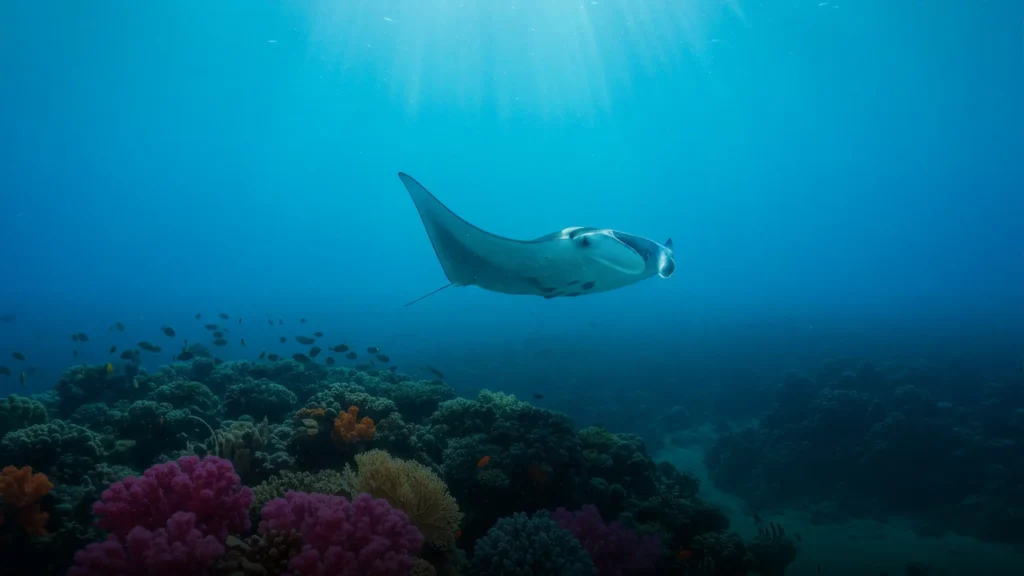
The Great Barrier Reef adds a genuinely rare experience: dwarf minke whales, typically May to August, congregate around the outer ribbon reefs near Lizard Island and Ribbon Reef No. 10. Licensed swim-with programmes operate here, making it one of only a handful of places globally where you can legally snorkel alongside wild whales.
- Best sites: Hervey Bay (boat tours from Urangan Harbour), Ribbon Reefs (liveaboard), Whitsundays (occasional sightings June–August)
- Best for: calves, swim-with (GBR only), family-friendly bay tours
- Crowd note: Hervey Bay fills fast in August; book 2–3 months ahead
New South Wales
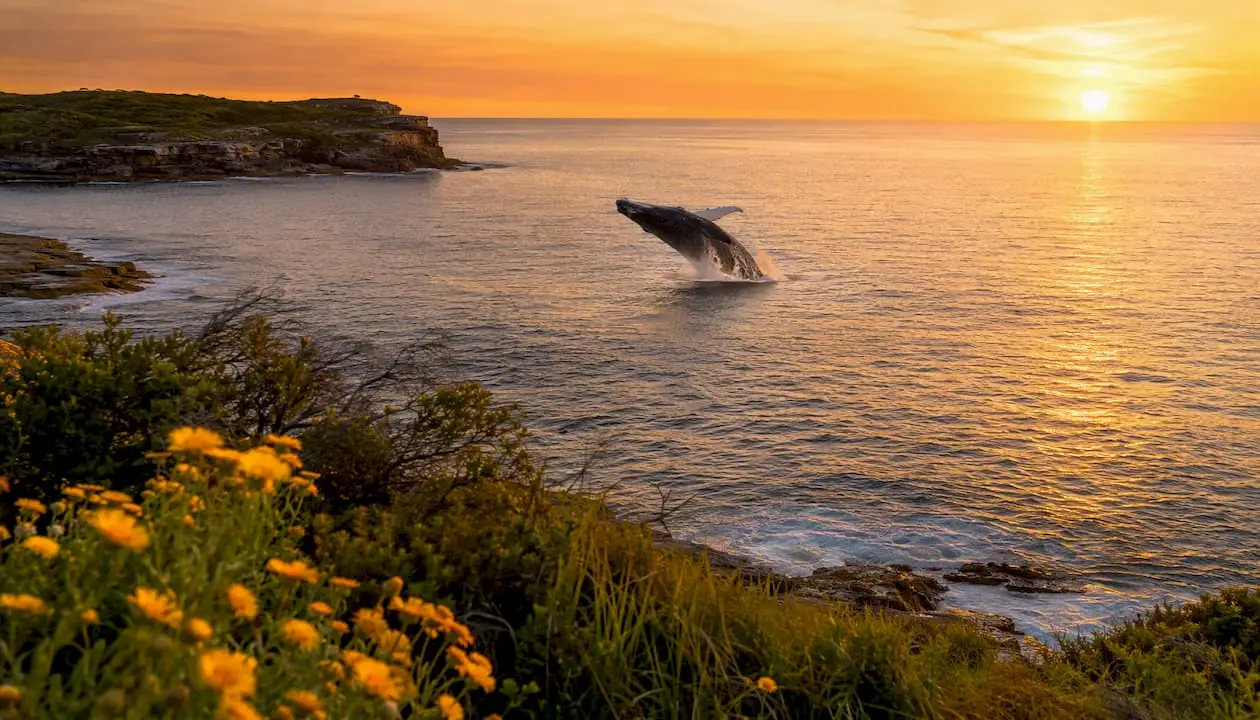
The NSW coast sits squarely on the humpback highway. DCCEEW confirms that northbound movement peaks June to August and the southbound return runs September to November, so you get two distinct windows from the same headlands.
Byron Bay and Cape Byron offer arguably the best free land-based viewing in Australia. The lighthouse at Cape Byron sits 100 metres above sea level, giving you a sweeping arc of ocean. Pods pass close to shore on both legs of the migration. Jervis Bay is calmer and more sheltered, making it excellent for boat tours and the occasional southern right sighting. Sydney’s Cape Solander in Kamay Botany Bay National Park is a favourite for city-based whale watchers; rangers from NSW National Parks run a volunteer count programme there each season.
- Best sites: Cape Byron (land), Cape Solander (land), Jervis Bay (boat tours), Eden (late season, October–November)
- Best for: land-based viewing, northbound and southbound passes, accessible day trips from major cities
- Crowd note: Cape Byron is busy on weekends; arrive before 8 AM for a quiet headland spot
Victoria, South Australia and Tasmania
These three southern states share a common thread: southern right whales. Unlike humpbacks, southern rights hug the coastline and linger in sheltered bays for weeks at a time, making them exceptionally easy to observe from shore.
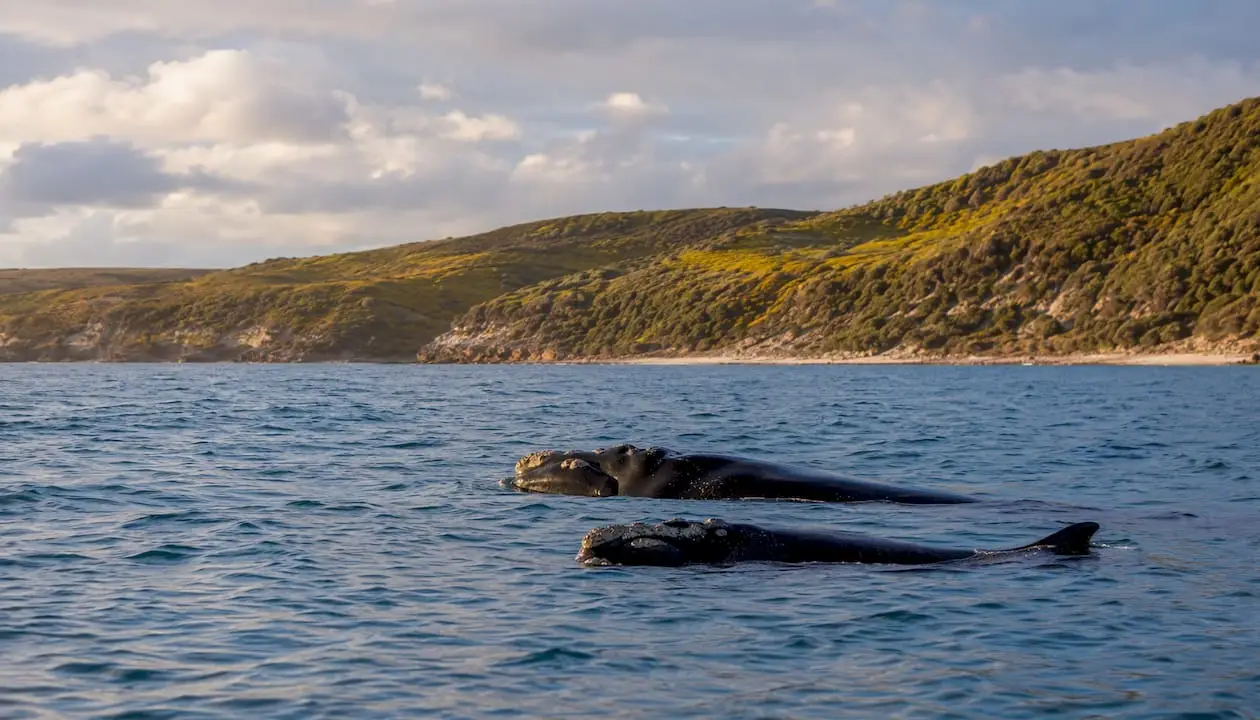
Portland and the Bonney upwelling (Victoria/SA border) is where the story gets unusual. Blue whales, the largest animals ever to have lived, feed on krill concentrated by the upwelling roughly November to May. Boat trips depart from Portland, but conditions can be rough and sightings are never guaranteed. The reward, when it happens, is extraordinary.
Head of the Bight in South Australia is a UNESCO-recognised southern right whale nursery. Cows with newborn calves arrive from May, and the clifftop boardwalk gives you views directly down into the turquoise shallows where mothers nurse their young. Access is remote (around 200 km from Ceduna on the Nullarbor), but the experience is unlike anything else in Australia.
Bruny Island and Adventure Bay in Tasmania offer southern right sightings from May to September. The Bruny Island wilderness cruise covers dramatic sea cliffs and wildlife-rich waters where whales are a genuine possibility alongside seabirds and seals. For broader Hobart trip planning, the things to do in Hobart guide covers logistics and accommodation options nearby.
- Best sites: Head of the Bight (land, clifftop boardwalk), Portland (boat, blue whale focus), Adventure Bay and Bruny Island (boat and land)
- Best for: southern right calves, remote wilderness, blue whale offshore trips
- Crowd note: Head of the Bight is genuinely remote; self-sufficient travel is necessary
Western Australia
WA’s whale calendar splits neatly. Northbound humpbacks pass Exmouth and the Kimberley coast from June to August; the southbound return through Perth waters runs September to late November. DBCA WA’s watching guide confirms Perth waters are reliably active from September through late November as humpbacks move south, often resting in temporary aggregations offshore.
Exmouth and the Ningaloo Reef corridor see humpbacks from July to October, sometimes in large groups. Albany on the south coast catches both northbound and southbound traffic, with August to October being the prime window. The old Cheynes Beach Whaling Station there now operates as Whale World, a museum that adds historical context to any visit.
Perth Canyon, roughly 35 km offshore from Rottnest Island, hosts blue whales from approximately November to April, feeding on the deep-water upwelling. These trips require specialist operators and longer offshore passages.
- Best sites: Exmouth/Ningaloo (boat tours), Albany (land and boat), Perth Canyon (specialist offshore), Broome/Kimberley (northbound, June–August)
- Best for: northbound humpbacks, blue whale offshore, remote Kimberley experiences
- Crowd note: Exmouth is increasingly popular; book accommodation and tours well ahead for July–September
Which whale species will you see and when?
Different species follow different routes and timetables. Knowing which one you most want to see shapes your destination choice more than any other single factor.
| Species | Typical months | Key locations | Viewing type |
|---|---|---|---|
| Humpback | May–November | East and west coasts, Hervey Bay, Exmouth, Albany | Boat, land, swim-with (GBR only) |
| Southern right | May–October | Head of the Bight, Warrnambool, Bruny Island, Albany | Land (clifftops), boat |
| Blue whale | November–May | Bonney upwelling (VIC/SA), Perth Canyon (WA) | Specialist offshore boat |
| Dwarf minke | May–August | Outer Great Barrier Reef (ribbon reefs) | Liveaboard, swim-with |
| Orca | Year-round (sporadic) | Bremer Bay (WA), Eden (NSW) | Specialist offshore boat |
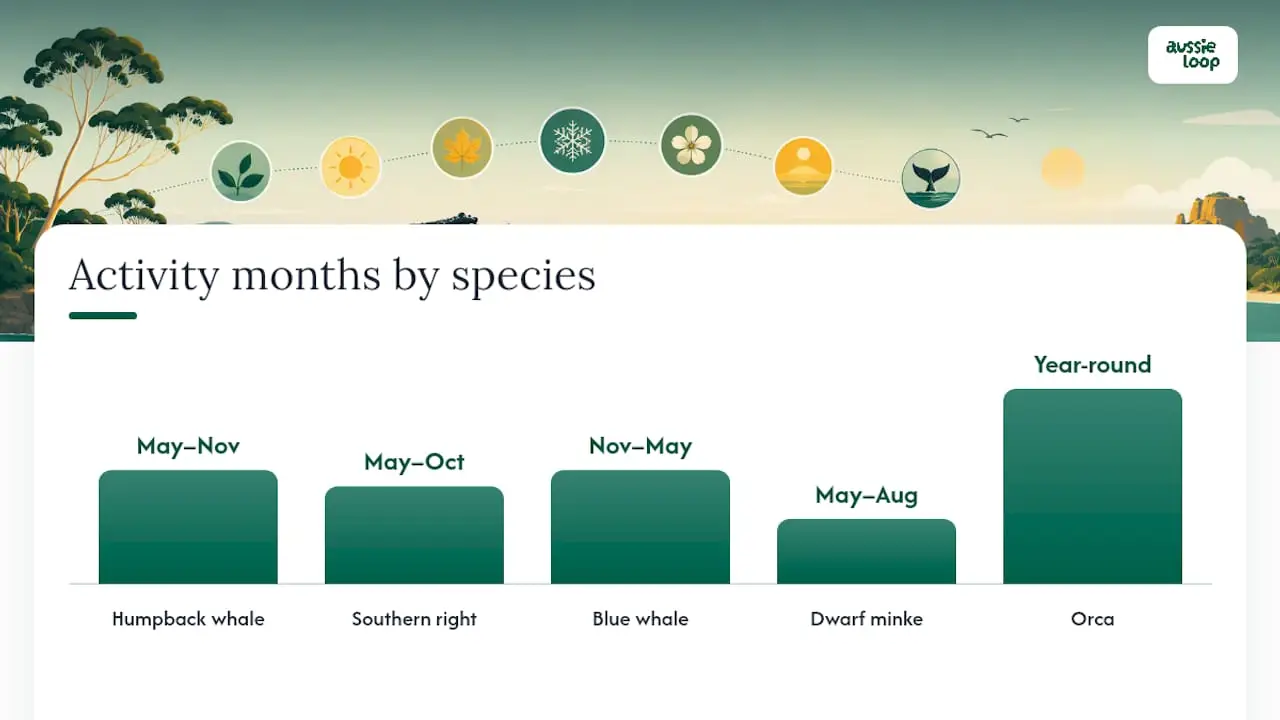
Humpbacks are the most reliably seen species, appearing along both the east and west coasts through the core season. Southern rights are slower-moving and coastal, making them the easiest to observe from shore. Blue whales are offshore animals requiring specialist trips; expect rougher conditions and higher costs. Dwarf minkes in the GBR are genuinely unusual, and the licensed swim-with experience there is unlike anything available elsewhere in Australia.
Orca sightings at Bremer Bay (WA) from January to April and Eden (NSW) in spring are spectacular but less predictable. Specialist operators run dedicated orca trips from both locations.
How to watch whales safely and what the rules require
Land-based viewing
Headlands and clifftop boardwalks cost nothing and require no booking. Cape Byron, Cape Solander, the Head of the Bight boardwalk, and the Point Ann lookout near Hopetoun (WA) are all exceptional. Binoculars rated 8×42 or 10×42 are the practical minimum for meaningful land-based spotting.
Boat tours
Commercial operators bring you closer and increase sighting probability significantly. Tours range from 2-hour bay cruises at Hervey Bay to full-day offshore passages for blue whales. Always choose a licensed operator; in Australia, commercial whale-watching vessels must comply with the Australian National Guidelines for Whale and Dolphin Watching, which set minimum approach distances and vessel behaviour standards.
Swim-with programmes
Swim-with is legal only for dwarf minke whales in the Great Barrier Reef Marine Park, under a specific permit system. No other species in Australian waters can be legally approached for in-water interaction by the public.
Regulations you need to know
The Australian National Guidelines for Whale and Dolphin Watching set the national floor: vessels must not deliberately approach within 100 m of a whale in Commonwealth waters and must use caution within 300 m. State and territory waters carry their own rules, which can be stricter. Queensland, for instance, applies a 100 m limit for vessels and a 300 m limit for aircraft. Never feed, touch, or attempt to separate a mother from her calf.
Pro Tip: Before booking any tour, ask the operator directly whether they hold a current whale-watching permit or authorisation for your state. A legitimate operator will answer immediately and without hesitation.
Practical tips for planning your whale-watching trip
Timing your day
Early morning (before 10 AM) generally means calmer seas, which matters enormously on a boat. For land-based viewing, midday light is actually better for long-distance spotting from headlands, as the sun angle reduces glare. Weather trumps time of day for boat trips: a calm afternoon beats a choppy morning every time.
Booking ahead
- Hervey Bay (July–September): book 2–3 months ahead; tours sell out weeks in advance during peak season
- NSW headlands (June–October): no booking needed for land spots, but guided boat tours from Jervis Bay and Eden fill quickly
- Head of the Bight (May–September): accommodation near Nullarbor Roadhouse is limited; plan well ahead
- Exmouth and Albany (August–October): tour slots go fast in peak weeks; 6–8 weeks minimum lead time
Typical tour costs
Prices vary by operator, vessel size, and region. Short bay cruises (2–3 hours) typically run from around AUD $80–$120 per adult. Full-day offshore trips, particularly for blue whales or orca, can reach AUD $200–$350 or more. GBR dwarf minke liveaboards are multi-day experiences priced accordingly.
What to pack
- Binoculars (8×42 minimum for land; 7×50 for boats, where image stabilisation helps)
- Warm, windproof layers even in summer, particularly for early morning boat departures
- Sunscreen and a hat for exposed headlands and open-deck vessels
- Sea-sickness medication taken at least 30 minutes before boarding if you are prone
- Camera with a telephoto lens (200 mm or longer) for meaningful shots from land
Why whale season windows shift from year to year
Migration timing is not fixed. It follows biological cues, ocean conditions, and individual behaviour, which means the windows above are reliable guides rather than guarantees.
Research published in Frontiers in Marine Science found a small but consistent trend toward earlier arrivals in some populations linked to rising sea surface temperatures over multi-decade records. The practical implication: peak windows may shift earlier by a week or two in warmer years, so checking recent-season reports from local operators before you finalise travel dates is worthwhile.
Individual behaviour adds another layer of variability. A longitudinal photo-identification study of eastern Australian humpbacks found that males sometimes circle back along the migration route and that groups can linger in northern waters for around two months. That means a site that “should” be past peak can still produce excellent sightings if a group has decided to stay.
Mothers with newborn calves travel more slowly and often remain in sheltered bays for extended periods, which is why sites like Hervey Bay and Head of the Bight can offer reliable sightings across a window of several weeks rather than a narrow few days. Plan for flexibility, not precision, and you will rarely be disappointed.
Climate variability also affects prey availability. In years when krill blooms are strong at the Bonney upwelling, blue whale aggregations can be larger and more predictable. In leaner years, the whales may be more dispersed and harder to find on a single-day trip.
What experienced whale watchers know that first-timers often miss
The conventional wisdom says “go in peak season and you’ll see whales.” That is broadly true, but it misses a more useful insight: the quality of an encounter often peaks at the edges of the season, not the middle.
In the first weeks of July at Hervey Bay, before the tour boats multiply and the bay fills with visitors, you can find yourself on a near-empty vessel watching a mother and calf in almost complete quiet. By mid-August, the same bay can feel like a floating car park. The whales are still there, but the experience is different. Similarly, late October in NSW catches the southbound migration with noticeably smaller crowds than the June northbound rush, and the whales are often travelling in larger groups with more surface activity.
The other thing worth knowing: land-based viewing is genuinely underrated. Experienced whale watchers often prefer a good headland to a boat, particularly for humpbacks on the NSW coast. You get a wider field of view, no vessel noise disturbing the animals, and the freedom to stay as long as you like. Cape Solander on a clear June morning, with humpbacks breaching 200 metres offshore, is as good as it gets anywhere in the world.
Aussie Loop makes it easy to find the right whale-watching tour
Knowing when and where is only half the work. Finding a tour that actually delivers, run by operators who know the local waters and respect the animals, is where most travellers lose time.

Aussie Loop curates whale-watching and coastal wildlife experiences selected by people who live and travel in these regions, not by an algorithm. Whether you want a sunset whale-watching cruise from Magnetic Island in Queensland or a Bruny Island wilderness cruise in Tasmania, the tours listed on the platform have been chosen for quality, responsible practice, and genuine local knowledge. Browse the full range of Australian tours curated by locals to find the right experience for your travel dates, budget, and preferred region, and book directly through the listing.
Sources
For up-to-date regulations, species notes and seasonal updates, consult these primary sources directly:
- Whale watching in Australia: best spots, season and tips | WWF Australia
- The humpback whales of Eastern Australia – DCCEEW
- Environment
- Watching whales information guide | DBCA WA
- Climate-linked shifts in marine species phenology (Frontiers in Marine Science)
- Migratory movements of individual humpback whales photographed off the eastern coast of Australia | Wiley
For state-specific rules, always check the relevant state parks or environment department website, as regulations in coastal waters can differ from Commonwealth guidelines.
FAQ
What is the best month to go whale watching in Australia?
August is the single most reliable month nationally, combining peak activity at Hervey Bay (humpback resting and calving), active NSW headlands, and the start of the southbound run through WA. If you can only choose one month, August delivers the widest range of locations and species.
Where is the best whale watching in Australia?
Hervey Bay in Queensland is widely regarded as the country’s premier site, offering calm, sheltered waters where humpbacks rest and calve for weeks at a time. Head of the Bight in South Australia is unmatched for southern right whale nursery viewing from land.
What months are best for whale watching in Queensland?
July to September is the peak window for Queensland, particularly at Hervey Bay. Dwarf minke whales in the Great Barrier Reef are best seen May to August on liveaboard trips to the outer ribbon reefs.
Is it whale season in Queensland right now?
Queensland’s season runs June to October, with the peak in July to September. Outside those months, sightings become infrequent, though dwarf minkes in the GBR can appear from May onward.
Do I need to book a boat tour, or can I watch from shore?
Both work well in Australia. Cape Byron (NSW), Cape Solander (NSW), and the Head of the Bight boardwalk (SA) offer exceptional free land-based viewing during peak months. Boat tours get you closer and increase sighting probability, but a good headland on a clear day is hard to beat.