7 Days in Tasmania: The stunning itinerary everyone needs!
???? Tasmania · ???? 10 min read · ???? Updated July 2026
Quick answer

7 days in Tasmania is enough to see the highlights — but only if you plan it honestly. Hobart, Freycinet and Cradle Mountain are the three anchors of any first-time Tasmania itinerary. Fitting in Bay of Fires and Bruny Island as well is possible, but something has to give. This itinerary covers what actually works: the East Coast loop in the first half, Cradle Mountain in the second, with Hobart bookending both. A car is not optional. A National Parks Holiday Pass at 95.50 AUD saves you money and time at every gate.
The honest truth about 7 days in Tasmania
Tasmania looks tiny on a map. It is about the size of Ireland. There are no freeways, the roads wind, the scenery constantly tries to pull you over, and you will stop more than you planned. A 7-day Tasmania itinerary that looks manageable on paper can fall apart on the ground if you underestimate the driving.
The ideal trip is 10 to 14 days. A 7-day trip is still genuinely good, but expect faster travel days and fewer detours than you might like. The visitors who get the most out of 7 days in Tasmania are the ones who choose their two or three anchors and build around them rather than trying to see everything.
Pick your anchors. Commit to them. Leave the rest for next time. There will be a next time.
Before you go: what you need to sort before Day 1
- Hire a car. Tasmania has limited public transport outside Hobart and Launceston. A car is not optional for this itinerary. Book before you leave home — prices spike during peak season (December to February and school holidays).
- Buy a National Parks Holiday Pass. At 95.50 AUD per vehicle, this covers entry to all Tasmania’s national parks for two months. You will visit at least three parks on this itinerary. It pays for itself.
- Book Freycinet accommodation early. Coles Bay has limited accommodation. In peak season it sells out weeks in advance.
- Download offline maps. Mobile reception disappears fast beyond Hobart and St Helens. Google Maps offline or Maps.me are both reliable.
- Avoid driving at dusk and dawn. Wombats, wallabies, and Tasmanian devils are most active at these times. They cause serious accidents. Take this seriously.
The 7 days in Tasmania itinerary
Day 1: Hobart — arrive, eat, walk
Fly into Hobart, pick up your hire car, and do not try to do too much on Day 1. Hobart rewards slow walking more than it rewards rushing. Head to Salamanca Place to get your bearings — the Saturday morning market is one of the best in Australia if your timing lines up. Walk Battery Point, grab lunch on the waterfront, and eat dinner somewhere on the Salamanca strip.
If you have the energy, kunanyi / Mount Wellington is a 45-minute drive from the city centre and gives you the best overview of Hobart and the Derwent River you will get all trip. Go at sunset if the weather is clear. It is cold at the summit even in summer — bring a layer.
Hobart is a proper city. Give it a proper evening. The rest of the week is going to be wild places and long drives — let Day 1 be slow.
Day 2: Hobart to Freycinet (2 hours 45 minutes)
Leave Hobart by 8am. Head north on the A3 Tasman Highway through Orford and Swansea — the coastal stretch after Orford is one of the most scenic drives in Tasmania and you will want time to pull over. Arrive at Coles Bay and Freycinet National Park by late morning.
Day 2 afternoon is for the Wineglass Bay Lookout. The return hike to the lookout takes about 90 minutes at a comfortable pace. If you have the legs and the time, continue down to Wineglass Bay beach itself — the full return walk from the car park is around 3 hours and the beach is genuinely worth every step. The Freycinet Paddle kayak tour runs from Coles Bay and gives you a water-level view of the bay that the walking track cannot match.
Stay overnight in Coles Bay or Swansea.
Day 3: Freycinet to Bay of Fires via Bicheno (2 hours 30 minutes)
Morning at Freycinet — if you did not make it to the beach yesterday, go now before the day groups arrive. Then head north along the coast through Bicheno (stop for coffee and a blowhole) toward St Helens.
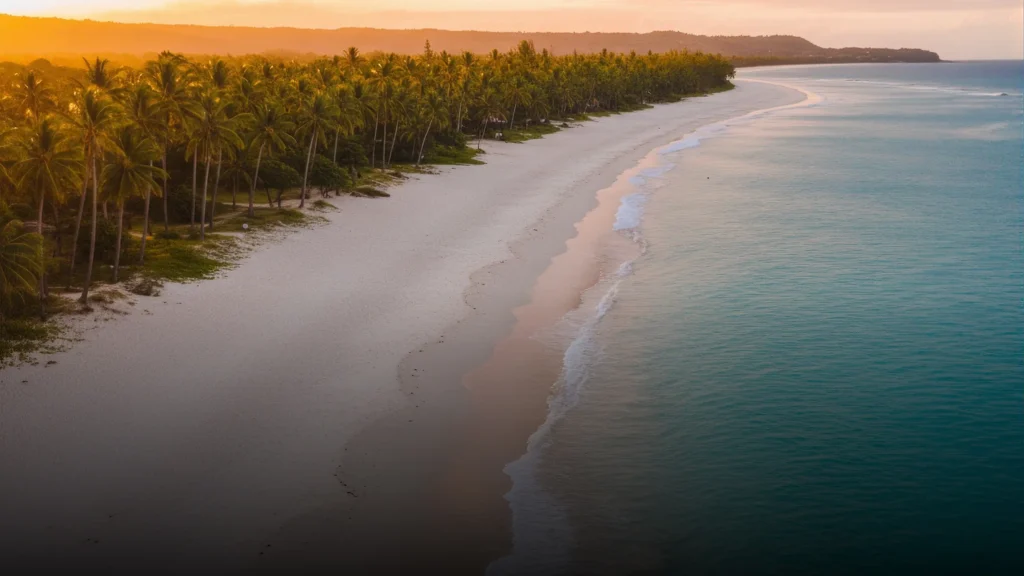
Bay of Fires sits about 20 minutes north of St Helens via Binalong Bay Road. The famous orange lichen-covered granite boulders, the white sand, the completely clear water. This is not a National Park in the traditional sense — there are no entry fees, no gates, no shuttle buses. You drive in, park, and walk. Binalong Bay is the easiest access point. The Gardens and Swimcart Beach are worth the extra drive north if you have time.
Mobile reception ends at Binalong Bay. Download maps and stock up on fuel and food in St Helens before driving in. Stay overnight in St Helens.
Bay of Fires is one of those places that does not need explaining once you are there. It just needs to be on the list.
Day 4: Bay of Fires to Cradle Mountain (4 hours)
This is your biggest driving day. St Helens to Cradle Mountain takes around 4 hours cutting across the middle of Tasmania through Scottsdale and Deloraine. The road is winding in places — do not try to rush it.
Aim to arrive at Cradle Mountain Village by mid-afternoon. Pick up your park shuttle ticket from the visitor centre — private vehicles cannot drive beyond the visitor centre during peak season, so the shuttle is how you access Dove Lake and the park interior. The evening wombat walk around the visitor centre grounds is genuinely excellent and takes about 30 minutes. Wombats here are completely habituated to humans and will walk right past you.
Stay overnight at Cradle Mountain — there are lodge and cabin options at various price points in the village.
Day 5: Dove Lake Circuit and Cradle Mountain
Full day at Cradle Mountain. Start early on the Dove Lake Circuit — the 6km loop takes 2 to 3 hours at a comfortable pace and gives you the classic view of Cradle Mountain reflected in the lake. Go before 10am if you want the lake to yourself. By midday the shuttles are full and the circuit is busy.
The Cradle Mountain Night Spotting tour runs after dark and is worth booking in advance. Spotted quolls, wombats, wallabies, and Tasmanian devils in their natural habitat with a guide who knows where to look. This is one of the best wildlife experiences in Australia and most visitors do not know it exists.
If the Dove Lake Circuit is not enough hiking for you, the Marions Lookout Track adds another hour and puts you significantly higher above the valley. Weather at Cradle Mountain changes fast — check the forecast each morning and always carry an extra layer regardless of what it says.
The photos make Dove Lake look easy. The walk is not hard, but the weather can turn fast. Go early, go prepared, and you will not be disappointed.
Day 6: Cradle Mountain to Hobart (5 hours)
The drive from Cradle Mountain to Hobart via the Midlands Highway takes around 5 hours without stops. This is a long day. Break it up with a stop in the historic town of Ross (the Ross Bridge and the town bakery are both worth 30 minutes) and Oatlands for a walk along the Georgian sandstone main street.
Alternatively, if you want to add a night at a midpoint and have the budget, the Tamar Valley wine region around Launceston is a strong overnight stop. Cataract Gorge in Launceston takes two hours and is genuinely impressive — a wild river gorge right in the city. From Launceston, the drive south to Hobart is another 2 hours 20 minutes the following morning.
If you are driving straight through, arrive in Hobart by early evening and spend your last night on the waterfront.
Day 7: Hobart — MONA, markets, final dinner
Last full day. MONA — the Museum of Old and New Art — is 15 minutes from the city by ferry and is genuinely one of the most interesting cultural experiences in Australia. Book ahead online. Budget a half-day minimum. The ferry ride across the Derwent River is part of the experience.
If MONA is not your thing, Salamanca Place has good galleries, bookshops, and the best coffee in the city. The Hobart waterfront around Sullivan’s Cove is worth a final slow walk. Buy Tasmanian whisky, Bruny Island cheese, and salmon at one of the deli stores on Salamanca before you leave.
Evening: dinner somewhere good in Hobart. Peppina at The Tasman or Fico on Macquarie Street if you want to book ahead. The Lark Distillery bar on Davey Street if you want Tasmanian whisky and no fuss. Fly out the next morning.
What this 7 days in Tasmania itinerary does not include
Honest accounting matters here. This 7-day Tasmania itinerary deliberately leaves out:
- Port Arthur. Tasmania’s most visited paid attraction and genuinely worth a full day. It is 1 hour 15 minutes from Hobart. If Port Arthur is a priority, swap it in on Day 1 afternoon and push the East Coast start to Day 2 morning.
- Bruny Island. The Bruny Island Cruise with Pennicott is one of the best wildlife boat experiences in Tasmania. Bruny requires a ferry from Kettering (30 minutes south of Hobart) and at least a full day. It does not fit a 7-day itinerary without dropping something else.
- The West Coast. Strahan, Queenstown, the Gordon River Cruise. The west coast deserves 2 to 3 days on its own. If the west coast is the reason you are coming to Tasmania, 7 days is not enough — consider 10 days minimum.
- Maria Island. A car-free island with extraordinary wildlife and no shops. Requires a ferry from Triabunna. Magical, but it takes a full day to do properly.
Should you self-drive or join a guided tour for 7 days in Tasmania?
Tasmania has excellent multi-day guided tours that follow similar routes to this itinerary. They include transport, accommodation, and national park entry — ideal if you do not want to drive mountain roads or navigate independently. The Bay of Fires 3 Day tour covers the East Coast highlights in a small group with a local guide.
Self-driving gives you complete flexibility — you stop when you want, you stay longer when something surprises you, and you can adjust daily based on weather. For a 7-day Tasmania itinerary, self-driving is the better option if you are a confident driver and comfortable with winding roads. Guided touring is the better option if you are travelling solo, unfamiliar with left-hand driving, or want someone else handling the logistics entirely.
Tourism Tasmania’s drive times guide is the most reliable reference for planning realistic driving days — worth bookmarking before you go.
Best time to do 7 days in Tasmania
Tasmania is a year-round destination, but the season shapes what you get.
- Summer (December to February): Warmest weather, longest daylight hours, and the busiest period. Book accommodation weeks in advance. Temperatures in Hobart sit around 21 to 24°C but Cradle Mountain stays cool at altitude regardless of season.
- Autumn (March to May): Crisp air, golden foliage, noticeably fewer crowds, and lower prices. One of the best times to visit for the East Coast and Hobart. Highly recommended.
- Winter (June to August): Cold, sometimes snowy at Cradle Mountain, and atmospheric. Some high-altitude roads close after heavy snowfall. Perfect if you want Dove Lake with almost no other people on the track.
- Spring (September to November): Wildflowers, excellent hiking conditions, and the shoulder-season crowd levels. A strong time for the 7-day Tasmania itinerary if you want good weather without summer prices.
FAQs
Is 7 days in Tasmania enough?
7 days in Tasmania is enough to see the main highlights — Hobart, Freycinet and Wineglass Bay, Bay of Fires, and Cradle Mountain — if you plan it realistically. The ideal trip is 10 to 14 days. With 7 days, expect faster travel days and fewer detours than you might like. Choose your two or three anchors and build around them rather than trying to fit in everything.
Do I need a car for 7 days in Tasmania?
Yes. A car is essential for this 7-day Tasmania itinerary. Public transport outside Hobart and Launceston is extremely limited. Most of the key destinations — Freycinet, Bay of Fires, Cradle Mountain — are only accessible by car or organised tour. Book your hire car before leaving home, especially during peak season (December to February) when availability is tight.
What is the best 7-day Tasmania itinerary for first-time visitors?
The most effective 7-day Tasmania itinerary for first timers follows this structure: Day 1 in Hobart, Day 2 to 3 on the East Coast (Freycinet and Bay of Fires), Day 4 to 5 at Cradle Mountain, Day 6 driving back to Hobart via the Midlands, and Day 7 in Hobart for MONA and final meals. This covers Tasmania’s three signature landscapes — the wild east coast, the alpine northwest, and the cultural south — without overloading any single day.
Can you do the Overland Track in 7 days in Tasmania?
No. The Overland Track is a 65km multi-day hike from Cradle Mountain to Lake St Clair that takes 6 to 8 days on its own. It cannot be combined with a standard 7-day Tasmania sightseeing itinerary. If the Overland Track is your main reason for visiting Tasmania, plan your trip around that specifically and consider it a standalone purpose-built trip.
How far is it from Hobart to Cradle Mountain?
Hobart to Cradle Mountain is approximately 5 hours via the Midlands Highway. It is a longer drive than it looks on the map. This itinerary avoids doing this drive in one day by building in the East Coast first, approaching Cradle Mountain from the northeast via Deloraine after spending nights at Freycinet and St Helens. That route runs around 4 hours from St Helens and is significantly more practical.
What should I not miss on a 7-day Tasmania trip?
The non-negotiables for 7 days in Tasmania are Wineglass Bay in Freycinet National Park, the Bay of Fires coastline near St Helens, and the Dove Lake Circuit at Cradle Mountain. Beyond those, Salamanca Place and MONA in Hobart, the Cradle Mountain Night Spotting tour for wildlife, and at least one meal featuring Tasmanian oysters, salmon, or whisky. Everything else is a bonus.
Every tour on Aussie Loop is handpicked by people who actually know Tasmania. No paid placements. No sponsored listings. Just what is worth your time
Related posts
- Tasmania Without a Car: Can You Do It? Honest Guide for International Visitors
- Dove Lake Circuit: What the Photos Don’t Tell You About Cradle Mountain’s Most Famous Walk
- Wineglass Bay Lookout vs Beach Walk: How Far Should You Actually Go?
- Bruny Island Day Trip from Hobart: What to Expect and Whether It’s Worth It