
For most first-time leisure travellers, the east-coast three-hub route — Sydney, Cairns, and the Great Barrier Reef, then Melbourne — is the best balanced 10-day Australia itinerary. It delivers iconic city culture, world-class reef diving, ancient rainforests, and the Great Ocean Road without burning half your trip on airports. Families, couples, and solo travellers who want genuine variety with just two domestic flights will find this plan works beautifully. The one honest caveat: ten days is a focused first visit, not a lap of the continent. If you’d rather drive a coastal road or head straight to the Red Centre, this guide covers those routes too.
Key takeaways
The east-coast three-hub plan — Sydney, Cairns, Melbourne — remains the best-balanced 10-day Australia itinerary for first-time travellers who want reef, rainforest, city culture, and the Great Ocean Road without excessive transit time.
| Point | Details |
|---|---|
| Best plan for first-timers | Sydney → Cairns → Melbourne covers reef, rainforest, and city culture with just two domestic flights. |
| Nights per stop | Three nights per hub is the minimum for an immersive visit; one buffer night handles jet lag or delays. |
| Book early | Domestic flights on Sydney–Cairns and Cairns–Melbourne sell out; book these immediately after your international flights. |
| Best travel months | April–May and September–October offer the best weather, crowd levels, and pricing across most routes. |
| Aussie Loop | Handpicked local tours for Cairns, the Daintree, and beyond slot directly into the itinerary and save significant planning time. |
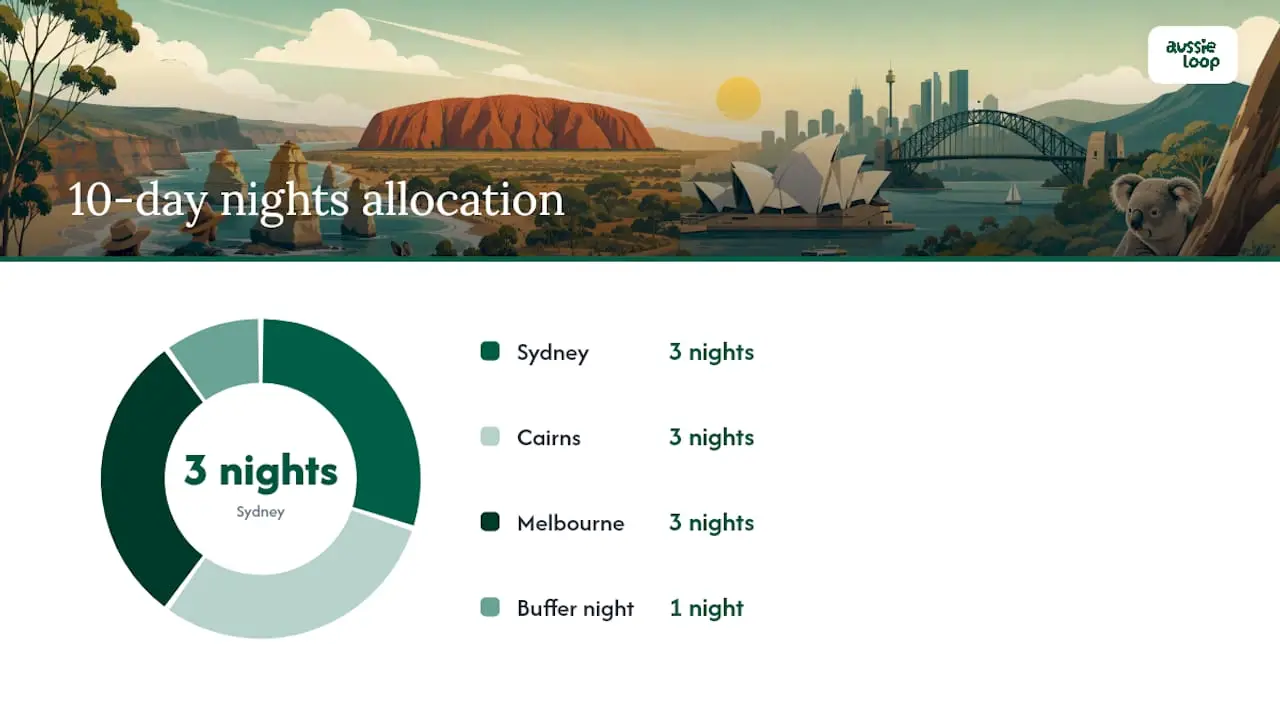
Table of Contents
- Best 10-day Australia itinerary: the east-coast three-hub plan
- Three alternative routes for different travel styles
- Quick facts: distances, transport and typical budgets
- When to fly, when to hire a car, and how to get between stops
- What’s the best time of year for a 10-day Australia trip?
- Pre-trip checklist: visas, bookings, packing and health
- How to pick the right 10-day plan for your travel style
- Why local, curated tours make a 10-day trip work harder
- Aussie Loop makes it easy to book the best bits
- Sources
- FAQ
Best 10-day Australia itinerary: the east-coast three-hub plan
This day-by-day plan follows the Sydney → Cairns → Melbourne spine. It allocates three nights to each hub and keeps one flexible buffer night, which travel guidance recommends for long-haul arrivals who need a low-key recovery day before diving into sightseeing.

Days 1–3: Sydney (3 nights)
Where to stay: The CBD or Circular Quay puts you within walking distance of the Opera House; Bondi is better for beach lovers who don’t mind a 20-minute bus ride to the city.
- Day 1 (arrival/recovery): Land, check in, walk the Circular Quay foreshore. The Sydney Opera House is right there — book a guided tour or evening performance for tonight if you’re feeling fresh, or save it for Day 2.
- Day 2: Morning walk across the Sydney Harbour Bridge (or the BridgeClimb if you’ve pre-booked), then Bondi Beach in the afternoon. The Bondi to Coogee coastal walk takes about two hours and is one of the best free experiences in the country.
- Day 3 (day trip): Blue Mountains. Catch the train from Central Station to Katoomba (roughly two hours each way) and spend the day at Echo Point for the Three Sisters, Scenic World, and the Jamison Valley lookouts. City bases with short day trips like this reduce packing and transit stress enormously on a tight schedule.
Days 4–6: Cairns and the Great Barrier Reef (3 nights)
Fly Sydney to Cairns (roughly 3 hours). Where to stay: Cairns CBD is the most practical base — it’s close to the marina where reef boats depart and within easy reach of the Daintree. For more detail on how to split your time here, the Aussie Loop guide to days in Cairns is worth a read before you book.
- Day 4 (arrival): Afternoon arrival. Walk the Cairns Esplanade, swim in the free Esplanade Lagoon, and book your reef day for tomorrow morning at the marina.
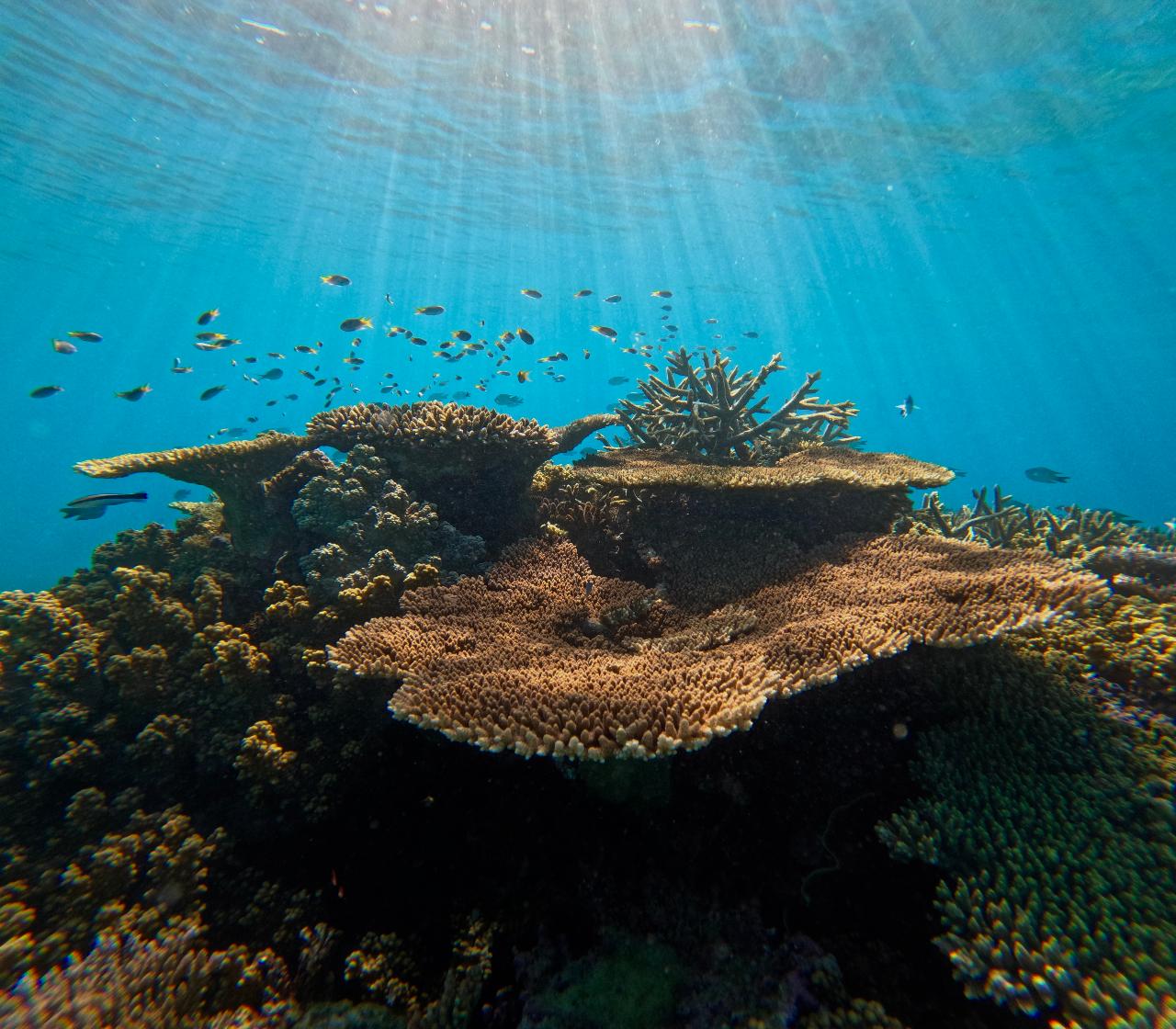
- Day 5 (Great Barrier Reef): Full-day reef trip. Book the earliest departure — morning slots have calmer water and better visibility. Snorkelling is accessible for all fitness levels; certified divers can add a dive. This is the day most travellers call the highlight of their trip.
- Day 6 (Daintree): Head north to the Daintree Rainforest and Mossman Gorge. The Daintree is the world’s oldest tropical rainforest, and a private Mossman Gorge and Daintree River tour covers both in a single efficient day. An evening Daintree nocturnal tour adds a genuinely wild dimension — cassowaries, tree kangaroos, and bioluminescent fungi after dark.
Days 7–9: Melbourne (3 nights)
Fly Cairns to Melbourne (roughly 3.5 hours). Where to stay: Fitzroy or the CBD for laneways and café culture; St Kilda for a beachside feel.
- Day 7 (arrival): Explore Melbourne’s laneways — Hosier Lane, Degraves Street, the Royal Arcade. The Queen Victoria Market is worth an early morning visit for local produce and street food.
- Day 8 (Great Ocean Road): This is the day trip that earns its own highlight reel. Hire a car or join a guided tour for the Great Ocean Road. The Twelve Apostles are the headline act, but the drive itself — clifftop views, surf beaches, rainforest gullies — is the real experience. Allow a full day.
- Day 9: Melbourne at your own pace. The National Gallery of Victoria, Federation Square, a tram ride to St Kilda, or a half-day trip to the Yarra Valley wine region. Melbourne rewards slow mornings.
Day 10: departure or flex day
Use this as a buffer for a late flight, a missed activity, or a spontaneous detour. If your flight is evening, a morning visit to the Royal Botanic Gardens or a final laneway coffee run is the perfect send-off.
Three alternative routes for different travel styles
Not everyone wants the east-coast hub plan. Here are three distinct 10-day variants, each built around a different pace and priority.
Coastal road trip: Sydney to Noosa
Best for: Couples, van-lifers, and travellers who’d rather drive than fly.

This route follows the Pacific Highway north from Sydney, keeping daily drives under three hours so you spend more time on beaches than behind the wheel. A rough outline: Sydney (1 night) → Hunter Valley (1 night, wine and food) → Port Macquarie (1 night, koalas at the Koala Hospital) → Coffs Harbour (1 night) → Byron Bay (2 nights, lighthouse walk, surf lessons) → Gold Coast (1 night, hinterland or theme parks) → Brisbane (1 night, South Bank) → Sunshine Coast/Noosa (2 nights, Noosa National Park).
Hire a campervan or a standard rental car. The self-drive coastal approach suits this route perfectly — you’re never more than a few hours from the next stop, and accommodation ranges from free campsites to boutique guesthouses. Tradeoff: you won’t reach the reef or Melbourne, so this plan suits travellers who’ve already ticked those or who prioritise a relaxed beach tempo over iconic landmarks.
Coast-to-coast: Great Barrier Reef to Western Australia
Best for: Reef and marine wildlife enthusiasts willing to cover more ground.
This plan requires one inter-coastal flight and works best between May and October when both the reef and Ningaloo are at their best. A sample outline: Cairns (3 nights, reef and Daintree) → fly to Perth (1 night) → drive north to Exmouth/Ningaloo (3 nights, whale sharks from April–July, manta rays year-round) → Coral Bay (1 night) → fly back to Perth (1 night, Swan Valley or Fremantle).
Tradeoff: Sydney and Melbourne don’t feature, so this is a strong second-trip option or a plan for travellers whose priority is marine wildlife over city culture. The Cairns-to-Perth flight adds cost and roughly half a day of transit.
Red Centre and Uluru
Best for: Outback seekers, photographers, and travellers drawn to Aboriginal cultural experiences.
Fly into Alice Springs, then drive or take a tour transfer to Uluru (roughly 4.5 hours, or a short regional flight). A 10-day outline: Alice Springs (2 nights, Alice Springs Desert Park, cultural centre) → Uluru/Ayers Rock Resort (3 nights, sunrise and sunset at Uluru, Kata Tjuta Valley of the Winds walk, Uluru Cultural Centre) → Kings Canyon (2 nights, Kings Canyon Rim Walk) → back to Alice Springs (1 night) → fly out.
Tradeoff: The Red Centre is extreme in summer (November–March), with temperatures regularly above 40°C. Aim for May–September. This route has almost no beach component, so it suits travellers who specifically want the outback and are comfortable with remote conditions. The Cassowary Coast Goondoi Culture Experience offers a different lens on First Nations culture for those who want to weave Indigenous experiences into a reef-region trip instead.
Quick facts: distances, transport and typical budgets
Distance and travel time between major hubs
Daily budget guide (per person, AUD) varies by travel style, from more affordable options like hostels and self-catering to higher-end choices including boutique hotels and private tours. International flights and specialized activities typically cost extra. Tourism Australia recommends planning roughly 3–4 days per destination — the three-hub east-coast plan follows that logic exactly, which is why it feels unhurried despite covering a lot of ground.
Statistic to note: Tourism Australia’s planning guidance suggests 3–4 days per destination as the minimum for an immersive visit. The east-coast three-hub plan hits that mark at every stop.
Book domestic flights as early as possible. Fares on Sydney–Cairns and Cairns–Melbourne rise steeply as departure approaches, and popular morning departures can sell out weeks ahead.
When to fly, when to hire a car, and how to get between stops
Most 10-day plans work best with a mix of domestic flights for long hops and a hire car for regional day trips. Here’s how to split them:
Fly for these legs:
- Sydney to Cairns (2,400 km — driving is not a realistic 10-day option)
- Cairns to Melbourne (2,800 km — same reason)
- Any leg over 600 km where you’d lose more than a day to driving
Hire a car for these legs:
- Great Ocean Road from Melbourne (a hire car gives you full flexibility to stop at every lookout)
- Daintree and Mossman Gorge from Cairns (manageable half-day drive, though a guided tour saves navigation stress)
- Blue Mountains from Sydney (train is equally good and avoids parking)
- Coastal road trip routes (Sydney to Noosa, Perth to Exmouth)
Use public transport for:
- Getting around Sydney (Opal card covers trains, buses, and ferries)
- Getting around Melbourne (Myki card, excellent tram network)
- Sydney to Blue Mountains (direct train from Central Station)
Pro Tip: Book one-way car hires early when you need them. Returning a car to a different city (e.g. picking up in Cairns and dropping in Melbourne) is rarely possible or cost-effective — plan your hire car legs as out-and-back from a single city base.
Door-to-door domestic flight time in Australia is longer than the flight itself suggests. A 3-hour Sydney–Cairns flight becomes a 5–6 hour door-to-door commitment once you factor in airport transfers, check-in, and baggage. Build that into your day planning, not just your flight time.
What’s the best time of year for a 10-day Australia trip?
The honest answer is that Australia’s size means no single month is perfect for every route simultaneously. That said, the shoulder seasons — April to May and September to October — deliver the best overall balance of weather, crowd levels, and price across most major destinations.
East-coast three-hub plan
September and October are ideal. Sydney is warm and clear, Cairns sits at the tail end of the dry season with excellent reef visibility, and Melbourne’s spring weather is reliably pleasant. April–May works nearly as well. Avoid December–February in Cairns: the wet season brings heavy rain, stinger (jellyfish) warnings on beaches, and reduced reef visibility.
Coastal road trip (Sydney to Noosa)
March to May and September to November. Byron Bay and the Gold Coast are swimmable year-round but genuinely beautiful in the shoulder seasons when school holiday crowds thin out.
Coast-to-coast (reef to Ningaloo/WA)
May to October is the window. Whale sharks visit Ningaloo from approximately March to July; manta rays are present year-round. The Australia.com coast-to-coast itinerary specifically highlights this May–October window for marine wildlife experiences.
Red Centre
May to September. Daytime temperatures are manageable (15–25°C), nights are cold, and the desert light at sunrise and sunset is extraordinary. Avoid November through March — heat above 40°C makes outdoor activities dangerous.
Safety note: Australia’s natural environments carry real hazards. In the reef zone, swim between the flags and follow stinger suit advice from your reef operator. In the Daintree, stay on marked trails. In the outback, carry at least 10 litres of water per person per day, tell someone your route, and never leave a broken-down vehicle in remote areas.
Pre-trip checklist: visas, bookings, packing and health
Visas and entry
- Most international visitors need an Electronic Travel Authority (ETA) or eVisitor visa — apply online before departure through the Australian Department of Home Affairs. Processing is usually fast but apply at least two weeks out.
- US, UK, Canadian, and most European passport holders are eligible for the ETA or eVisitor. Check your specific passport on the Department of Home Affairs website.
Health and insurance
- No mandatory vaccinations are required for most visitors, but check current recommendations with your GP or a travel health clinic at least 6 weeks before departure.
- Travel insurance is strongly recommended — medical costs in Australia are high for uninsured visitors, and reef or adventure activities may require specific cover.
Booking order and lead times
- International flights — book as early as possible (3–6 months out for best fares)
- Domestic flights — book immediately after international flights; Sydney–Cairns and Cairns–Melbourne are high-demand routes
- Key tours — Great Barrier Reef day trips, Daintree tours, and Great Ocean Road guided tours book out fast in peak season
- Accommodation — book 2–3 months out for peak season (December–January, Easter)
- Car hire — book alongside accommodation; one-way hires need early confirmation
Packing for mixed climates
Ten days across Sydney, Cairns, and Melbourne means three distinct climates. Pack layers you can add or remove rather than separate wardrobes for each city.
- Cairns: lightweight, breathable fabrics; a rash vest for reef snorkelling; reef-safe sunscreen
- Sydney and Melbourne: a light jacket or merino layer for evenings (especially in spring and autumn)
- All regions: comfortable walking shoes, a reusable water bottle, and a small daypack
Pro Tip: Travel with carry-on luggage only if you can manage it. Checking bags on multiple domestic flights adds time and cost. A 20-litre daypack plus a 40-litre carry-on handles 10 days comfortably if you pack light fabrics and use hotel laundry.
How to pick the right 10-day plan for your travel style
Before you commit to a route, ask yourself four questions:
1. How do you feel about flying domestically?
If two domestic flights feel like too much, the coastal road trip is your plan. If you’re comfortable with airports, the east-coast hub plan or coast-to-coast option opens up.
2. What’s your non-negotiable experience?
Reef → Cairns must be in your plan. Outback and ancient landscapes → Red Centre. Beaches and a relaxed pace → coastal road trip. City culture plus nature → east-coast three-hub.
3. Who’s travelling with you?
Families with young children do best on the east-coast hub plan — the Blue Mountains train day trip, Bondi Beach, and the reef are all accessible and manageable. Solo travellers and couples have more flexibility for the road trip or coast-to-coast variant.
4. What’s your weather tolerance?
The Red Centre in summer is genuinely dangerous. The Cairns wet season is uncomfortable and limits reef access. If your travel dates are fixed in December–February, the coastal road trip or a southern-focused plan (Sydney, Melbourne, Tasmania) avoids both.
Red flags that should change your plan
- More than two domestic flights in 10 days means you’re spending too much time in airports. Consolidate.
- If your itinerary has no recovery day after a long-haul arrival, add one. Losing Day 1 to jet lag is a very common mistake.
- Booking the reef for Day 1 or Day 2 after a long-haul flight is risky — a rough sea day when you’re already exhausted is memorable for the wrong reasons.
Why local, curated tours make a 10-day trip work harder
Ten days sounds generous until you factor in airport transfers, check-in times, and the half-day a domestic flight actually consumes. Local, curated tours solve a specific problem: they compress the logistics so you spend your limited hours on the experience, not on navigation.
A guided Northern Experience Eco Tour from Cairns covers terrain that would take a self-driver a full day to navigate independently, and it adds access to smaller operators and cultural experiences that don’t appear on mainstream booking platforms. The same logic applies to a Daintree Dreaming Aboriginal Cultural Adventure — the cultural context a local guide provides is simply not replicable from a hire car window.
For the Taste of the Tablelands tour from Cairns, the value is similar: a half-day that covers Atherton Tablelands food producers, crater lakes, and rainforest waterfalls in a loop that would take a self-driver most of a day to piece together. On a 10-day trip, that efficiency matters.

Aussie Loop’s curated approach focuses on exactly this: handpicked operators, local expertise, and experiences that go beyond the standard tourist circuit. The things to do in Cairns guide is a good starting point for building out your Cairns days beyond the reef.
A planner’s note on pacing
The biggest mistake travellers make with a 10-day Australia trip is treating it like a checklist. You cannot see everything, and trying to usually means you see nothing properly. The east-coast three-hub plan works because it makes a deliberate choice: three real days in each place, with day trips that radiate outward rather than requiring a full relocation.
If you’re booking through Aussie Loop, the most useful thing a local planner can do is tell you what to cut. The reef day should always be morning — calmer water, better light, and you’re back in Cairns by mid-afternoon with energy left. The Great Ocean Road is best done westbound from Melbourne so the Twelve Apostles are your finale, not your starting point. Small details like these are the difference between a trip that feels rushed and one that feels like you actually lived it.
Aussie Loop makes it easy to book the best bits
Planning a 10-day Australia trip means juggling reef boats, rainforest guides, and road trip logistics all at once. Aussie Loop cuts through that by offering handpicked, locally vetted tours across the destinations that matter most on this itinerary — from a private Cape Tribulation river drift to a Daintree nocturnal experience that most travellers don’t even know exists.

Every tour on the platform is chosen by locals who know which operators deliver and which ones don’t. You’re not sorting through hundreds of generic listings — you’re picking from a shortlist that’s already been filtered for quality, authenticity, and fit. For the Cairns days specifically, the Daintree Dreaming Aboriginal Cultural Adventure and the Northern Experience Eco Tour slot directly into Days 5 and 6 of the primary itinerary without any rearranging. Browse the full range of Australian tours on Aussie Loop and lock in the experiences that matter before the good slots go.
Sources
FAQ
Is 10 days in Australia worth it?
Yes — ten days is enough for a genuinely memorable first trip if you focus on one coast or a tight cluster of destinations. Trying to cover the whole country in 10 days leads to exhaustion; picking two or three hubs delivers real depth.
What is a good itinerary for a 10-day trip to Australia?
The most practical plan for first-timers is Sydney (3 nights), Cairns and the Great Barrier Reef (3 nights), and Melbourne (3 nights), with one buffer day. This covers Bondi Beach, the Blue Mountains, the reef, the Daintree Rainforest, and the Great Ocean Road with just two domestic flights.
Is AUD $3,000 enough for two weeks in Australia?
Budget varies by travel style and choices, with more affordable options like hostels and self-catering, and higher-end choices including boutique hotels and private tours increasing costs. International flights and specialized activities typically cost extra.
What is the best single itinerary for an Australia trip?
For most first-time visitors, the east-coast three-hub plan (Sydney → Cairns → Melbourne) is the strongest single itinerary. It balances iconic natural experiences with city culture, keeps domestic flights to two, and follows Tourism Australia’s own recommendation of 3–4 days per destination.
When is the best time to visit Australia for 10 days?
April–May and September–October are the best months for most routes. The reef is accessible and clear in the dry season (May–October), Sydney and Melbourne are pleasant in spring and autumn, and crowds are thinner than in the December–January peak.