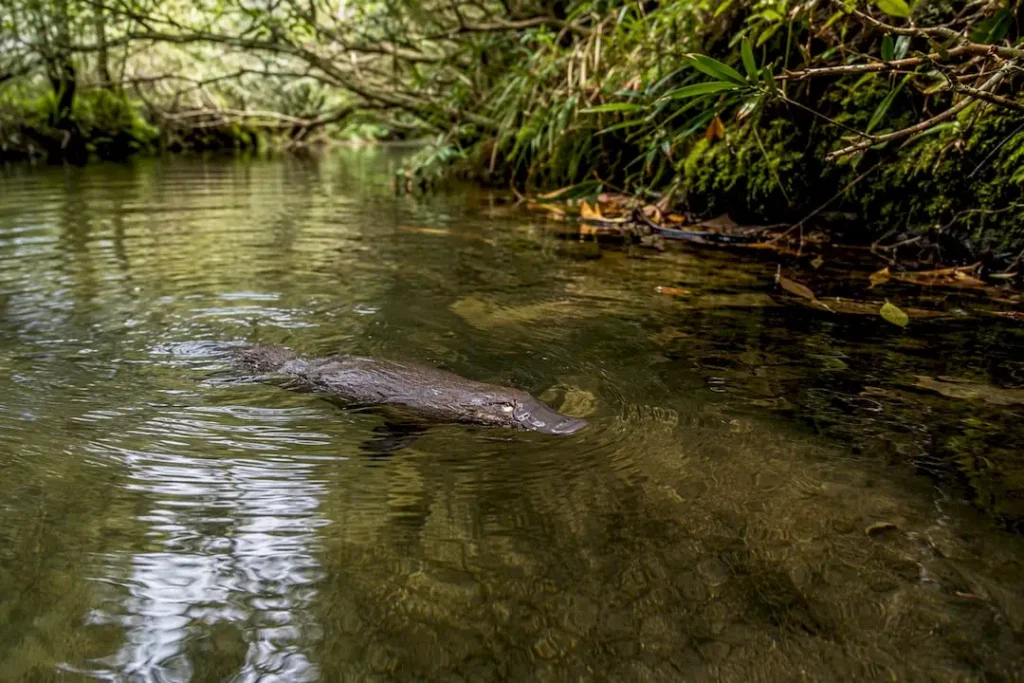
The best months for a well-rounded Ningaloo Reef trip are April to June. That window gives you warm water, calmer seas and the peak of the whale shark run, all at once. If you’re chasing a specific animal, the timing shifts slightly:
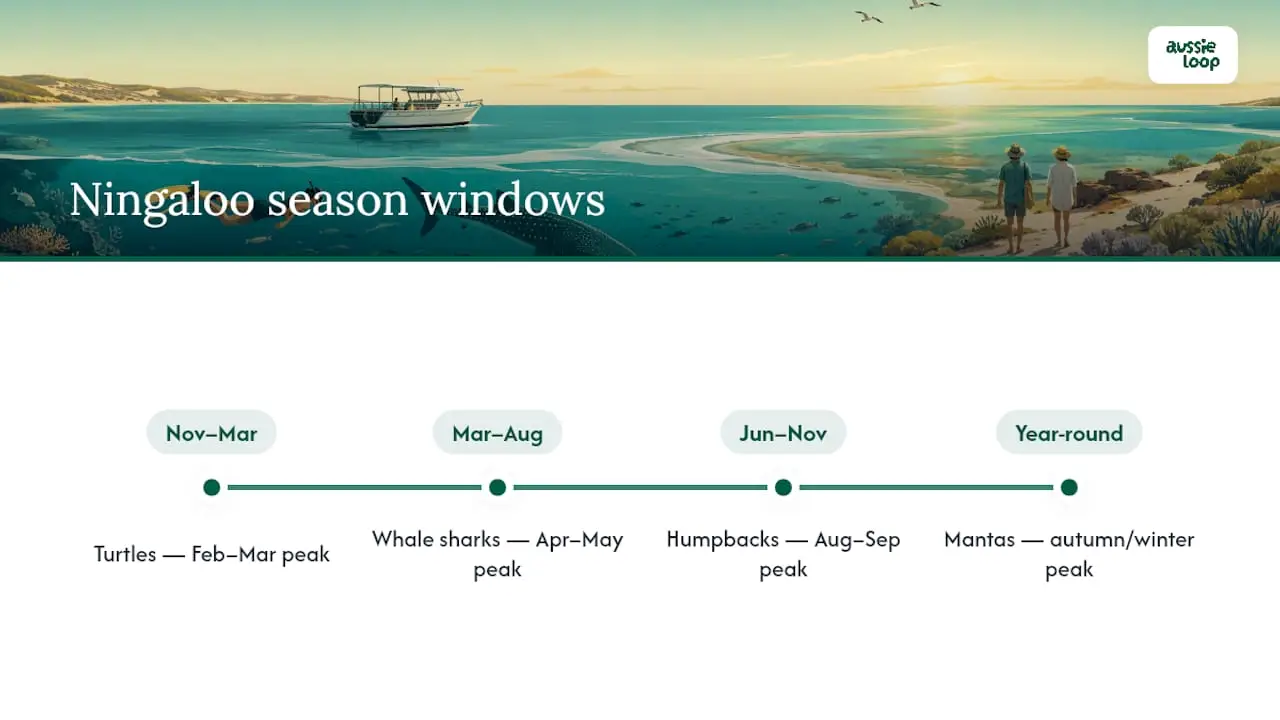
- Whale sharks: March to August, peak April to May
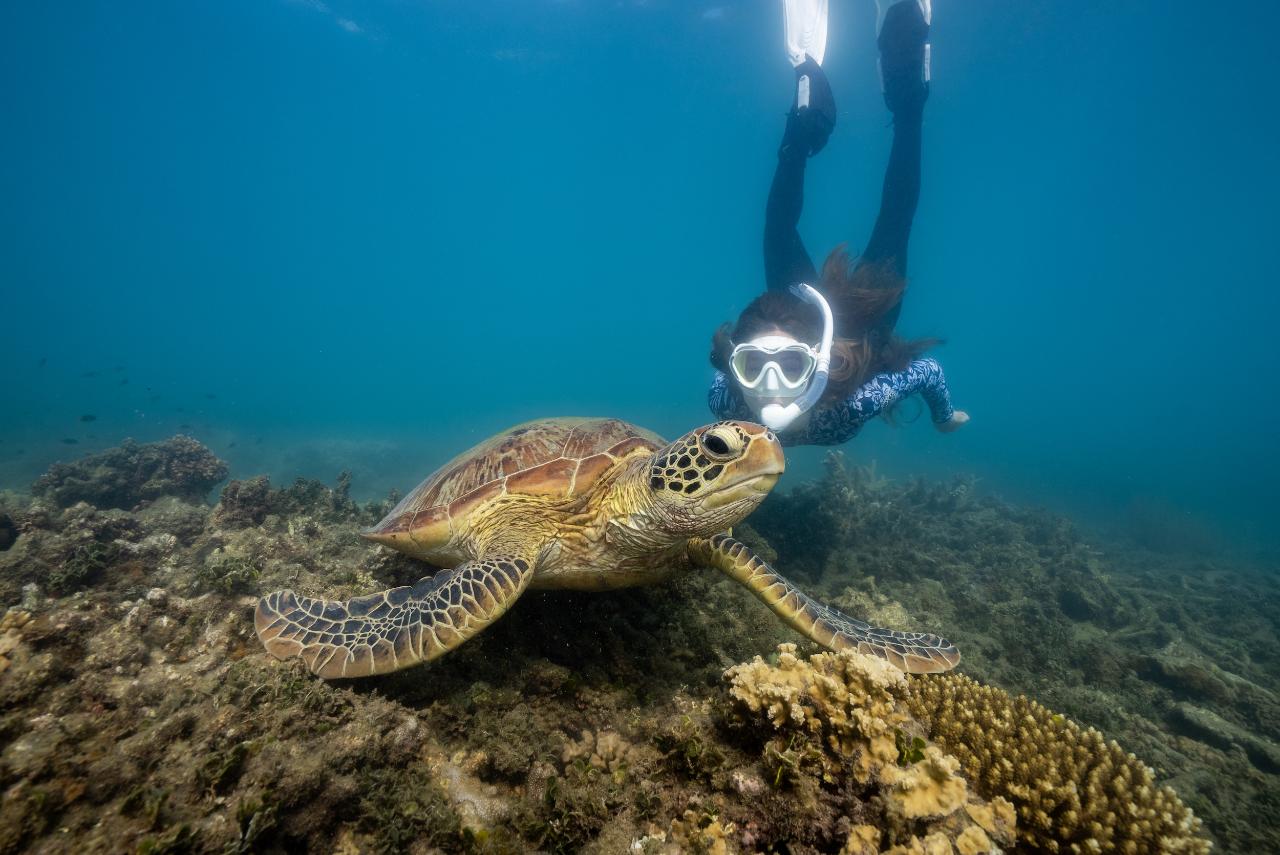
- Turtles nesting and hatching: November to March, hatchling peak February to March
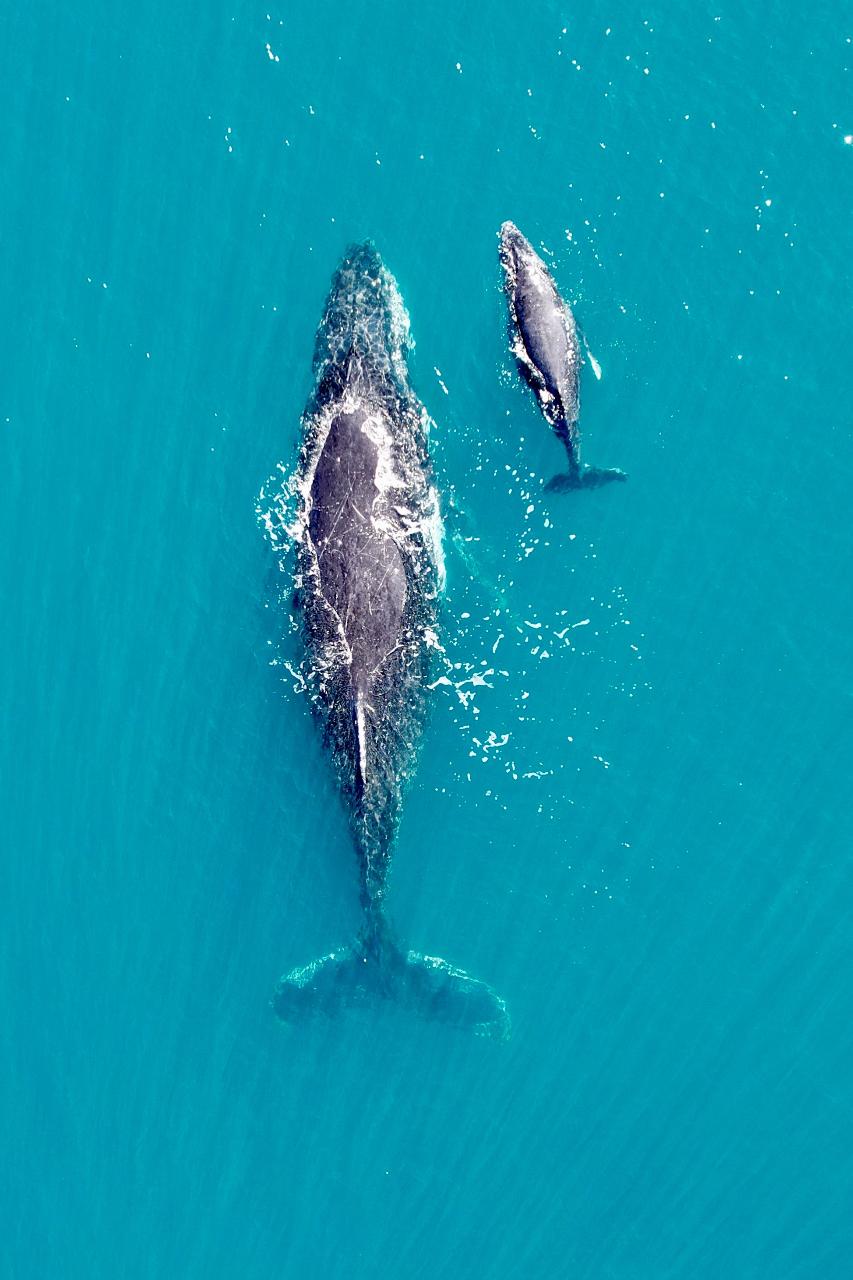
- Humpback whales: June to November, best close encounters August to September
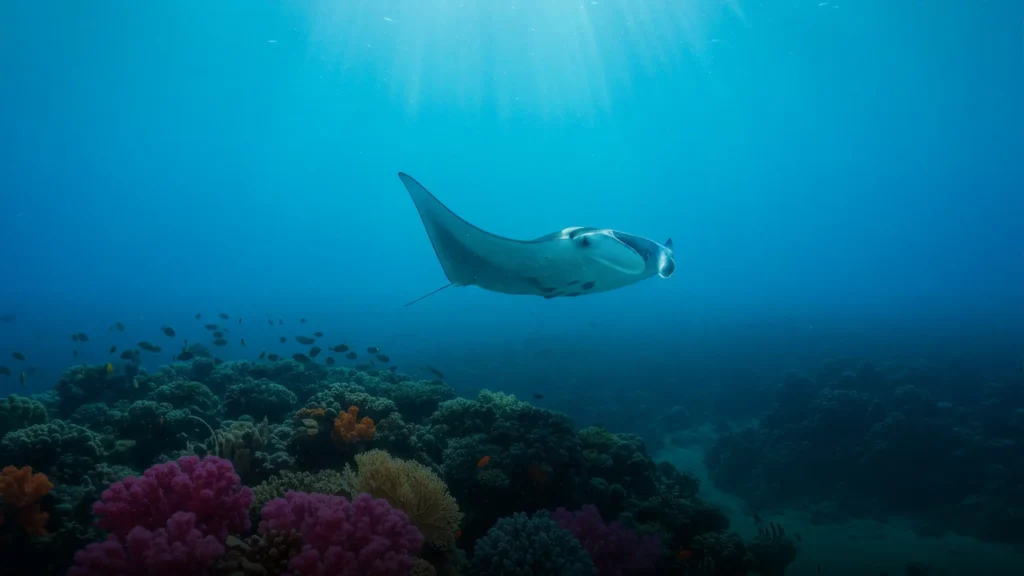
- Manta rays: year round, with stronger sightings in autumn and winter
Book early. Peak-season tours through Exmouth and Coral Bay routinely sell out weeks in advance, and because this stretch of coast is genuinely remote, plan for 5 to 7 days on the ground to absorb weather delays.
Key Takeaways
April to June delivers the strongest combination of warm water, calm seas and peak whale shark activity for a Ningaloo trip.
Table of Contents
- Ningaloo best time by month: a seasonal calendar
- Ningaloo whale shark season, turtle nesting and humpback migration windows
- Ningaloo weather, water temperature and how long to stay
- DBCA rules and responsible ways to see Ningaloo’s wildlife
- Booking Ningaloo tours around weather and wildlife
- How Aussie Loop helps you plan a Ningaloo trip
- What the season-first approach gets right, and where it falls short
- Sources
- FAQ
Ningaloo best time by month: a seasonal calendar
Ningaloo doesn’t run on a single tourist season. It runs on overlapping wildlife windows, each triggered by water temperature, current and plankton activity rather than a fixed date on the calendar. That’s the real answer to “what’s the Ningaloo best time” question: it depends on whether you’re chasing whale sharks, watching turtle hatchlings scramble down the sand, or hoping a humpback surfaces beside your boat.
| Month | Headline wildlife | Typical conditions |
|---|---|---|
| January–February | Turtle nesting winding down; hatchlings emerging | Hot, humid, cyclone risk |
| March | Whale sharks arrive; hatchling peak | Warm water, settling weather |
| April–May | Whale shark peak; mantas building | Warm, calm, prime diving |
| June | Whale sharks tapering; humpbacks arriving | Cooler, clear water |
| July–August | Humpback migration; mantas strong | Mild days, cool nights |
| September | Humpback close encounters; low crowds | Mild, stable, shoulder season |
| October–November | Mantas year-round; turtle nesting begins | Warming up, building humidity |
| December | Turtle nesting continues | Hot, storm season starting |
May and September deserve special mention as shoulder months. Crowds thin out, tour prices often ease, and you still get solid overlap between species, mantas in September, whale sharks tailing off in May, without the peak-season scramble for berths. Cyclone season runs roughly November to April, with the Western Australian coast averaging several tropical cyclones per season, so late-summer bookings need built-in flexibility.
Ningaloo whale shark season, turtle nesting and humpback migration windows
Each species keeps its own calendar, and understanding why helps you pick dates with confidence rather than guesswork.
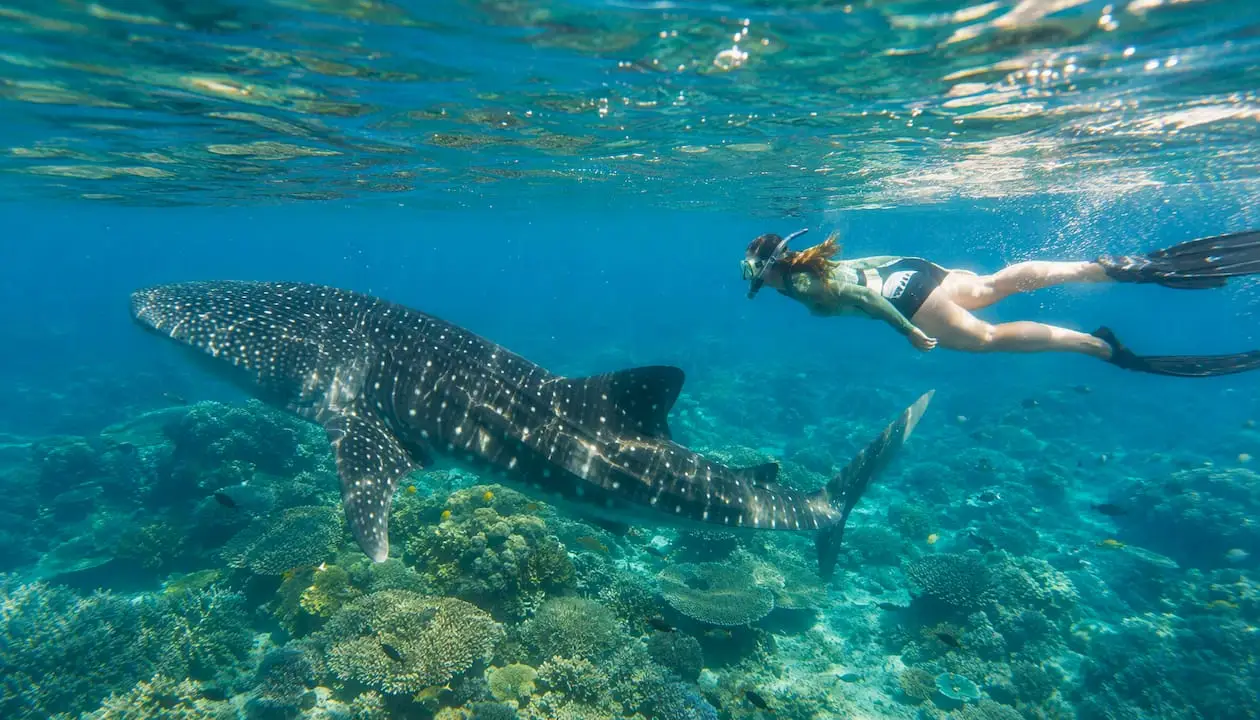
Whale sharks show up on Ningaloo Reef roughly from March through August, with the heaviest aggregations landing in April and May. Coral spawning and a plankton bloom draw them in, and the timing shifts a little year to year depending on when those triggers fire.
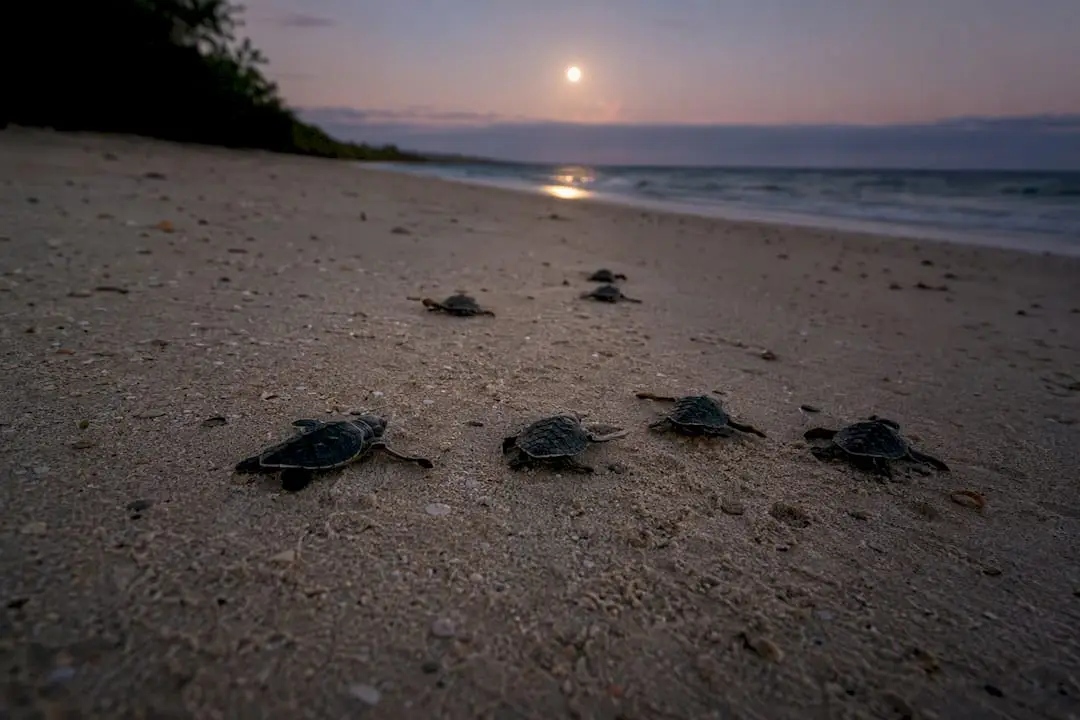
Turtles nest from November through March, with hatchlings emerging in their biggest numbers during February and March. Local guides rate February as an exceptional month for watching hatchlings make their run to the water, and they consistently point visitors toward licensed eco-education tours at the Jurabi Turtle Centre rather than independent beach visits.
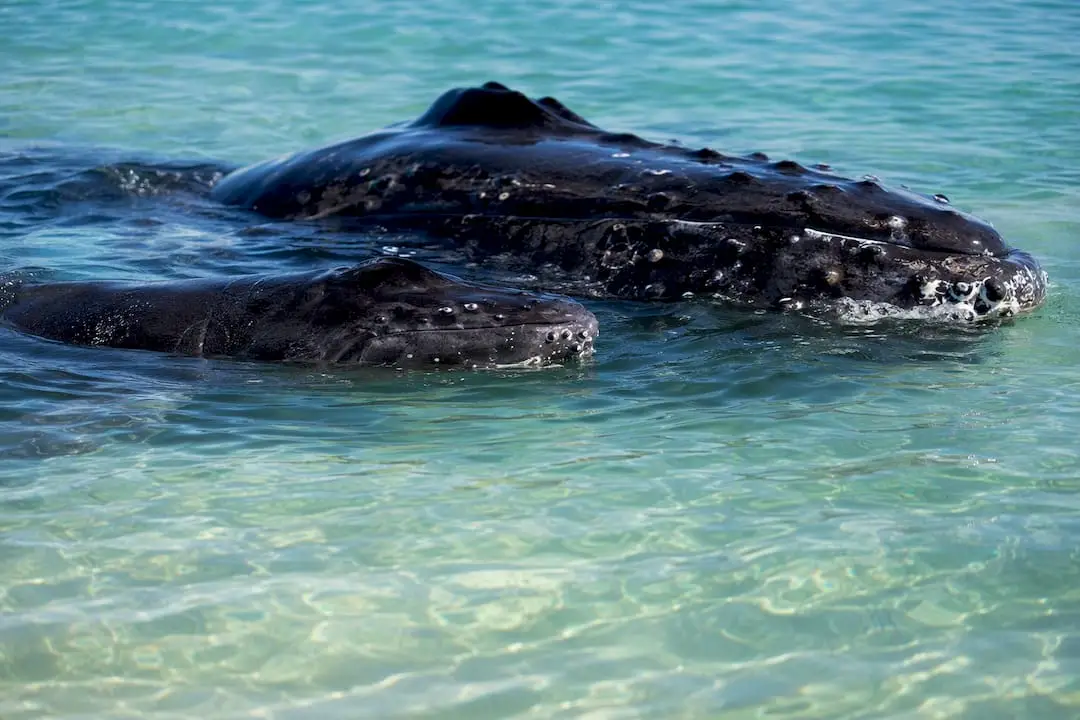
Humpback whales migrate past Ningaloo from June to November, and August through September tends to deliver the closest, calmest encounters as mother-calf pairs linger in the sheltered waters.
Manta rays are present year round, but sightings climb through autumn and winter, overlapping neatly with the tail end of whale shark season and the start of the humpback run.
Pro Tip: If you can only pick one month, go with May. You’ll still catch whale sharks, you’re ahead of the winter humpback crowds, and water clarity is usually at its best for the whole year.
Ningaloo weather, water temperature and how long to stay
Water temperature at Ningaloo swings from around 22°C in winter (June to August) up to 29°C or higher in summer, and air temperatures follow a similar pattern, mild winter days versus properly hot, humid summers. Checking the Bureau of Meteorology’s Exmouth forecast before you fly in is worth the two minutes it takes, since conditions on this stretch of coast can shift faster than inland forecasts suggest.
A few practical points for scheduling your visit:
- Budget 5 to 7 days minimum. Ningaloo Coast stretches across 300 kilometres of reef, and getting between Exmouth and Coral Bay eats into your itinerary, especially if a tour gets weathered out.
- Book reef trips for early morning. Wind picks up through the day, so the calmest water and best visibility usually sit between sunrise and mid-morning.
- Check tide times before kayak or snorkel trail days. Some of the shore-access snorkel trails only work well around specific tide windows, and a low tide can leave you wading over exposed coral.
DBCA rules and responsible ways to see Ningaloo’s wildlife
Ningaloo sits inside a marine park, and the rules that govern it aren’t red tape for its own sake. They’re the reason the whale sharks keep coming back every year. The DBCA visitor guide sets out clear codes of practice, and following them keeps these encounters possible for the next traveller as well as yourself.
- Boats and swimmers must keep to set approach distances from whale sharks and other protected species.
- No artificial light near nesting beaches, torchlight and phone screens disorient hatchlings and send them the wrong way.
- Turtle encounters should run through licensed operators offering eco-education tours, not casual beach visits at night.
- Swim-with-whale-shark permits are limited to accredited operators, so check for DBCA licensing before you book.
Choosing a licensed operator isn’t just a box-ticking exercise. It’s what keeps access to swim-with experiences intact for future seasons, since ongoing permits depend on operators demonstrating low-impact practices.
Booking Ningaloo tours around weather and wildlife
Most whale shark operators run spotter planes overhead each morning to locate aggregations before boats leave the marina. It’s a smart system, it means your tour isn’t guessing where the sharks are, but it also means schedules shift with what the plane finds, so patience on the day pays off.
- Book April and May trips at least 6 to 8 weeks ahead; peak season sells out fast.
- Build a buffer day or two into your itinerary in case a tour gets rescheduled for weather.
- Pack reef-safe sunscreen, a rash vest, and a light jacket for cooler mornings on the water.
- Check the operator’s cancellation policy before paying in full; weather-dependent refunds and reschedules are standard practice on this coast.
Pro Tip: Ask your tour operator directly how many spotter-plane flights they run daily. More flights generally means better odds of finding whale sharks, especially outside the April to May peak.
How Aussie Loop helps you plan a Ningaloo trip
Getting the timing right is only half the job. The other half is picking an operator who actually respects the marine park rules instead of just ticking the licence box. Aussie Loop curates tours selected by locals who know which operators run responsible whale shark swims, which turtle-watching outfits stick to the no-light rules, and which reef trips are worth your money.
- Curated reef and wildlife tours filtered for quality, not volume
- Local knowledge on which operators genuinely follow DBCA-aligned practices
- Trip-planning guidance that pairs with seasonal timing advice like this
A reef this good depends on visitors doing the right thing at the right time of year.
Browse the full range of Australian tours on Aussie Loop, and if you’re stacking a longer trip around Ningaloo, worth reading on trip length is how many days you actually need in a remote destination before locking in flights. For more on how seasonal marine timing plays out elsewhere, this piece on dolphin watching season covers similar planning logic.
What the season-first approach gets right, and where it falls short
Most Ningaloo advice treats “best time to visit” as a single answer, usually April or May, and leaves it there. That’s not wrong, but it flattens a coastline that actually runs on four or five overlapping wildlife calendars. The more useful question isn’t “when’s the best time,” it’s “which animal am I actually travelling to see,” because a traveller chasing turtle hatchlings in February wants a completely different trip to one chasing humpbacks in September.
Where conventional advice really falls short is on logistics. Plenty of guides list the wildlife calendar and stop there, without mentioning that spotter-plane scheduling can shuffle your whole day, or that a five-day trip often isn’t enough once you factor in one weathered-out tour. Prioritise your target species first, build buffer days second, and only then start comparing exact months. Book with an operator that treats DBCA’s rules as standard practice, not a formality, because that’s what keeps this reef worth visiting in the first place.
— Dhruv Sharma
Sources
- Nyinggulu (Ningaloo Coast) visitor guide — DBCA
- Ningaloo Marine Park (Commonwealth waters) visitors guide — Ningaloo Atlas
- Turtle season on Ningaloo Reef — Western Australia travel stories
FAQ
What is the best month to visit Ningaloo Reef?
April and May offer the strongest all-round combination of warm water, calm seas and peak whale shark numbers, though May also gives you lighter crowds.
How many days do you need in Ningaloo?
Plan for 5 to 7 days to account for the remote distances between Exmouth and Coral Bay and the likelihood that at least one tour gets rescheduled for weather.
What is the best time to see whale sharks in Ningaloo?
Whale sharks are present from March to August, with the biggest aggregations typically arriving in April and May.
When can you see manta rays in Ningaloo?
Manta rays are around year round, but sightings tend to increase through autumn and winter, overlapping with the whale shark and humpback seasons.
Recommended
- Everything you need to know before visiting the Great Barrier Reef for the first time! – Aussie Loop
- Great Barrier Reef Tour Comparison: Outer vs Inner vs Island – Aussie Loop
- Daintree and Cape Tribulation Tour: The Savvy Local’s Guide to the World’s Oldest Rainforest
- Port Douglas vs Cairns – Which Should You Base Yourself In?